
by David J. Lobina
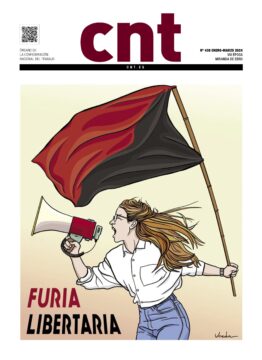
One of the most annoying aspects of living in an American – that is, US – world is not the imperialism of it all, with US military bases in hundreds of countries and the many wars and unpunished war crimes that have come with these bases in the last 80 or so years (and let’s not forget economic warfare, of course).[i]
Nay, the worst thing about an American world is the cultural hegemony that stems from the immense soft power the US yields in the world and that we, as regular citizens of overseas countries, must endure. This is especially annoying when it comes to political and cultural discourse that is clearly specific to the US, and to US social and political conditions, but which often becomes, in a blink-and-you-miss-it kind of moment, almost universal.
I say ‘almost’ because the effects do not always hold for long, especially in non-English-speaking countries, but some issues, along with particular ways of approaching these issues, do sometimes become common talking points outside of the US, and often for longer that is merited. A case in point is the meaning and usage of three political concepts that originated, in each case, in Europe, but which have received different (and, sometimes, very different) interpretations in the US, with some of these new readings coming back to Europe in a new incarnation, with various levels of success, but sometimes replacing the original interpretations – even if there is typically little justification for this to happen at all.
The three concepts I want to discuss here are liberalism, libertarianism, and once again, but this time rather briefly, fascism, and my flippant conclusion will be that Americans should be a little bit less colonial and leave our word-concepts alone!
Let’s start with liberalism, the most common of the three, but a term that is used in a variety of ways everywhere you look in the world (no comprehensive review will be attempted here, naturally). From an etymological point of view, the word liberalism, in English, was possibly borrowed from the French libéralisme, from the early 19th century, whilst the word liberal, either as an adjective or a noun, was in use much earlier.
As an adjective, the Oxford English Dictionary lists two relevant meanings of liberal, both from the 18th century: said of a person who favours social reform with a degree of state intervention, and said, also, of a person who supports individual rights and civil liberties, with a view to advocate individual freedom but with little state intervention.[ii] Read more »

 The stock market, social media, award contests, product reviews, beauty contests, social media, fashion styles, job applications, award contests, product reviews, and even elections, don’t seem to belong in the same crowded sentence. What do they have in common? Before I get there, a couple of abstract analogues to pave the way.








 groups of citizens. Let’s call them the Shirts and the Skins. The Shirts believe homosexuality is an abomination that stinketh in the nostrils of the Lord, and abortion is baby murder. The Skins believe homosexuality is perfectly normal and natural, and abortion is a woman’s right. How can we build a society where those groups can get along without killing each other?


 Sughra Raza. Decay Saturated. Vermont, April, 2017.
 If you in any way follow AI policy, you will likely have heard that the EU AI Act’s Code of Practice (CoP) was released on July 10. This is one of the major developments in AI policy this year. 2025 has otherwise been fairly negative for AI safety and risk – the Paris AI summit in February