
by Laurie Sheck
1.
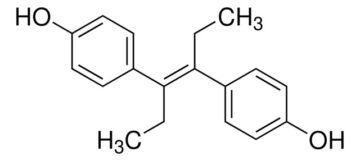
In March 2023, Nicola Sturgeon, the leader of the Scottish government, officially apologized for Scotland’s policy from the 1940’s to the 1970’s of forcing tens of thousands of unmarried women to give up their newborns for adoption. Shortly after giving birth and without informed consent, many of the women were required to take repeated and powerful doses of a synthetic estrogen, Stilbestrol (also known as Diethylstilbestrol or DES) now recognized as linked to reproductive cancers and other metabolic maladies, to dry up their breast milk. They were given no choice in this matter.
2.
“We have enormous sympathy for the women and families who have been harmed by Stilbestrol.” –The Scottish Government.
“It’s bad enough that SNP (Scottish National Party) ministers have tried to sweep the mental health impact of forced adoption under the carpet. The physical impacts must be brought into the light too, including the potential link between cancer and drugs the women were made to take to stop their breast milk.” –MSP Monica Lennon
3.
DES was developed by a British chemist, Charles Dodds, in 1938. He used it in his laboratory experiments and never patented it or expected it to be used as a widely prescribed pharmaceutical. Because it was not patented, over 200 pharmaceutical companies worldwide were left at liberty to manufacture and market it, first as a treatment for menopause and then, when that didn’t fly, mainly, though not exclusively, for the prevention of miscarriage. It was effective at neither one. Instead, it harmed millions of women who took DES while pregnant and even more-so their children who were exposed in utero.
During the initial application process, the FDA denied DES approval. Numerous animal studies showed various forms of harm, including deformities not evident at the offspring’s birth but which manifested only at maturity. These harms included deformed sexual organs.
Throughout its decades of use, a silence surrounded it. The FDA required the pharmaceutical companies to make available the questionable safety information of DES if requested by physicians, but there was no insert that came with the product: each physician needed to make a specific request. The information was not directly available to patients.
4.
Pain-Has an element-of Blank. (Emily Dickinson)
5.
I am a child, my body doesn’t feel right but I can’t say why. I have no words for it, it’s just a feeling. My lovely mother likes to talk about how excited she was, at twenty-three, to be pregnant with me after two miscarriages. How she took such good care of herself when pregnant and ate healthy foods. Then I am a teenager lying on a gynecologist’s table. I am cold and baffled as he calls his colleagues to come look. He doesn’t ask my permission, just calls. They gather around. I have never seen one, he says. The speculum is inside me as he points out my “cauliflower cervix”. Later I will find out that my uterus is t-shaped, that my cervical cells show pre-cancerous changes, that I cannot carry a child. That I am a DES daughter. That I am infertile.
6.
I ask my mother about it. No, she says, I would never have taken such a thing. I took something but it must have been something else. It never would have been that. A painful silence arises between us, a hurt tenderness, a wound that doesn’t know how to bring truth and love together. It is a silence that spreads through many years.
7.
In 1941 when the FDA officially approved DES, the pharmaceutical companies had arranged things so that animal studies could not be taken into consideration, even though those studies showed that unlike natural estrogen created by the body, synthetic estrogen remained potent even when excreted from the body: the feces from treated experimental animals could induce uterine growth in mice. In addition, it was not understood how DES affected the body’s metabolic functions, and synthetic estrogen was known to be carcinogenic in large doses. This was the first time the FDA chose to approve a drug that “did not purport to cure a disease yet did have the potential to harm users.” At this time, it was approved for menopausal women but warned against for pregnant women. But by 1947, when DES gained approval for use in pregnant women, these early warnings were simply ignored.
8.
In 1966, when Marion McMillan was forced as a teenager to give up her baby because she was unmarried, she was ordered to take 16 tablets of DES per day for a week to dry up her breast milk. “It was seen as an inconvenience once we’d given birth so we were told to take the tablets, which were handed out like sweets… Nobody ever explained what they were or whether there were any side effects… I was diagnosed with terminal cancer just over two years ago and I’d like to know whether the drugs I was given played any part in what happened to me and other women.”
9.
From the May 3, 2018 issue of the New England Journal of Medicine: “Researchers from the University of Chicago state that the risk of death for women age 10 to 34 who had been exposed to DES in utero and had clear-cell adenocarcinoma was 27 times higher than the risk for women in the general US population.” Decades earlier, on April 22, 1971, the journal published the classic study on DES daughters which described “a few unusual cancer cases at a Boston hospital: eight women, age 15 to 22, suffered from this extraordinarily rare tumor.” These women were DES daughters. Years after their normal-seeming birth, these exposed girls and young women began to die. Male children suffered physiological changes as well.
10.
“The Soul has bandaged moments” (Emily Dickinson)
11.
DES was definitively proved harmful by 1954 but continued to be prescribed until 1971.
12.
In 1947, after approving DES for use in chickens, the FDA began receiving reports about its effect on men’s health. Arapaho Chemicals of Colorado wrote to the agency, “Our company has recently been approached in regard to manufacturing Stilbestrol… as raw material for pharmaceutical formulation. We know that these materials are all readily absorbed through the skin by inhalation. It is our belief that the physiological effect of these materials would constitute a decided industrial hazard…We are particularly concerned over the possibility of carcinogenesis through long continued contact with Stilbestrol.” The FDA replied: “It is our understanding that excessive exposure to the substances may cause marked disturbances of the menstrual function in women and have a devirilizing effect on men. For this reason, it might be feasible for you to consider the employment of old rather than young men.”
13.
From time to time my friends ask me why in my books of poems and novels I don’t write about what happened to me, my DES history, how it has shaped my life. For many years I don’t really have an answer. Then the obvious dawns on me- I have been writing about it all along. Emily Dickinson wrote, “Tell all the truth, but tell it slant–.” I wrote a novel narrated by a monster whose troublesome origin and body keeps him isolated and misunderstood. I wrote another novel in which a cyborg has been forced to be an experimental subject against his will. And another novel in which Dostoevsky suffers repeated epileptic attacks, his body a site of traumatic interruption, erratically acting out beyond his control. Books are many things, but one of the things they are is a kind of self-portrait. Direct or indirect. It’s just how it is.
14.
My mother is 93 and she is dying. Somewhere along the line we were able to say what really happened. How day after day she swallowed a pill that would harm me, her unborn child, though that was the last thing in the world she ever would have wanted. How a pharmaceutical company embedded itself into our lives from the very start and changed us irrevocably. How this happened to millions of others. How thousands of medical records seemed to have magically disappeared, the result of mysterious fires and floods. But the proof is my body. I know what happened, I know what was done.
15.
The funding for studying DES children has mostly dried up. But we are still around, still moving through the different stages of our lives not knowing what awaits us, and there is evidence of epigenetic changes in the grandchildren of the women who were administered the drug and whose daughters were still able to have children. There is also increasing evidence of the harm done by many forms of endocrine disruptors, ever more pervasive in our environment. Those of us who were exposed to DES are canaries in the mine. Many times when I have raised my medical history with a doctor, they have never heard of DES or only vaguely.
16.
This from the New York Times, January 10, 1976. “The FDA proposed today for the second time a ban on the suspected cancer-causing substance DES as a growth stimulant in cattle and sheep… The ban would be on the use of DES in animal feed and as an implant placed under the skin of cattle and sheep… DES has been used for livestock since 1954, although it has been shown in laboratory animals to cause cancer… In 1973, when retail meat prices rose sharply, some elements of the meat industry blamed the earlier DES ban. Less meat was being produced, they said, because growers had to fill the DES gap with added feed grain, which was expensive and in short supply.”
17.
Clear cell carcinoma, autoimmune disorders, cervical collars, hoods, and cockscombs, t-shaped uterus, double uterus, menstrual irregularities, ectopic pregnancy, undescended testicles, sperm and semen abnormalities, increased risk of heart disease, prostate abnormalities, infertility.
18.
How soft this Prison is. (Emily Dickinson)
***