

Inheritance Tax Is Largely Irrelevant to the Problem of Economic Inequality

by Thomas R. Wells

Source

Lots of people think that a few people controlling a very large share of a society’s economic power is a bad thing. It is unfair that some should have so much while so many have so much less. It is inefficient that so much wealth lies in the hands of people who already have everything they could reasonably desire. It gives some people an outsized influence on decisions that affect the whole society, and on democratic politics itself (previously). And so on.

These people often also worry that economic inequality is increasing and becoming entrenched as the rich pass their excessive wealth on to their children and more and more wealth ends up concentrated in ever fewer hands. Many of them think increasing inheritance tax is necessary to stop this. But this solution relies on a mistaken understanding of how wealth is actually transmitted between generations.

Many leftist commentators seem to believe something like the following argument:

Premise 1: Rich people passing on their wealth to their children after they die is an important cause of rising economic inequality

Premise 2: Rising economic inequality is bad

Premise 3: Without higher inheritance taxes economic inequality will continue to rise

Conclusion: Therefore, inheritance taxes should be raised

I accept premise 2, but reject premises 1 and 3 because they are based on significant misunderstandings of how the world actually works. Read more »
Monday, April 3, 2017

Rebecca Solnit, Henry Thoreau, and Huckleberries

by Evan Edwards

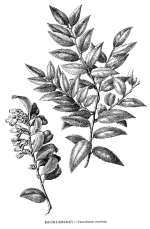
Huckleberry

In her article, “The Thoreau Problem,” Rebecca Solnit begins by drawing our attention to the mythical place that huckleberries play in Thoreau’s writing. In his two most famous texts — Walden and “Civil Disobedience” — Thoreau recounts the story of being taken by the authorities for not paying a tax that would go toward paying for the Mexican-American war. For Thoreau, this war was unjust not because it was an act of violence, as is commonly believed, but because he thought it was little more than a thinly veiled attempt on the part of the American government to take land that rightfully belonged to another nation. His resistance to the war was then similar to his resistance to slavery and to the genocide of native Americans: these things constituted an infringement on the right to self-determination, and further that this infringement was “the work of comparatively a few individuals using the standing government as their tool.” Thoreau writes, in both Walden and “Civil Disobedience,” that when he was released from jail, he went straight to the huckleberry field “to get [his] dinner…on Fair-Haven Hill.” Solnit calls our attention to this repeated story to pose the following question: why did Thoreau consider “the conjunction of prisons and berry parties, of the landscape of incarceration and of pastoral pleasure” significant?

This question seems to me to have two separate but interrelated parts. First, we might want to ask why Thoreau thought to go to the huckleberry field after a night of incarceration in the first place. If you have ever spent a night (or longer) in jail, you will know that such an experience is not pleasant, it is dehumanizing, terrifying, and demoralizing. After such an experience, we might more readily expect Thoreau to go home, take a shower, sleep, or seek out a friend. That he chooses to, almost nonchalantly, go to a huckleberry field should give us moment to pause and consider the significance of this decision. Second, we might want to ask why Thoreau thought to tell us that he went to the huckleberry field after being in jail. He is a deliberate writer—he went through seven full drafts in nearly ten years in the process of writing Walden, and each draft shows an increasing precision in his choice of words, concepts, and structure—and so the choice to include this detail in his account is significant. The fact that he does not end his account of incarceration with his release suggests that for him, there is something significant about placing the experience of being in jail alongside the experience of going “a’huckleberrying.”

Read more »