
Inheritance Tax Is Largely Irrelevant to the Problem of Economic Inequality

by Thomas R. Wells

Source

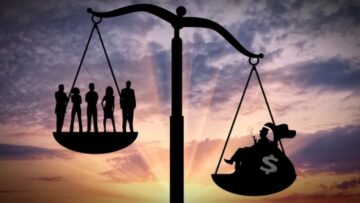
Lots of people think that a few people controlling a very large share of a society’s economic power is a bad thing. It is unfair that some should have so much while so many have so much less. It is inefficient that so much wealth lies in the hands of people who already have everything they could reasonably desire. It gives some people an outsized influence on decisions that affect the whole society, and on democratic politics itself (previously). And so on.

These people often also worry that economic inequality is increasing and becoming entrenched as the rich pass their excessive wealth on to their children and more and more wealth ends up concentrated in ever fewer hands. Many of them think increasing inheritance tax is necessary to stop this. But this solution relies on a mistaken understanding of how wealth is actually transmitted between generations.

Many leftist commentators seem to believe something like the following argument:

Premise 1: Rich people passing on their wealth to their children after they die is an important cause of rising economic inequality

Premise 2: Rising economic inequality is bad

Premise 3: Without higher inheritance taxes economic inequality will continue to rise

Conclusion: Therefore, inheritance taxes should be raised

I accept premise 2, but reject premises 1 and 3 because they are based on significant misunderstandings of how the world actually works. Read more »
Monday, April 20, 2020

Democracy Can’t be Fixed

by Scott F. Aikin and Robert B. Talisse

Democracy is a precious social good. Not only is it necessary for legitimate government, in its absence other crucial social goods – liberty, autonomy, individuality, community, and the like – tend to spoil. It is often inferred from this that a perfectly realized democracy would be utopia, a fully just society of self-governing equals working together for their common good. The flip side of this idea is familiar: the political flaws of a society are ultimately due to its falling short of democracy. The thought runs that as democracy is necessary for securing the other most important social goods, any shortfall in the latter must be due to a deviation from the former. This is what led two of the most influential theorists of democracy of the past century, Jane Addams and John Dewey, to hold that the cure for democracy’s ill is always more and better democracy.

The Addams/Dewey view is committed to the further claim that democracy is an ideal that can be approximated, but never achieved. This addition reminds us that the utopia of a fully realized democracy is forever beyond our reach, an ongoing project of striving to more perfectly democratize our individual and collective lives.

This view is certainly attractive. Trouble lies, however, in making the democratic ideal concrete enough to serve as a guide to real-world politics without thereby deflating it of its ennobling character. Typically, as the ideal is made more explicit, one finds that it presumes capacities that go far beyond the capabilities of ordinary citizens. It turns out that democracy isn’t only out of our reach, it’s also not for us. Read more »