
by Kevin Lively
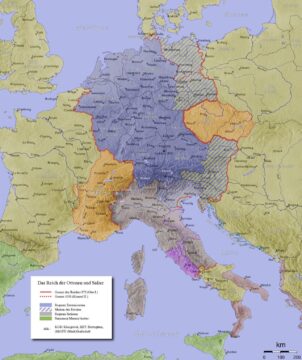
Nietzsche saw it coming early. The Europeans drowned God in the gore of Lotharingia during WWI. They dismembered the body on the Marca Geronis in WWII. They immolated the corpse with a funeral pyre made from human beings during the Holocaust. Purging these residual “ethnic impurities” sealed the millennia of ritualistic slaughter which constituted the history of nation-state formation in Europe from Charlemagne until the modern system of international relations.
With the latest brazen attack by the United States on a sovereign nation in utter disregard for the legal formalism of international diplomacy, the current framework of diplomacy between states is likewise prostrate upon the altar, with another pyre in the making.
The Fading of Past International Orders
The organs of International Law which were instituted after the conclusion of WWII were intended to be the framework in which nation-states non-violently adjudicate disagreements between themselves. Due to centuries of expanding and re-expanding the Marches, by 1945 the empires of Western Europe, the USA and the Soviet Union were in direct control of, or possessed a preponderance of influence over, the bulk of the world’s labor capacity and resources. However, by squinting somewhat, one can see an analogy of limited usefulness between the United Nations and some aspects of the various roles the Catholic Church played for the centuries from about 920 AD until about the Protestant reformation circa the 1520s.
That is to say, the church was a long-lived institutional and cultural supra-structure which transcended the loss of power by any one individual or group of individuals. The Church claimed some universalistic authority over moral approval of conflicts between the various medieval warlords and regional hegemons. Similarly, the UN of course is theoretically invested with the capacity to collectively approve of inter-state war or sanctions under some semi-transparent legalistic process. Read more »

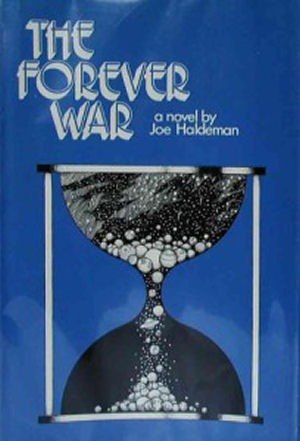 In 1974, noted science fiction author Joe Haldeman published a novel called The Forever War, which won several awards and spawned sequels, a comic version, and even a board game. The Forever War tells the story of William Mandella, a young physics student drafted into a war that humans are waging against an alien race called the Taurans. The Taurans are thousands of light years away, and traveling there and back at light speed leads Mandella and other soldiers to experience time differently. During two years of battle, decades pass by on Earth. Consequently, the world Mandella returns to each time is increasingly different and foreign to him. He eventually finds his home planet’s culture unrecognizable; even English has changed to the point that he can no longer understand it.