
by Gary Borjesson
In 1956 when this work was begun I had no conception of what I was undertaking. At that time my object appeared a limited one, namely, to discuss the theoretical implications of some observations of how young children respond to temporary loss of mother. —John Bowlby (opening sentence of his seminal book, Attachment, 1969)
Note: I always disguise the identities of patients discussed in my writing.

A patient described the dramatic dance he was in with his longtime partner as “go away closer.” She’d be warmly attentive, which drew him closer; but as soon as he stepped in, she would step back. He asked whether she wanted to go to a concert, and she was enthusiastic. But after he’d bought tickets, she made excuses and suggested he invite a friend instead. Confused and hurt, he’d move away, partly to protect himself but also to punish her. Paradoxically, this seemed to attract her. And the dance would begin again. He felt as if she were gaslighting him, but he knew she wasn’t, or at least not consciously.
Attachment theory offers an explanation of such primitive (unconscious and instinctive) relationship dynamics. Attachment patterns, shaped by early interactions with caregivers, are impressively durable: Secure versus nonsecure patterns discernible by 12 months of age correlate with adult attachment behavior roughly 50% to 60% of the time.
In this essay I offer an overview of attachment, an increasingly influential lens through which to understand how we relate to others—and who we are. For our “self” is fundamentally relational, just as our brains are fundamentally social. We become our selves through engaging with the world, and attachment science reveals how our early experience disproportionately affect who we become and how we relate.
In one way of looking at it, attachment theory describes how our early interactions with caregivers get internalized as a collection of patterns that form our initial sense of who we are—how lovable, fearful, emotional, outgoing, smart, capable, curious, social, etc. It’s no wonder that attachment patterns are strongly correlated with personality types. (Attachment patterns develop first, stabilizing by around age two, while personality traits stabilize progressively from adolescence through about age 30.)
The behavior of my patient’s partner suggests a more disorganized attachment pattern, and a more borderline personality. But since it takes two to tangle, my patient’s behavior, as he came to see, tended toward an avoidant pattern, and he inclines to a more narcissistic personality. (Paradoxically, an avoidant attachment pattern correlates more with a narcissistic personality than an avoidant personality.)
You might worry I’m too quick to diagnosis someone I haven’t even met, but in fact I’m observing and pointing in a direction, not diagnosing. To think clearly about attachment and personality we need first to make a distinction missed in much of the popular conversation about these. Attachment and personality are dimensional, not categorical: they admit of degrees, rather than falling into all-or-nothing categories—like whether you’re alive or dead. Thus, each of us falls somewhere on a continuum (or continua to be precise). Take the “big five” personality assessment, OCEAN. This acronym stands for five traits that compose personality. Thus each of us falls on continua of more or less Open, Conscientious, Extroverted, Agreeable, or Neurotic.
When a psychotherapist observes a pattern of drama in a person’s life and relationships, we may say that person presents with a borderline flavor without suggesting there’s a disorder. For again, we are not pointing to a box but to a region on a continuum. In the case of my patient and his partner, both likely have nonsecure attachment patterns, but neither has a personality disorder. It’s worth noting that having a nonsecure attachment pattern does not imply a personality disorder; but if you have personality disorder, the evidence suggests it’s likelier than not that you have a nonsecure attachment pattern.
Heritable factors such as genetics, epigenetics, and temperament contribute, along with early childhood experience, to forming our default patterns of attachment, personality, and relationships. Since these are the waters we are swimming in by the time we’re old enough to reflect on ourselves, my patient was right that his partner’s “crazy-making” behavior was not conscious. Nor, for the most part, were his own contributions. Their dance was an “enactment,” playing out parts and adaptive strategies largely established by the time they were three. For better or worse, so are most of us, most of the time.
This brings me to another common misconception, that attachment patterns and personality are inflexible. To the contrary, these can and do change across the lifespan, if only by degrees. With conscious attention, most of us can in principle shift where we are on the continua. We can change our sense of self and thus the way we’re sensed by others. We can shift from a nonsecure to secure attachment pattern. Like my patient and his partner, we may always be a little dismissive-avoidant or disorganized side, but he can move toward more connection and she toward less drama.
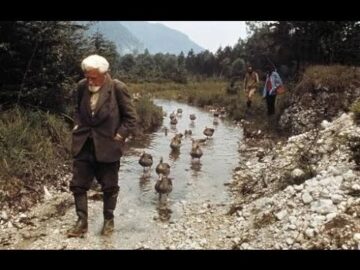
Still another common source of misunderstandings about attachment is failing to recognize that its truths are true “for the most part.” Aristotle often pointed this out about claims made in the domains of biology and psychology. For he knew that as soon as he defined human beings as “the animal with the logos” (speech or reason), some clever naysayer would point to a speechless irrational person—as if this refuted his claim! (As a recovering academic, I know the type all too well.) So Aristotle adds the caveat “for the most part” to acknowledge the complex, changeable nature of embodied, living things. Thus, for the most part: humans have speech and reason; goslings imprint on geese; by 30 our personalities and character are highly stable; and children with nonsecure attachment patterns grow up to be adults with nonsecure patterns who raise children with nonsecure patterns.
The Idea of Attachment
Attachment behavior expresses a deep truth about our lives and fate: we need each other if we are to become who we are, and flourish. Our very power to speak and think, to have a self and know it, develops only through relating.
John Bowlby‘s core insight is that seeking proximity and attachment is a primary drive across the lifespan. Curiously, it was precisely this insight that was initially rejected by establishment psychologists, Freudians and behaviorists alike. Their view was that attachment behavior is a secondary (conditioned) drive that serves the primary drive of securing nourishment. As they saw it, the baby seeks proximity and is distressed in its absence because it associates caregivers with nourishment. But Bowlby was right, as the work of Harry Harlow and Konrad Lorenz, among others, soon proved. (I wrote about Harlow’s devastating experiments in a column for 3QD, Getting In Touch.)
It’s not that seeking nourishment doesn’t inform attachment—again, we’re talking about complex multidimensional phenomena—but it’s clearly not the primary driver of attachment behavior. What, then, are the main motivations driving attachment behavior?
Bowlby explored two main ideas. First, because infants and the young are so vulnerable, being in proximity provides protection against predators, intraspecies aggression, accidents, etc. Second, being in proximity provides chances for learning and adapting to the environment. We’re social animals capable of a profound adaptation to our world—to the specific language and caregivers and community in which we must survive and find our way. But we can only learn if others are nearby, to listen to, interact with, imitate, play and experiment with, be educated by. These two motivations, Bowlby hypothesized, helped explain why attachment behavior was persistent across the lifespan. For a social species like ourselves, good attachments provide safety and chances to learn at all ages.
Early on, attachment research by Bowlby and Mary Ainsworth focused on distinguishing the behaviors of young children and their caregivers when they are together; when separating; while separated; when re-uniting; and while together again. In the 1980s, Mary Main and colleagues developed the Adult Attachment Interview (AAI), which provides a systematic, empirically validated method for assessing adults’ representations about their childhood attachment relationships. The AAI predicts parenting behavior and what attachment patterns are likely to be formed with their children. It also made possible the aforementioned correlation between infant- and adult attachment patterns.
Since Bowlby died in 1990, the science of attachment has continued to mature, with contributions from many fields. The research is helping us understand the deeper foundations of attachment, personality, and trauma—and their intergenerational transmission, for better and worse.
A Field Guide to Attachment Patterns
Researchers have identified four main patterns. Adapting Tolstoy’s famous opening sentence that ‘all happy families are alike,’ we can say all secure attachment is alike, a pattern unto itself. But each nonsecurely attached person is nonsecure…in one of three main ways. As you read this overview of the four main patterns, notice which resonate for you.
Secure Attachment (roughly 60% of children)
The caregiver functions as secure base for child. Safe when together, tolerably distressed when absent; easily soothed upon return. Imagine your initial experience of being in the world is safe: wants and needs are met, or when they’re not, the distress is tolerable. As an adult, you’re likely to be emotionally regulated, comfortable with intimacy and autonomy, equally able to seek support and provide it. You can tolerate conflict and ruptures without losing (or confusing) your sense of self.
Anxious-Ambivalent/Preoccupied (roughly 20%)
Caregiver does not function as a secure base. The child is clingy and distressed even when caregiver is present; upset during separation; and not easily soothed upon reunion. The child may express anger mixed with comfort-seeking. As adults, they tend to crave closeness but worry about their partner’s availability and love. They may be hypervigilant and reactive when there’s a threat or rupture in relationship, and have difficulty self-soothing when distressed.
Avoidant/Dismissive (roughly 15-20%)
The child appears indifferent to the caregiver’s presence or absence; doesn’t seek comfort when distressed; and “seems” to self-regulate. However, physiological measures show that in fact they’re quite stressed. As adults, they typically value independence over intimacy, may struggle to access or express emotions, and often view others as unreliable. Early experience taught them that emotional needs are better managed alone. (Resonates for me.)
Disorganized/Fearful-Avoidant (roughly 5-10%)
In caregiver’s presence the child exhibits contradictory behaviors—approaching then avoiding, freezing, or other incoherent responses. (Epitomized in “Go away closer” or “I hate you! Don’t leave me!”) This pattern often develops when caregiver is the source of both comfort and fear (usually because of caregiver’s own mental-health struggles). As adults, this type may struggle with emotional regulation, simultaneously craving and fearing intimacy, and behaving unpredictably in relationships. Borderline personality is correlated with this pattern.
Perhaps you noticed identifying with one more than the others, and with some or all of them—depending on circumstances. This variability doesn’t mean we’re crazy, it means we’re psychologically flexibility, which is adaptive. It’s good to be able to read the room, and respond differently depending on the circumstances. Often we shift strategies unconsciously, avoidant with some, ambivalent with others, and secure with a few. That being said, for the most part we have our patterned way of being with others.
Earned (Social) Security
Those who didn’t have the good fortune of forming a secure attachment early in life have reasons to hope we can change, or “update our priors,” as the Bayesians would say. Attachment researchers coined the term “earned secure” to describe those who have moved from a nonsecure pattern to secure one. This is not something we can do alone, by reading books or meditating. We need others to get close to and move away from, to love and hate, to experience rupture and repair with—to dance with. Our priors get updated by examining, and gradually changing our behavior, thoughts, and feelings according to what we learn from engaging with others, whether in marriage, friendship, therapeutic alliance, or other attachments.
My patient and his partner provide an example of the the effort by which we earn a more secure attachment pattern. To counter his avoidant pattern, he started initiating difficult conversations with his partner. He had habitually avoided communicating his hard feelings to her because he (rightly!) recognized doing so might lead to yet more hard feelings and conflict—even to being hated or rejected. Which of course are precisely the experiences he has a lifelong habit of avoiding! For, in his childhood, conflict was never resolved, but at best forgotten. His partner’s work, on the other hand, was to become aware of her own erratic moods and behavior, get curious about what was driving them, and make an effort to be more (stably) available for difficult conversations. (By the way, all of this was easier for her to do once he started giving her feedback, and was able to receive it himself.) Together they were learning how to have good fights that lead to more understanding and intimacy rather than resentment and alienation.
Research suggests it can take anywhere from one to ten years to “earn” secure attachment. One benefit of longer-term therapy is that it can provide a safe, regular and reliable relationship that provides a corrective emotional experience in its own right. As importantly, therapy provides consistent occasions for learning, exploring, and examining effects of new ways of being with others. Because love is an embodied art, it’s not enough to have insight. Changing an attachment pattern requires the sort of conscious and frequent practice that becoming skilled at any art or craft does. As my patient practiced, he moved along the continuum, becoming less fearful of confrontation and conflict. He wryly said to me that he was never going to be “conflict eager,” but he was becoming more “conflict willing and able.”
As someone who’s been migrating out of the avoidant range myself, I support patients recognizing and challenging their unconscious expectations, formed in childhood, about who they are and how relationships work. My patient needed to update his priors, which were that conflict leads only to disappointment or disaster. For the most part, when those with nonsecure patterns examine our expectations, we find they are outdated. Circumstances have changed. We’re not so helpless now, and our partner is not dangerous (mostly).
Ideally, instead of stepping in with tickets only to be pushed away, he can step in and be met with a partner who can communicate their authentic yes, no, or maybe—without him feeling jerked around. If it’s a ‘no,’ he can learn to tolerate the distress and, therefore, not avoid stepping in again. Or, if the distress is intolerable, he can talk with her, and me, about it, getting help with difficult feelings rather than trying to metabolize them by himself–as his avoidant pattern had encouraged him to do in the past.
Secure attachment can be viewed as a mature kind of love. Love that recognizes (contra Eros) that there is no final merging, no full possession of the other. Regrettably, the other remains other, insistent upon living their own lives! To recognize this is to recognize that those we love are free in their own right. When we’re securely attached, we can love them, tolerating their freedom to say yes or no to us, tolerating comings and goings without becoming overly distressed. For experience has taught us that we’re safe, and to trust that we can reconnect and repair, if needed. (For the most part.)
***
Enjoying the content on 3QD? Help keep us going by donating now.