3 Quarks Daily Is Looking For New Columnists

Dear Reader,

Here’s your chance to say what you want to the large number of highly educated readers that make up 3QD’s international audience. Several of our regular columnists have had to cut back or even completely quit their columns for 3QD because of other personal and professional commitments and so we are looking for a few new voices. We do not pay, but it is a good chance to draw attention to subjects you are interested in, and to get feedback from us and from our readers.

We would certainly love for our pool of writers to reflect the diversity of our readers in every way, including gender, age, ethnicity, race, sexual orientation, etc., and we encourage people of all kinds to apply. And we like unusual voices and varied viewpoints. So please send us something. What have you got to lose? Click on “Read more »” below…

NEW POSTS BELOW THIS ONE

Read more »

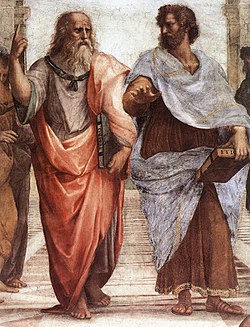
Raphael’s School of Education

by Scott Samuelson

Raphael, School of Athens (1509-11). Detail of Plato and Aristotle. Click here to see the whole image.

Once I’ve hung a picture on the wall, I pretty much never look at it again. It goes right from the forefront of my mind to the background of my room. It’s only when a guest comments on it that I bother to see it again.

A similar thing can be said for iconic works of art. We see them so often that we don’t bother to look at them anymore. A good example is Raphael’s School of Athens, especially its central scene of Plato and Aristotle in conversation. It’s used to illustrate pretty much every article concerning philosophy in the popular media. When we see it, we think “philosophy” or maybe “classics” and move on.

Art historians aren’t much better. They love the game of guessing who each figure in the School of Athens is modeled on or is supposed to represent. Instead of seeing “philosophy,” their great advance is to see “Michelangelo” and “Heraclitus.” As fun and minorly informative as the guessing game can be, it still sees the painting as a cheap allegory.

I started taking a fresh look at the School of Athens when I had to teach it as part of a study abroad course to Rome. The more I looked at it, the more I started to see it as a compelling and comprehensive philosophy of education. To my surprise, I’ve found that it illustrates the complexity of what I aspire to as a teacher. Read more »

America’s Imperial Boomerang Era

by Mindy Clegg

The late Renee Good right before she was killed by an ICE agent.

Just a scant few days into the new year and our supposedly anti-war peace president has greenlit what some are calling an unprecedented attack on another country: we bombed Venezuela, killing up to 40 and kidnapped their sleeping president and his wife (who apparently got roughed up in the process). They are currently sitting in a jail cell in New York City facing drug and weapons charges. Some people are shocked (just SHOCKED) that a man who ran on ending our endless wars is presiding over such a brazen intervention into the affairs of a foreign country. Those who believed Trump would not use American military might in the same way as his predecessors… well Jamelle Bouie has something to say about that:

One thing to remember about the far right is that they lie about almost everything except the most cruel things they have planned. The language of the MAGA movement on both the people and countries of Latin American have long been cruel, jingoistic, and violent. Imperialism is nothing if not those very things. While Trump’s openly violent language and some of his foreign policy actions seem out of step with previous post-war and post-Cold War presidents as they soften the realities of the American imperialism, they are not entirely out of step with our imperial history. What we’re seeing is an attempt to return to more naked forms of imperialism, rather than the somewhat softer imperialism of the Cold War. To understand our present Trumpian moment, we need to understand a couple of facts. First, that America is and has been an imperial power and second, that imperialism takes on many forms, some softer than others. Possibly, the very real damage being done by this destructive administration will make clear American imperial history. But that will necessitate people understanding the nature of American imperialism historically and just what we mean by Trump’s specific version of American imperialism. Read more »

Perceptions

Sughra Raza. Bey Unvaan. January, 2026.

Digital photograph.

On the Pulse of Morning

by Maya Angelou

A Rock, A River, A Tree
Hosts to species long since departed,
Marked the mastodon,
The dinosaur, who left dried tokens
Of their sojourn here
On our planet floor,
Any broad alarm of their hastening doom
Is lost in the gloom of dust and ages.

But today, the Rock cries out to us, clearly, forcefully,
Come, you may stand upon my
Back and face your distant destiny,
But seek no haven in my shadow,
I will give you no hiding place down here.

You, created only a little lower than
The angels, have crouched too long in
The bruising darkness
Have lain too long
Facedown in ignorance,
Your mouths spilling words
Armed for slaughter.

The Rock cries out to us today,
You may stand upon me,
But do not hide your face.

(Excerpt; more here)

Enjoying the content on 3QD? Help keep us going by donating now.

Monday, January 12, 2026

The Minotaur is Patient: a Schizothemia

by TJ Price

It’s a few days before Christmas, but it doesn’t feel like it. The weather app I use has subtitled the forecast for the holiday with a cheeky “feels more like Spring than Christmas,” and the temperature is hovering around seventy degrees Fahrenheit. I’m visiting family down in Cape Fear, and my nephew, all of four years old, sits rapt and silent for approximately ten minutes before abruptly transforming into a firecracker of noise, babbling and shrieking, a whirligig that hurls itself at the legs of whoever happens to first verify his existence. I’m probably reading into it, but it looks for all the world to me like a sudden paroxysm of solipsistic terror—as if he has been seized by the irrational and intrusive thought that (despite the empirical evidence of nearby voices and bodies moving to and fro in the kitchen) he is feeling a kind of doubt in his own ability to adequately integrate with the rest of us. 

I understand this feeling, I think. As a child, my family would bring me over to my grandmother’s house and conduct conversations that floated austerely over my head. Sometimes that height was intentional, positioned as such because they wanted it out of my reach, like the medicine they kept on the top shelf of the bathroom cabinet. Sometimes it was because they wanted to abstract complexity to the extent that it would befuddle me and discourage any continued questioning. (The joke was on them—more often than not, such behavior would only deepen my urge to decode those encryptions, even if it often led to frustratingly reductionist statements in the form of tautology like “because that’s just how it is.”) I felt the terror of being excluded then not because something secret held any kind of promise or hope, but rather signified the coming of a threat against which I was unable to prepare. If I could not have defenses mounted to face obvious menaces, how could I be on guard against proverbial Greeks bearing gifts?

Read more »

Numbers, Percentages, and Hyperbole – Trump Is a Poster Boy for Innumeracy

by John Allen Paulos

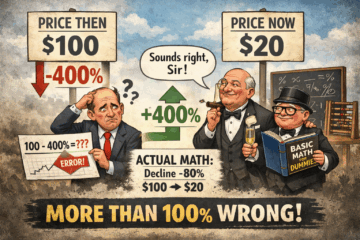
Oy. Where to start? Let me begin with a recent abuse involving percentages. Trump’s absurd claims about price declines of more than 100% have elicited a lot of well-deserved derision. How could someone with an undergraduate degree in business from Wharton make these mathematically impossible claims?

And why would the billionaire Commerce Secretary Howard Lutnick attempt to show that Trump’s claims might be made to look rational. That’s an easier question. Toadyism.

Lutnick’s effort is a laughable, but perhaps superficially appealing “explanation” for claims about percentage declines of more than 100%

Here’s a cleaned up account of the mistake: Say an item sells for $100 at a given point, but for whatever reason after some time it sells for $20. Consumers at the later time, would be right to note that for the $20 price to rise to its earlier price of $100 it would have to rise by 400%.

Now an innumerate politician who might be supported by a rich yes man would be quite wrong to claim that at the later time the price had declined by 400%. That, of course, remains nonsensical (it declined by 80%), but it is perhaps a compelling conclusion for those whose knowledge of basic math is on a par with their fluency in Kazakh. Read more »

Poem by Jim Culleny

I am Hawk

I ride a thermal, wind-lifted under sun
which I think must be eternal, I fly!
I’m on my breakfast glide, I am beauty,
but infernal to who in open fields might run

I’m soaring on the wind
I’m searching like a drone
I’m laser-eyed, I hunger.

You watch me glide alone in sky
You watch me slide and circle
You watch me take a sudden dive
You watch me pull in wings and hurtle
like a spear to kill; only though, to keep
myself alive. In that I’m not like humans
who
also so kill for power,
and gold, and,
 pride.

Jim Culleny 4/17/22

Enjoying the content on 3QD? Help keep us going by donating now.

Sunday, January 11, 2026

Restless Bones: How Our Treatment of Human Skeletons Reveals the Politics of the Body

by Amir Zadnemat

In almost every medical school in the world, there is a cupboard—or a quiet back room—full of bones. The skulls are numbered, the femurs stacked like firewood, the ribs threaded onto metal wire. Officially, they are “teaching aids”. Unofficially, they are the remains of actual lives, reduced to objects that can be ordered from a catalogue.

We are used to this sight in photographs and films. The skeleton in the anatomy lab is so familiar that it has become a cliché. But if you pause for a moment, a much more disturbing question emerges: how did those bones get there, and what does their journey say about the way we value—or fail to value—human bodies?

The answer is not only a matter of medical history. It is a window onto something larger: the politics of who is allowed dignity, who becomes “material” for science, and whose remains can be moved, displayed, or even sold without much public concern. To look closely at the skeleton is to see, beneath the neat language of progress, a long story of power.

From memento mori to medical specimen

For most of human history, bones were not neutral. They were sacred relics, moral warnings, or traces of the dead who still had a claim on the living. Medieval European churches were filled with skulls and femurs carefully arranged into chapels of bones. Their purpose was not scientific. They were there to remind the living of their own mortality—memento mori—and to keep the dead within the orbit of the community. Read more »

12 Classic Novels That Made Me A Better Writer

by Eric Schenck

2025 was a good year for books. 

One of my New Year’s Resolutions in 2025 was to read a classic novel each month of the year. And I’m happy to say I succeeded.

While I’ve learned quite a bit from these books, one of my “meta goals” with the resolution was to become a better writer. And I think I have. Below you will see each of the 12 books I read, and the main lesson that each book taught me.

Want to get better at writing? Curious what some of the best novels ever written can teach you about it? This article is for you.

A few notes before I start:

  • I tried to include a mix of nationalities, genders, and “era written” in my picks. Are these the 12 best books of all time? I don’t know. But they are a good mix. You might disagree. And that’s alright.
  • My interpretation of these books (and the lessons I took from them) are mine alone.
  • I’ve tried not to include any spoilers. 

With that out of the way-

Let’s get better at writing. Read more »

Making the Invisible Visible: Plato and Jung on Archetypes

by Gary Borjesson

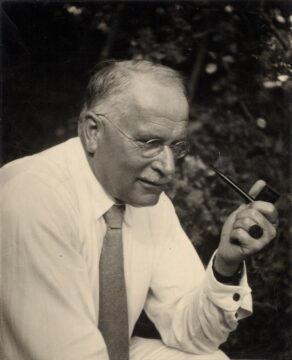
Carl Jung, c. 1935

It is the first week of the new year, a time traditionally given to reflecting on the year past and the year to come. Reviewing, summing things up—all those top 10 lists—and making resolutions. Having slowly gained more knowledge of what is stable in my disposition (for better and worse), I’m less tempted to dream of radical reinvention or even self-improvement. Depending on my mood, this can feel like self-acceptance or defeat.

One way of describing the situation is to say that I’m getting to know what Carl Jung described as the archetypal aspects of my psyche. Jung acknowledged that his account is a paraphrase of Plato’s description of the psychic patterns that structure our experience. For Jung these emerge from the collective unconscious, a realm beyond immediate conscious awareness. Plato’s Socrates locates them in an analogous place, the Underworld. These archetypes guide our lives in some respects, but they’re not the only forces at work. For Socrates and Jung, we exercise our power to be truly self-determining through getting to know the patterns that guide our lives, but do not determine our fates.

In honor of the birth of a new year, I want to share the story Socrates tells at the end of the Republic, about how souls come to choose the lives into which they’ll be reborn. For those familiar with depth psychology, this myth of Er (as the story is called) will be strikingly resonant.

A friend once told me he’d spent years trying to make himself into a scholar, and by the world’s eyes he had succeeded. But it never felt like a fit to him. Eventually he realized that, whatever his conscious intentions, he had the instincts and desires of an artist. (His academic articles kept wanting to become stories!) Denying this part of himself had generated internal conflict. So, rather than work against his natural wiring, he started finding ways to be an artist in his work and life. Read more »

Friday, January 9, 2026

Personhood, Virtual Wantons, and Online Bullshit

by Rachel Robison-Greene

We spend much of our lives—perhaps more time than we realize—interacting with non-persons online. We ask for help from artificial customer service representatives. Some of us accept friend requests from bots and are, thereafter, influenced by the content they post. This is a momentous change to the nature of the public square. For most of human existence, discourse occurred between persons. That is no longer true. Philosophers spend much of their time thinking about whether it will ever be possible for artificial intelligence to be conscious. For many purposes, however, the question of whether artificial intelligence exhibits or could ever exhibit personhood is a much more important question.

The philosopher Harry Frankfurt has much to say about what it is to be a person. Persons are beings who use their second order volitions to guide their first order desires. To see how this works, consider the case of a woman who desires a slice of cake. Suppose that she is avoiding sugar. Accordingly, she has a second order desire to refrain from eating the cake. When she is successful in getting her second order, reflective desires and volitions to guide her first order desires, she exhibits personhood. That is, when she does what she wants to do because the wants to want to do it, her will is free and she acts as a person. A being that never used second order desires to guide first order desires would be what Frankfurt calls a wanton. Frankfurt imagines a wanton as a being who merely acts as their impulses dictate, never reflective on whether they’d like those impulses to be different or whether they should attempt to modify their impulses. He says,

I shall use the term “wanton” to refer to agents who have first-order desires but who are not persons because, whether or not they have desires of the second order, they have no second-order volitions. The essential characteristic of a wanton is that he does not care about his will. His desires move him to do certain things, without its being true of him either that he wants to be moved by those desires or that he prefers to be moved by other desires. (Frankfurt 1988, 16)

Frankfurt offers non-human animals and very young children as examples of wantons, acknowledging that there may be others. This new virtual type of wanton isn’t a being swept away by impulse. The “first order impulses” of an algorithm are simply to do what it is programmed to do. There is nothing seductive or addictive about these impulses that make them irresistible. The impulses simply must be unreflectively followed. This makes the virtual wanton a special kind of hazard in the public square. Read more »

“By The Book” — My Way

by Barbara Fischkin

Since its debut in 2013, I have been a fan of “By the Book,” a “Q and A” feature, in The New York Times Book Review. Google AI describes it as a look into “select authors’ reading habits and favorite books.” I’d always been so eager to read the text, that it was only recently I noticed the pun in the title. A word play on a phrase I had used umpteenth times to push sales, after the first of my three books was published in 1997. Duh.

Late last year one of those “select, authors did a slight stumble over the often-posed question about who to invite to a literary dinner party. He said he had been reading the feature for years—which I took as a big hint that he had long hoped to be a subject one day. I don’t know any writers who wouldn’t jump at the chance, myself included.

For me, one major problem: My last book was published in 2006, seven years before this feature appeared. Like many writers, my heart and soul are joyous about my successes yet tainted with bitterness and blame. In regard to my lack of a fourth book, I blame the editor—and supposed friend—who refused to acquire an in-depth look at the children of the autism surge growing into adulthood, as was my elder son. A similar tome, written by Washington insiders, was a Pulitzer prize finalist. With a little less bite, I blame the handful of non-writers with great stories, who chickened out when it came to partnering with me to write their books. To be fair they did this after editing, book proposals and early chapters were written—and after they paid me for my work. But when it came to publicly telling their stories, they got cold feet.

Most of all, though, I blame my current obscurity on myself and on a manuscript-creature titled The Digger Resistance. My yet unborn historical novel. Read more »

The Literature of Limits (Part III): Islamicate Encounters with Threshold

by Muhammad Aurangzeb Ahmad

Fatimah Masumeh Shrine

In the last two parts we have discussed encountering the boundary of reason as fracture, and dissolving the boundary altogether. Now we talk about the Islamicate intellectual tradition and how it addresses this threshold. It cultivated a disciplined attentiveness to what appears when knowing falters i.e., a state not of confusion, but of reverent disorientation.  In Islamic philosophy and Sufism, the limit of reason is not a catastrophe. It is a disclosure. To reach the boundary of thought is not to exhaust truth. The limit is meant as an opening, it could be outward, inward, upward. Reason could fail but the state of bewilderment that it entails discloses meaning. This orientation reshapes the very role of language, philosophy, and art. No figure articulates this vision more fully than the Spanish Muslim thinker Ibn Arabi. Writing in the thirteenth century, he developed a metaphysics of extraordinary subtlety while insisting, relentlessly, that the Real forever exceeds the structures built to approach it. For Ibn Arabi, reality is not something to be captured but something to be mirrored. The Infinite discloses itself only through finite forms, and those forms are never final. Meaning does not culminate in certainty, it unfolds endlessly through interpretation.

Thus encountering the infinite may lead to paradoxes but they are not meant to be states of failure. Such encounters may even constitute an epistemic virtue!  This metaphysics became foundational to Sufism as a lived tradition. Across its many orders and practices e.g., dhikr (remembrance), audition, ethical refinement, disciplined retreat etc the same insight recurs: the self is not annihilated to erase difference, but trained to become permeable. Knowledge is relational. Presence matters more than possession. The limit is not crossed by force, but inhabited with care. In Islamic metaphysics the world is a continuous act of divine self-disclosure (tajalli). Each form is a partial unfolding of an inexhaustible reality. Infinity does not lie beyond the finite; it is enfolded within it. The limit is not where reality ends, but where it becomes legible. Besides Ibn Arabi we see meditations on limits and infinity in the works of thinkers like Suhrawardi’s hierarchies of light to Mulla Ṣadra’s dynamic being, from al-Razi’s interpretive abundance and al-Biruni’s pluralistic cosmology. Read more »

Thursday, January 8, 2026

Deepfake porn is not going away, so we should find a way to live with that

by Thomas R. Wells

In a world in which anyone can create fake sexually explicit images of anyone else, we should not be surprised when it happens, and we should not get especially upset if it happens to us.

Synopsis of my argument

Premise 1: It is now trivially easy to use a generative AI image apps to produce realistic looking deepfake nudes and explicit pornographic videos of anyone without their consent

Premise 2: P1 is, or should be, common knowledge (everyone knows it, and that everyone knows that everyone knows it)

Conclusion 1: Therefore, everyone knows that everyone knows that sexually explicit pictures of non-porn stars are almost certainly deepfakes created without that person’s consent

Premise 3: Privacy is the right to be mysterious to others: to determine for yourself what different people know, or think they know, about you.

Premise 4: If the deepfake images circulated of you were considered real by those friends and strangers who might find them then that would be a grave violation of your privacy and it would be reasonable to feel very upset about it

Premise 5: However, by C1, everyone knows that everyone knows that these sexualised images are not real

Conclusion 2: Therefore, it is not reasonable to get upset about finding deepfake nudes of ourselves circulating on the internet. The correct response is more of a shrug. Read more »

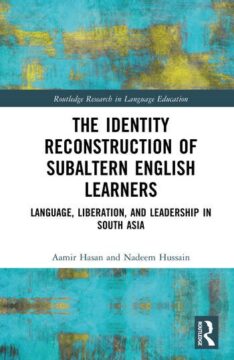
From Anglicists and Orientalists to English-medium and Urdu-medium: Review of “The Identity Reconstruction of Subaltern English Learners”

by Sauleha Kamal

“This is the mentality of our society. If someone is speaking English, he or she is really good, he or she is from a very good background,” one subaltern English learner tells the researchers in this study. “When someone speaks good English, Shah says, people assume that person is educated, knows how to carry himself, and is, crucially, ‘a good person’,” notes another.

The Identity Reconstruction of Subaltern English Learners by Aamir Hasan and Nadeem Hussain is an ambitious book that draws on a qualitative study of language learners in South Asia to make connections between social mobility, leadership development and English acquisition. Through this data, and a detailed theoretical and historical analysis of the position of English in South Asia, it endeavors to fill a crucial gap in the area of English studies.

English occupies a distinctive place in former British colonies, and in South Asia in particular. Its significance extends to everything from communication to shaping access, credibility, and self-perception in ways that are difficult to disentangle from class. This book takes that relationship seriously, treating English as a social determinant whose effects are felt across education, leadership, and everyday dignity. In doing so, it offers a careful and largely persuasive account of how this language mediates power in the region. Read more »

Wednesday, January 7, 2026

3 Quarks Daily Is Looking For New Columnists

Dear Reader,

Here’s your chance to say what you want to the large number of highly educated readers that make up 3QD’s international audience. Several of our regular columnists have had to cut back or even completely quit their columns for 3QD because of other personal and professional commitments and so we are looking for a few new voices. We do not pay, but it is a good chance to draw attention to subjects you are interested in, and to get feedback from us and from our readers.

We would certainly love for our pool of writers to reflect the diversity of our readers in every way, including gender, age, ethnicity, race, sexual orientation, etc., and we encourage people of all kinds to apply. And we like unusual voices and varied viewpoints. So please send us something. What have you got to lose? Click on “Read more »” below…
NEW POSTS BELOW THIS ONE

Read more »

Decisions, Decisions

by Barry Goldman

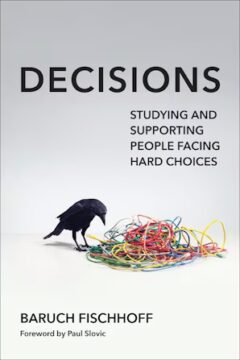
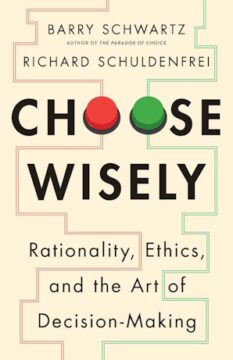
Two books came out recently in the field of decision-making. Baruch Fischhoff published Decisions: Studying and Supporting People Facing Hard Choices, and Barry Schwartz and Richard Schuldenfrei published Choose Wisely: Rationality, Ethics, and the Art of Decision-Making. The two books take very different approaches. In a word, Fischhoff represents the science of decision-making. Schwartz represents the art.

We are all in favor of rational decision-making. We want public policy decisions to be made by reasonable people following orderly procedures designed to give appropriate consideration to relevant factors and to maximize the probability of success. How could we possibly not want that? And the same is true of personal decisions. We may not have the patience or the attention span to work through the literature and pick the best health insurance plan for our family. But we have to agree it would be better if that choice were made on some rational basis rather than randomly or on the basis of the relative attractiveness of the models in the company brochures. We may conclude that any improvement in health insurance coverage is not worth the effort required to identify it. That’s fine. Some decisions are not worth thinking about. But even the decision that something is not worth thinking about is better if it is made according to some rational process.

At the same time, there is a false precision conveyed by the matrix of factors, weights and probabilities involved in rational choice theory. And there is something missing. If you’re trying to decide whether to uproot your family and move across the country or whether to start a war with, say, Venezuela, an algorithm and a spreadsheet are not what you need. As the saying goes, not everything that counts can be counted, and not everything that can be counted counts.

Baruch Fischhoff was present at the inception. Amos Tversky and Daniel Kahneman jointly advised his dissertation. He was at Hebrew University in Jerusalem with Kahneman and Tversky when they began creating the universe of judgment and decision-making, biases and heuristics, and what became behavioral economics. His name is most closely associated with hindsight bias, our tendency to think we knew it all along and to be “insufficiently surprised” by events. For the past 50 years Fischhoff has been applying Bayesian inference, game theory, measure theory and signal detection theory to an extraordinary array of real-world decision problems. Read more »

Panorama

by Derek Neal

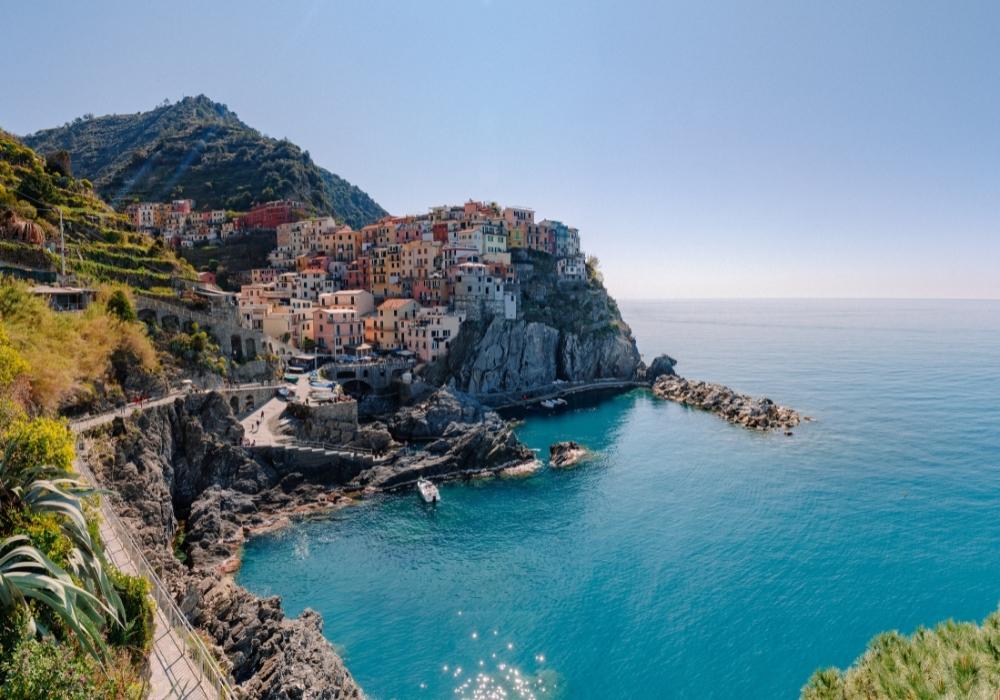
The town had only one grocery store, and Steve wondered where the locals did their shopping. Certainly not here, but perhaps in a supermarket outside of town, one that required a car. Along with Julia, he picked up some Italian cheese, prosciutto, grapes, and a bottle of local wine, and they made their way up the hill to the house they’d rented for the week.

The two friends from college were proud of themselves. They weren’t staying next to the sea with the rest of the tourists, but in a different village altogether, one that required a short bus ride and where no other passengers got off. In the village, the few streets that existed were carved into the hillside, each one so narrow that they were forced to walk behind one another, instead of side by side.

It had been a long day, and they felt they deserved to indulge. They’d gone hiking high above the town, starting early and rising with the sun. The trail followed the curve of the hills, the open sea to one side, vineyards to the other. What lay before them not visible beyond a few yards. They heard fellow hikers before seeing them, but rarely was any Italian heard. When two groups passed each other, each group always smiled and let out a garbled “Buongiorno,” before reverting to their respective languages. Steve complied and mumbled “Ciao” a few times, but soon he began to feel like an imposter, playing at being Italian, or playing at being whatever it was people thought being Italian meant, and he resigned himself to nodding politely in response to the other travelers. Read more »