
by Muhammad Aurangzeb Ahmad
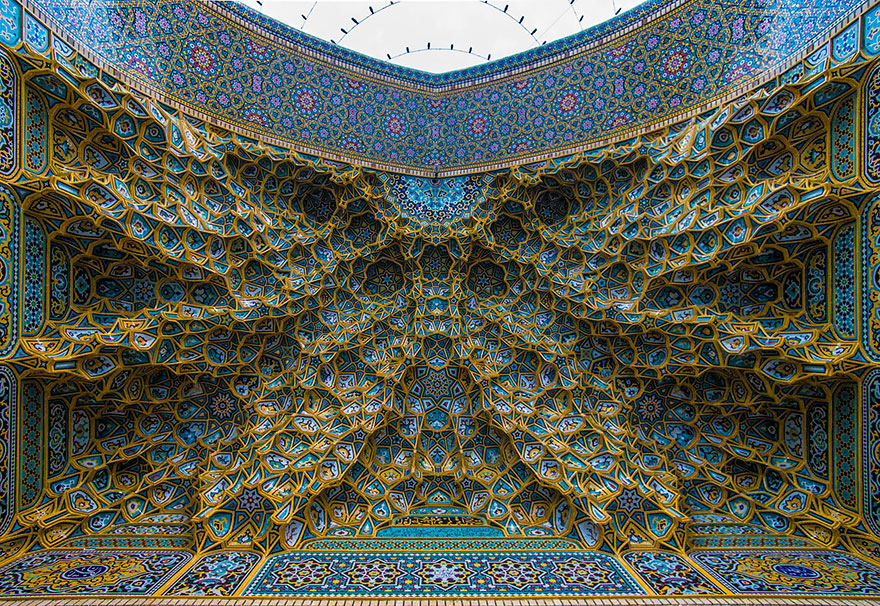
In the last two parts we have discussed encountering the boundary of reason as fracture, and dissolving the boundary altogether. Now we talk about the Islamicate intellectual tradition and how it addresses this threshold. It cultivated a disciplined attentiveness to what appears when knowing falters i.e., a state not of confusion, but of reverent disorientation. In Islamic philosophy and Sufism, the limit of reason is not a catastrophe. It is a disclosure. To reach the boundary of thought is not to exhaust truth. The limit is meant as an opening, it could be outward, inward, upward. Reason could fail but the state of bewilderment that it entails discloses meaning. This orientation reshapes the very role of language, philosophy, and art. No figure articulates this vision more fully than the Spanish Muslim thinker Ibn Arabi. Writing in the thirteenth century, he developed a metaphysics of extraordinary subtlety while insisting, relentlessly, that the Real forever exceeds the structures built to approach it. For Ibn Arabi, reality is not something to be captured but something to be mirrored. The Infinite discloses itself only through finite forms, and those forms are never final. Meaning does not culminate in certainty, it unfolds endlessly through interpretation.
Thus encountering the infinite may lead to paradoxes but they are not meant to be states of failure. Such encounters may even constitute an epistemic virtue! This metaphysics became foundational to Sufism as a lived tradition. Across its many orders and practices e.g., dhikr (remembrance), audition, ethical refinement, disciplined retreat etc the same insight recurs: the self is not annihilated to erase difference, but trained to become permeable. Knowledge is relational. Presence matters more than possession. The limit is not crossed by force, but inhabited with care. In Islamic metaphysics the world is a continuous act of divine self-disclosure (tajalli). Each form is a partial unfolding of an inexhaustible reality. Infinity does not lie beyond the finite; it is enfolded within it. The limit is not where reality ends, but where it becomes legible. Besides Ibn Arabi we see meditations on limits and infinity in the works of thinkers like Suhrawardi’s hierarchies of light to Mulla Ṣadra’s dynamic being, from al-Razi’s interpretive abundance and al-Biruni’s pluralistic cosmology. Read more »