by Akim Reinhardt
I’ve always found the notion of a handful of Swedes deciding the world’s best anything to be ludicrous, even laughable. Well, not always. When I was a kid, a teenager, I thought the Nobel Prizes must be important and mean something. But by my twenties, they had started to seem like a joke.
Nothing against Sweden or its fine denizens, of course. A lot of us would probably very much enjoy living there. But that’s precisely because it’s hard to think of a country less representative of the global human experience. Almost any other country you could name is a truer sampling of the global human experience than this one, with its roughly 0.1% of humanity perched near the top of the world.
I don’t know. Maybe it’s different in the sciences. Maybe in that realm a Nobel Prize signifies something other than an ego trip and a fat check. I’m no scientist. I don’t even really understand how gravity works; if you told me it’s because there’s some big ‘ole magnet at the center of the Earth holding us down, I’d probably muse: “Huh, should probably get a little more iron in my diet.”
How ‘bout that. Turns out there is a big ‘ole magnet at the center of the Earth. Pass the brocolli.
Maybe Nobel laureate Richard Feynman was just kidding when in his memoir he named a chapter about the Nobel Prize in Physics: “Alfred Nobel’s Other Mistake” (his invention of dynamite being the other). Perhaps in the sciences the Nobel is a meaningful brand of lifetime achievement award for worthy scientists who have made important contributions to our understanding and applications of physics, chemistry and biology/medicine. But not geology, oceanography, mathematics, or a bunch of other sciences. Cause fuck those branches of science?
I don’t know. At least they’re not handing out Nobels to the social sciences. How ridiculous would that be?
Oh wait. They are. But not. Kinda. It’s confusing. Read more »



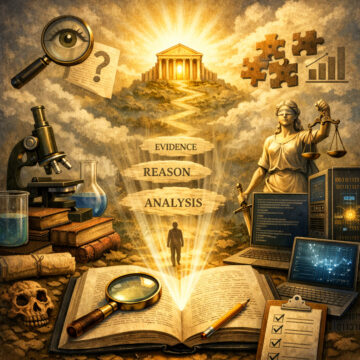
 I have put off reading G.H. Hardy’s Mathematician’s Apology (1940) to the end for too long. Now that I have, I can say with conviction that if you ever find yourself needing to justify why people should learn at least some mathematics, then this is the text to avoid, and Hardy provides the arguments you should stay away from furthest. And yet, it grew on me as an honest presentation of Hardy’s perspective on why anything is worth doing.
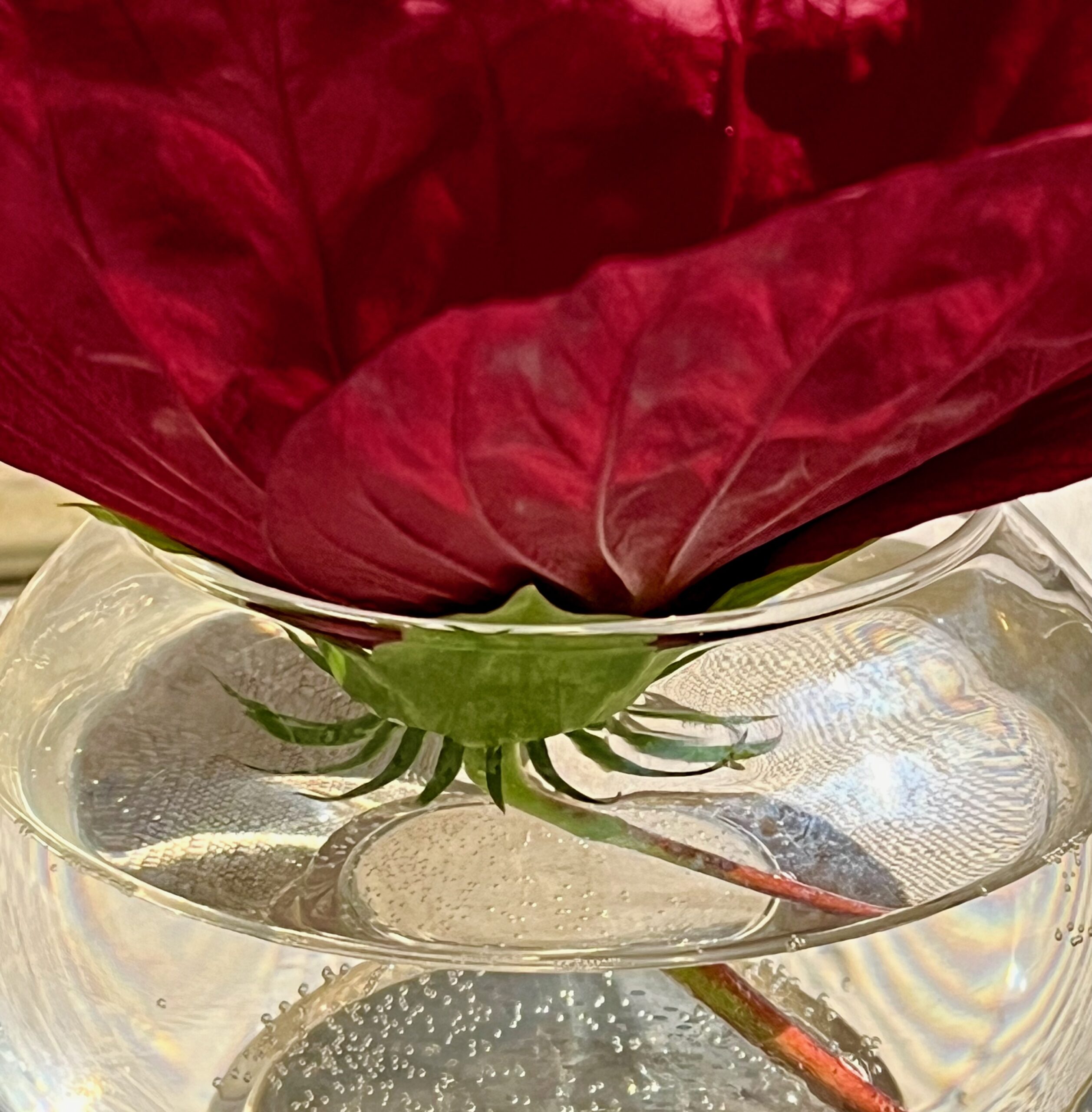 Sughra Raza. Blood. August 2024.


 a prickly pine’s upon one nub,


 Dear Reader,