by Muhammad Aurangzeb Ahmad
In 2018, more than a hundred robotic dogs were assembled at a Buddhist temple in Japan for a funeral. Each of these robots, called AIBO, had a name and belonged to a family. Some came with letters written by their owners. As incense burned, Buddhist priests chanted prayers for the departed. The robots, of course, were not dead in any biological sense. They were machines manufactured by Sony, and over the years they had broken down. After these “rites” a company called A-Fun, which specialized in repairing older electronics, would dismantle the defunct robots and use their components to repair other AIBOs. If we really think about it then we may to the conclusion that the robots were being treated almost like organ donors! Reports of these ceremonies describe how the practice grew from the emotional difficulties owners experienced when parting with their robotic companions. At first glance, this may appear to be an eccentric cultural phenomenon. But the ceremonies raise a question that what, exactly, is being mourned when a machine stops functioning? More importantly, what purpose does a funeral serve when the object of mourning was never alive?
In the first part of this essay, I discussed how people experience grief when AI companions disappear or undergo substantial changes in personality following model updates. One of the peculiarities of such losses is that they are often the consequences of deliberate technological decisions. In this part I want to consider if the disappearance of an artificial companion can produce something resembling grief, what might an appropriate response look like? Do we need new rituals to deal with these losses, and if so, what would those rituals actually accomplish? The Japanese example suggests that humans may not have to invent everything from scratch. In Japan, ceremonies known as kuyō have long been performed for certain objects that have reached the end of their useful lives. These include dolls, needles, and other objects with which people develop intimate relationships through repeated use. The object does not necessarily have to be alive for a ritual of farewell to have meaning. The ceremony can recognize the history of human interaction with that object. Consider a family home that is demolished after several generations. The building is not alive, and yet losing it can be profoundly distressing. The source of grief is not the death of the building but the loss of a place in which memories were created and identities were formed. Something similar can happen when a person loses a diary, a collection of letters, or an object inherited from a deceased parent.
To understand why rituals might matter, it helps to consider what anthropologists have said about transitions in human societies. Read more »



 What goes around comes around. In 1963 during a speech at the Manhattan Center in New York, Malcolm X, the Black Muslim leader, described the assassination of President John F. Kennedy as “

 “Hilarius Bookbinder’s Scriptorium Philosophia” might sound like the working title of a sequel to Terry Gilliam’s “The Imaginarium of Doctor Parnasus”. It is rather a very interesting and entertaining Substack written pseudonymously by an American philosophy professor. It first came to my attention last year, when it caused a bit of a stir with a post entitled “The average college student today”, which detailed the author’s bleak experience with the current cohort of average undergraduates. This was followed by the author’s response to critics of that post, wherein he attests that the overwhelming majority of informed respondents (i.e. students or teachers in contemporary Western post-secondary institutions) said that their own experiences mirrored those of Dr. Bookbinder. To wit, that literacy, critical thinking, academic integrity, and work ethic among this generation of students has collapsed to the point where teachers have to drastically lower their work demands and achievement standards, or else imperil their careers by assigning failing grades to an institutionally unacceptable proportion of their pupils/clients/customers. Having not been in a post-secondary institution myself for over a decade, I can’t personally testify to the accuracy of his assessment, but it seems to jive with everything I’ve heard from personal acquaintances in primary and secondary education (what miracle do we expect to happen in the months between the end of high school and the beginning of university?), and the various academic philosophy blogs I peruse have swelled with robust concurrence of his account. I am not entirely distraught that my dreams of being a post-secondary philosophy teacher never panned out.
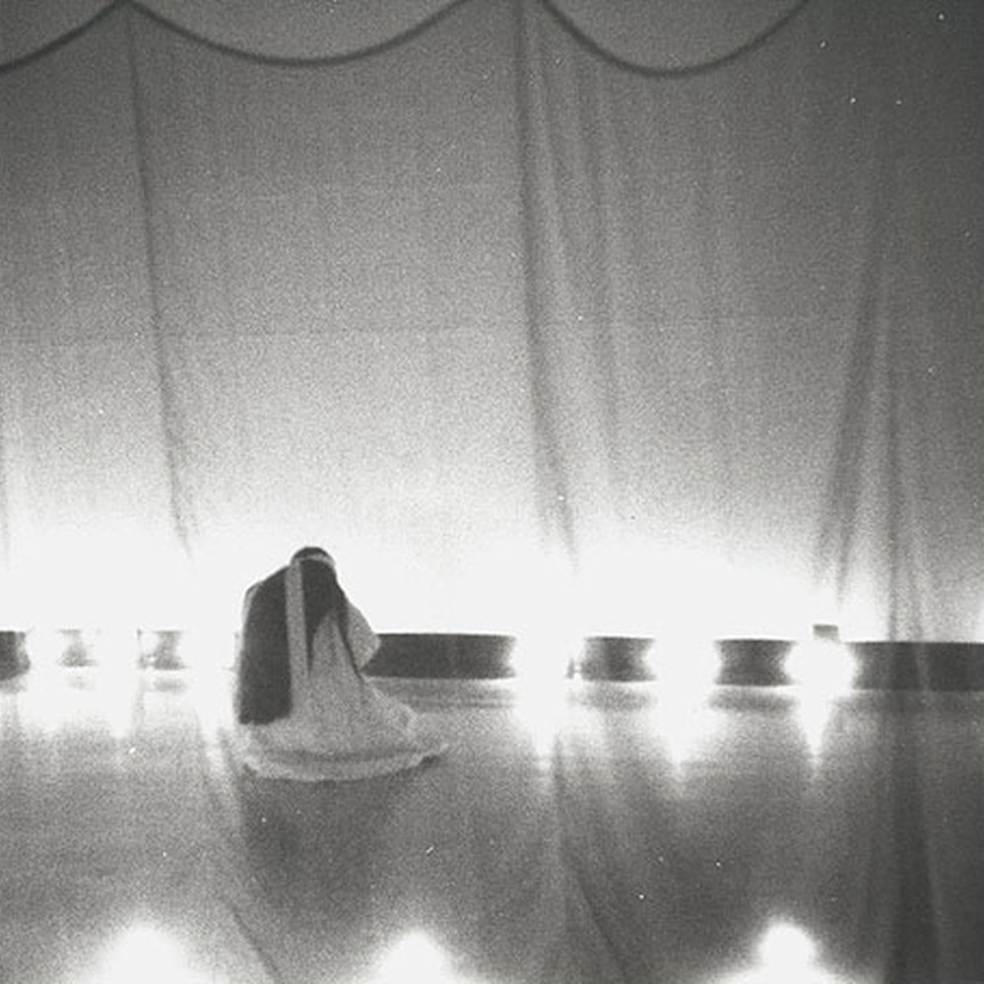 Theresa Hak Kyung Cha. A BLE W AIL, 1975.
 Two years ago, in
 particularly with regards to Israelis and Arabs, Jews and Muslims.
 The TV show Heated Rivalry arrives on cinema screens this week, transforming it from a short six-episode TV season into a 5-hour cinematic experience. I for one can’t wait to sit with an audience in a darkened theater and share in Shane and Ilya’s steamy romance. For those of us who love the show, it has always been an epic, monumental narrative, taking an outsized role in our lives. But why? The success of the show has created a kind of mystery—what about this story made it such an undeniable cultural force? Let us compare it to another cultural force which has recently entered the public imagination: Homer’s Odyssey. I am setting aside Christopher Nolan’s version of the story (which I found disappointing) to look instead at Homer’s text, which offers some surprising parallels with our favorite TV hockey romance.

 A couple of years ago I offered up