
by Gary Borjesson
It is the first week of the new year, a time traditionally given to reflecting on the year past and the year to come. Reviewing, summing things up—all those top 10 lists—and making resolutions. Having slowly gained more knowledge of what is stable in my disposition (for better and worse), I’m less tempted to dream of radical reinvention or even self-improvement. Depending on my mood, this can feel like self-acceptance or defeat.
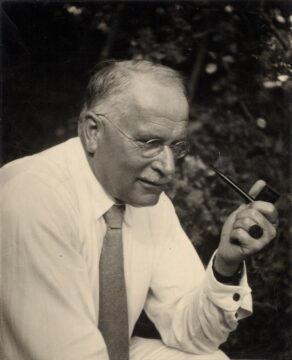
One way of describing the situation is to say that I’m getting to know what Carl Jung described as the archetypal aspects of my psyche. Jung acknowledged that his account is a paraphrase of Plato’s description of the psychic patterns that structure our experience. For Jung these emerge from the collective unconscious, a realm beyond immediate conscious awareness. Plato’s Socrates locates them in an analogous place, the Underworld. These archetypes guide our lives in some respects, but they’re not the only forces at work. For Socrates and Jung, we exercise our power to be truly self-determining through getting to know the patterns that guide our lives, but do not determine our fates.
In honor of the birth of a new year, I want to share the story Socrates tells at the end of the Republic, about how souls come to choose the lives into which they’ll be reborn. For those familiar with depth psychology, this myth of Er (as the story is called) will be strikingly resonant.
A friend once told me he’d spent years trying to make himself into a scholar, and by the world’s eyes he had succeeded. But it never felt like a fit to him. Eventually he realized that, whatever his conscious intentions, he had the instincts and desires of an artist. (His academic articles kept wanting to become stories!) Denying this part of himself had generated internal conflict. So, rather than work against his natural wiring, he started finding ways to be an artist in his work and life. Read more »