“By The Book” — My Way

by Barbara Fischkin

Since its debut in 2013, I have been a fan of “By the Book,” a “Q and A” feature, in The New York Times Book Review. Google AI describes it as a look into “select authors’ reading habits and favorite books.” I’d always been so eager to read the text, that it was only recently I noticed the pun in the title. A word play on a phrase I had used umpteenth times to push sales, after the first of my three books was published in 1997. Duh.

Late last year one of those “select, authors did a slight stumble over the often-posed question about who to invite to a literary dinner party. He said he had been reading the feature for years—which I took as a big hint that he had long hoped to be a subject one day. I don’t know any writers who wouldn’t jump at the chance, myself included.

For me, one major problem: My last book was published in 2006, seven years before this feature appeared. Like many writers, my heart and soul are joyous about my successes yet tainted with bitterness and blame. In regard to my lack of a fourth book, I blame the editor—and supposed friend—who refused to acquire an in-depth look at the children of the autism surge growing into adulthood, as was my elder son. A similar tome, written by Washington insiders, was a Pulitzer prize finalist. With a little less bite, I blame the handful of non-writers with great stories, who chickened out when it came to partnering with me to write their books. To be fair they did this after editing, book proposals and early chapters were written—and after they paid me for my work. But when it came to publicly telling their stories, they got cold feet.

Most of all, though, I blame my current obscurity on myself and on a manuscript-creature titled The Digger Resistance. My yet unborn historical novel. Read more »

Monday, October 16, 2023

When I Worked for Fox News

by Barbara Fischkin

I once wrote a political column for Fox News. My point of view was liberal and at times decidedly leftist.

This is true-true and not fake news.

The notorious Fox was then a media baby, albeit an enormous one. At its American launch in 1997, it already had 17 million cable subscribers. Millions of Americans looking for a conservative alternative to CNN and company.

Two years later I was hired, as a freelancer, to write an opinion column for a nascent website: Fox News Online. Back then, the television screen ruled. The website was an experiment, to see if the Internet was real. I was told I could opine as I wished, as long as the facts backed me up and I was not libelous or incoherent. A cartoonist was assigned to illustrate my words.

When I was first approached about writing this, I thought it was a practical joke. A dear friend and former newspaper colleague showed up one morning in our family backyard and told me to stop calling her every morning with my take on national and world events. “Write it,” she said. “I will pay you. Two hundred bucks a column once a week. Eight hundred a month.”  Not a lot for Fox News, even then. But I needed the money. Needing money is one of my hobbies. Read more »

Monday, March 11, 2013

Family Feud

by Akim Reinhardt

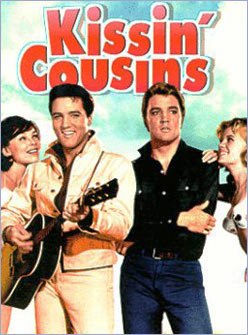
Elvis Presley in Kissin CousinsLess than an hour apart, similar in size and population, and connected by I-95 and a tangled overgrowth of suburbs, Baltimore and Washington, D.C. are very much alike. The mid-Atlantic's kissin' cousins share everything from beautiful row home architecture to a painful history of Jim Crow segregation.

But the wealthier parts of D.C. have grown uppity of late, and you can blame Uncle Sam.

Whereas Charm City has suffered from de-industrialization, depopulation, and growing poverty over the last half-century, Washington's economy has grown dramatically with the federal government's rapacious expansion since World War II.

Once upon a time, Baltimore was a major American city driven by heavy manufacturing and voluminous harbor traffic, while Washington was a dusty, lackluster town, the population noticeably undulating with the political season. But after moving in opposite directions for decades, D.C. was poised to surpass Baltimore economically by the 1990s.

The rich cousin is now the poor cousin and vice versa, trading seats at all the family functions. But one thing has not changed: Neither member of America's urban clan ever has or likely ever will come anywhere close to competing for the title of Patriarch. We're not talking about big boy national powerhouses like New York or Los Angeles, or even avuncular, regional monsters like Chicago and Houston.

Nope. It's just D.C. and Baltimore

If Baltimore is the southeastern most notch on the rust belt, the rough, homemade punch hole that allows the nation to let out the its sagging waistline, then Washington is the two-bit company town in the heady throes of a contrived boom. Each town has seen their fortunes headed in different directions of late, but nobody is ever going to confuse either of these old branches on the family tree for anyone's rich uncle. Baltimore's heyday is in the past, while D.C.'s rising glory is transparently artificial.

Read more »