by Richard Farr
 It’s a ritual now. Every Sunday morning I go into my garage and use marker pens and sticky tape to make a new sign. Then from noon to one I stand on a street corner near the Safeway, shoulder to shoulder with two or three hundred other would-be troublemakers, waving my latest slogan at passing cars.
Others are waving the Ukrainian or Canadian flag. Or Hire a Clown and Get a Circus. Or Support Our Troops: Fire Hegseth. In my small town we’re perhaps 2% of the population — not yet one of those mass movements to which the future’s textbooks will devote a chapter, but we are fearful enough to need the hope of that outcome. With America’s vaunted institutions and much-hyped freedoms on fire, we desperately want more people to (as one of my own signs says) Join Us Before It’s Too Late.
We try to take comfort from the fact that we occupy three corners of the intersection, greatly outnumbering the Trumpers, a dozen people blasting patriotic country music on the northwest corner. But we know the truth: the only consequence of our protests, at least until ICE comes to town and starts handing out free tickets to El Salvador, is that it buys us a little dignity, a little solidarity, a little courage in the face of disaster.
Some of us are “leftists,” which is American English for “centrist neoliberals who look back wistfully to the era of Barack and Hillary.” Some are “radical leftists,” which is American English for “people so naïve that they actually care about things like climate change, the minimum wage, Citizens United, Gaza, nuclear command and control, universal healthcare, starving Yemeni children, and Ukraine.” All of us are appalled that Donald Trump and his one-eyed yellow minions are vandalising central functions of the state, especially the ones that involve anti-corruption oversight.
So that makes us the statists and him the anarchist, right? Read more »
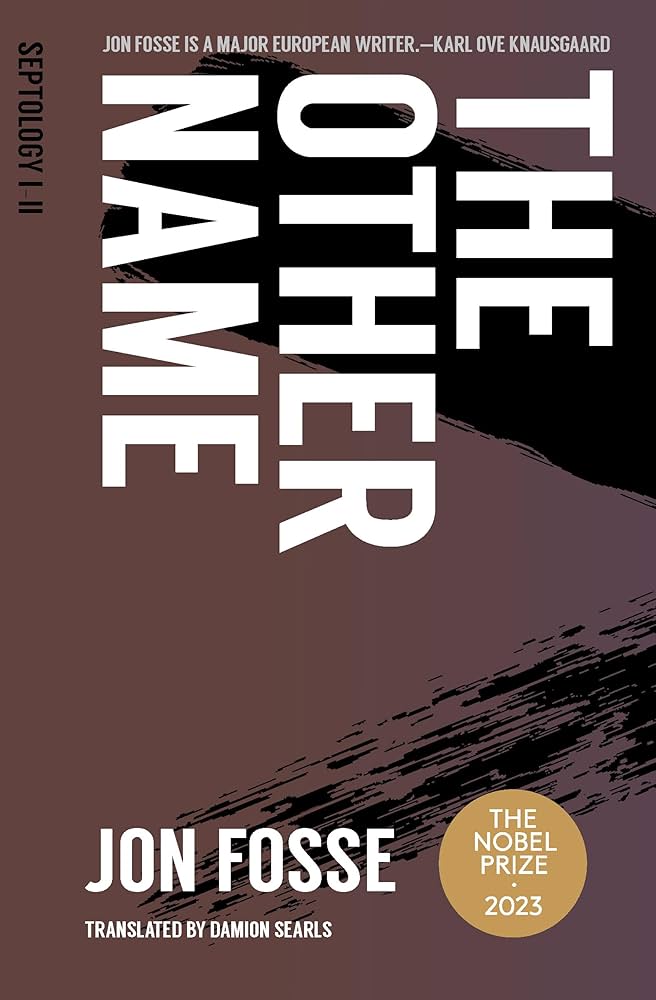 I first started reading Jon Fosse’s Septology in a bookstore. I read the first page and found myself unable to stop, like a person running on a treadmill at high speed. Finally I jumped off and caught my breath. Fosse’s book, which is a collection of seven novels published as a single volume, is one sentence long. I knew this when I picked it up, but it wasn’t as I expected. I had envisioned something like Proust or Henry James, a sentence with thousands and thousands of subordinate clauses, each one nested in the one before it, creating a sort of dizzying vortex that challenges the reader to keep track of things, but when examined closely, is found to be grammatically perfect. Fosse isn’t like that. The sentence is, if we want to be pedantic about it, one long comma splice. It could easily be split up into thousands of sentences simply by replacing the commas with periods. What this means is the book is not difficult to read—it’s actually rather easy, and once you get warmed up, just like on a long run, you settle into the pace and rhythm of the words, and you begin to move at a steady speed, your breathing and reading equilibrated.





 Jeanne Moutoussamy-Ashe. Mine Dancers, Alexandra Township, South Africa, 1977.