
by Gary Borjesson
And these two [the rational and spirited] will be set over the desiring part—which is surely most of the soul in each and by nature the most insatiable for money—and they’ll watch over it for fear of its…not minding its own business, but attempting to enslave and rule what is not appropriately ruled by its class, thereby subverting everyone’s entire life. —Plato’s Republic 442a
I want to share my vision for a tool that helps inform, direct, and scale consumer power.
It would be a customized AI that’s free to use and accessible via an app on smartphones. At a time when many of us are casting about for ways to resist the corruption and authoritarianism taking hold in the US and elsewhere, such a tool has enormous potential to help advance the common good. I’m surprised it doesn’t already exist.
Why focus on consumer power? Because politics in the US has largely been captured by monied interests—foreign powers, billionaires, corporations and their wealthy shareholders. Until big money is out of politics (and the media), to change the country’s social and political priorities we will need to encourage corporations and the wealthy to change theirs.
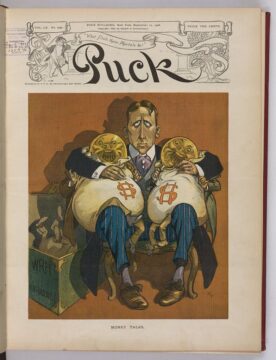
As Socrates observed in the Republic, these “money makers” operate in society like the appetitive part operates in our souls. This part seeks acquisition and gain; it wants all the cake, and wants to eat it too. If unregulated, this part (perfectly personified by Donald Trump) acts selfishly and tyrannically, grasping for more, bigger, better, greater everything—and subverting the common good in the process.
The solution, as Socrates saw, is not to punish or vilify this part, but to restrain and govern it, as we do children. For the more spirited (socially minded) and rational parts of ourselves and society recognize the justice and goodness of sharing the cake. Thus the AI I envision will have a benevolent mindset baked into its operating constraints. But before seeing how this might work, let’s consider how powerful aggregated consumer spending can be.
Scaling Consumer Power
I recently canceled our Amazon Prime membership. I was inspired by seeing how one prominent money-maker, Jeff Bezos, “folded like the laundry” (as a clerk at the local hardware store put it) when Trump called him out for planning to let customers see what tariffs add to the price of items. Bezos had already forced the Washington Post to adopt his editorial policy, because he owns it. His policy served his interests, bending the knee to his lkely master, Donald Trump.
One person canceling Amazon Prime is a drop in that bucket of power we’d need in order to bring the monied interests to heel. But if as many people as voted against Trump (75,017,613)) in 2024 canceled their Prime subscriptions (at $139/year), Bezos would feel it, to the tune of $10,427,448,207. That’s a 10.5 billion dollar loss in one year. (The current number of Americans with Prime memberships is over 180 million.) Such leverage could be used to incentivize big players in gas and oil, chemical, transportation, defense, banking, crypto, retailing, pharmaceutical, health care, telecommunications, and tech sectors.
How the AI App Would Work
Imagine an app that provides a simple speech or text interface. The AI would be an ultra-knowledgeable maven offering real-time guidance on where best to spend your money. For example, at one intersection in our town there are three gas stations. Like the significant majority of Americans (67%), we favor transitioning to renewable energy but still own one gas-powered vehicle. The AI could answer the question I’ve been too lazy to research: ‘Which of these three companies is doing the most to transition to renewable energy?’ Or, if you valued encouraging fair labor conditions more, you might ask the AI, “Which of these companies offers employees the best working conditions and compensation?” possibly getting a different recommendation.
Later, you can return to the advice and follow links, inspecting what data the AI drew on to reach its conclusion, educating yourself and confirming reasons to trust the AI. You might learn that one company has made significant investments in solar, while another has spent their money lobbying against legislation that would support transitioning to renewable energy. More generally, the AI could help you learn what online platforms to use, where to do your shopping and banking, what car to buy and airlines to fly, and so on. The AI’s transparency concerning data sources, how it weights them, what trade-offs it makes between competing values (and why), will be essential to establishing the trust necessary for mass adoption.
Until now we haven’t had the computational power for gathering information, analyzing data, and disseminating actionable real-time results to the majority of people in the country, or the planet. But we do now. Just about anyone with a smart phone (roughly 60-70% of the global population) could have access to this tool.
I’m sharing the broad contours of this idea, hoping to inspire others who have the practical competence to build it. There are devilish details to sort out, but, as Socrates warned, we shouldn’t let the ideal be the enemy of the good. In this spirit, I imagine the AI starting as simple and limited, and evolving over time. That’s what intelligent systems do. In the beginning, perhaps only a few critical sectors fall within its scope of competence. Among my candidates for the most urgent are the energy, technology, and media sectors. The capability of the AI will increase rapidly, assuming that we can sort out the devilish detail of persuading the monied interests to allow the AI to develop using the infrastructure they currently own. For example, Bezos’s Amazon Web Services owns 31% of the global cloud infrastructure.
Tunings and Constraints
First of all, the AI would be tuned for collaboration and cooperation. It will recognize but not engage in competitive, Machiavellian, zero-sum games. (Don’t worry, plenty of AIs will be tuned to that frequency.) This privileging of nonzero-sum strategies is a crucial differentiating feature from tools like boycotts—which have their place but which perpetuate the zero-sum, us-and-them tribal mindset that is so destructive of the common good. AI can plausibly integrate this cooperative mindset.
For example, like Socrates, or like a good therapist for that matter, the AI would offer reframes and results that minimize divisiveness and maximize collaboration. If I asked it how best to hurt a company like Amazon that I viewed as a bad actor, it would respond by asking what positive value and common good I seek by trying to punish Amazon. Depending on my answer, it would recommend where to take my business. This AI would thus encourage users like me to shift to the nonzero-sum mindset—to think in terms of empowering good actors. Instead of not supporting Amazon, it would tell me which booksellers, streaming services, music stores, and other businesses are more aligned with the common good. Often, making the switch will mean being in an economic position to tolerate a little more inconvenience and expense.
Second, the AI would be proofed against being co-opted by political parties, partisans, or monied interests. Everyone can use the tool, and organizations can encourage their supporters to use it, but no one should be able to game it. AI has more ability to resist corruption than other attempts to aggregate consumer power because it has a mind of its own. This sounds scary, but is the source of its potential trustworthiness. An AI’s process would be more transparent and harder to co-opt than a government agency, think tank, or nonprofit. It is resistant to social pressure, financial incentives, or changes in personnel. It has no motive not to offer the best counsel based on its core operating principles. It will not be tempted, as nonprofits are, to change their advice because a corporation makes a large donation in the hope of greenwashing its reputation…without changing its behavior. The AI will deliver results based on actual corporate behavior and its impact, not on donations, advertising dollars, or other smokescreens.
Third, the AI would offer advice based on the most accurate information available. It would draw from verified data sources, including scientific research, government statistics, corporate financial disclosures, third-party audits, and independent watchdog reports. Using the best, most vetted sources is crucial if users are to trust the AI’s advice. Here again, the devil is in the details of finding, supporting, and protecting good data sources, especially since monied interests exert disproportionate control over these. The republicans under Trump, with the support of corporate actors like Musk, are doing enormous damage by attacking institutions and spreading disinformation; this strategy includes preventing the collection of data, as the republicans have done with NOAA, among other agencies. As bad as this is, AIs excel at recognizing basic errors of fact and reason, not to mention Machiavellian attempts to manipulate both.
Finally, this AI would be built and maintained by a small well-funded group of individuals who subscribe to a few core principles. (A money-maker like Bill Gates who professes interest in the common good could fund this project in perpetuity without diminishing his net worth—$115 billion—by even 1%.) Here are a few core principles the majority of citizens acknowledge as common goods: Cooperation. Democracy. The rule of law. Free and fair elections. Individual rights. Sustainable energy. Clean air and water. Evidence-based reasoning. It may seem there is disagreement about these, but that’s largely because they have been warped and weaponized by monied interests that own politicians and use media platforms to propagandize citizens, on the left and right.
In the Venn diagram of life, there is substantial overlap between my good and yours. If we can govern the monied interests, the common good will become more evident. The technology exists. The consumer power exists. What’s needed now are the builders—technologists, philanthropists, and institutions willing to create a tool that could help rebalance power between citizens and corporations. Following the Platonic insight, let the rational and socially spirited parts of our society step up and govern the appetitive part that is running amok in the world.
***
Enjoying the content on 3QD? Help keep us going by donating now.