
by Alizah Holstein
 How are we to live, to work, when the house we live in is being dismantled? When, day by day, we learn that programs and initiatives, organizations and institutions that have defined and, in some cases, enriched our lives, or provided livelihoods to our communities, are being axed by the dozen? Can one, should one, sit at the desk and write while the beams of one’s home are crashing to the floor? Or more accurately: while the place is being plundered? There have been moments of late when I’ve feared that anything other than political power is frivolous, or worse, useless. In those moments, I myself feel frivolous and useless. And worse than that is the fear that art itself is useless. Not to mention the humanities, which right now in this country is everywhere holding its chin just above the water line to avoid death by drowning. It can take some time to remember that these things are worth our while, not because they’ll save us today, but because they’ll save us tomorrow.
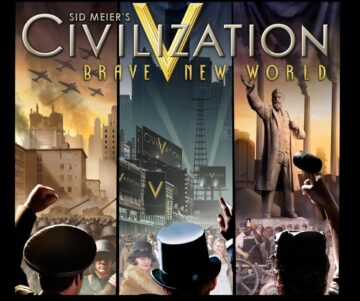
In my previous essay for 3 Quarks Daily, I wrote about how the acronym for the Department of Government Efficiency—DOGE—is possibly an allusion to the Venetian doge. For most of the Middle Ages, the doge was the city republic’s chief magistrate and its highest-ranking oligarch. The connection linking DOGE and doge, I suggested, was the video game Civilization V: Brave New World. In this game, players can choose to play the blind Doge Enrico Dandolo, who at ninety years old led the Venetian and crusader troops on the Fourth Crusade, ultimately diverting the crusade from its initial objective of Egypt and instead attacking two Christian cities, first Zadar on the Dalmatian coast, and then, more famously, Constantinople. Someone who has spoken publicly about playing this game is Elon Musk, and if I had to hazard a guess, I’d say he learned some of his history from it.
What does the Fourth Crusade look like in a video game? A Civilization V wiki supplies us with historical background and a summary sketch of Doge Enrico Dandolo: “He took control,” it explains, “of a mercantile power in decline, riven by corruption and inefficiency, challenged by great and small powers across the region. Trade had declined, and its military was moribund. By his death he had ended all outside threats to its influence, and made it the dominant power in Mediterranean trade again.” Corruption and inefficiency: those words ring a bell. Declining trade and complaints about a feeble military? Those too.
And yet there is much history that the wiki omits. Importantly, it neglects to mention that Doge Dandolo defied Pope Innocent III’s explicit prohibition against attacking allied lands. The pope excommunicated him for it, though in the two and a half years that Dandolo lived before dying on the crusade, the pope’s condemnation never appears to have made much of a difference. And another thing the wiki neglects to mention is the shocking violence of the plundering of Constantinople. Read more »

 I love public transportation.
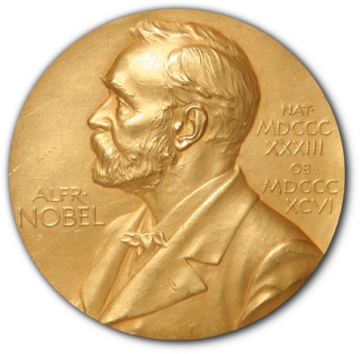 The list of Nobel laureates in physics, chemistry, and medicine includes men and women, Jews, Christians, Muslims, Hindus, Buddhists, and atheists, gay men, lesbians, and cis-scientists, people from Europe, Asia, Africa, North America, South America, and Australia. So, is the ultimate example of meritocracy also the epitome of Diversity, Equity, and Inclusion?


 Some weeks ago I made a note to myself on my phone:
 know exactly how it happened, but that’s the gist. She finished taking a shower, pushed on the door to get out, and it wouldn’t open. She jiggled the door, and she banged on the door, and she pushed on the door, and she wiggled the door, and the door would not open.
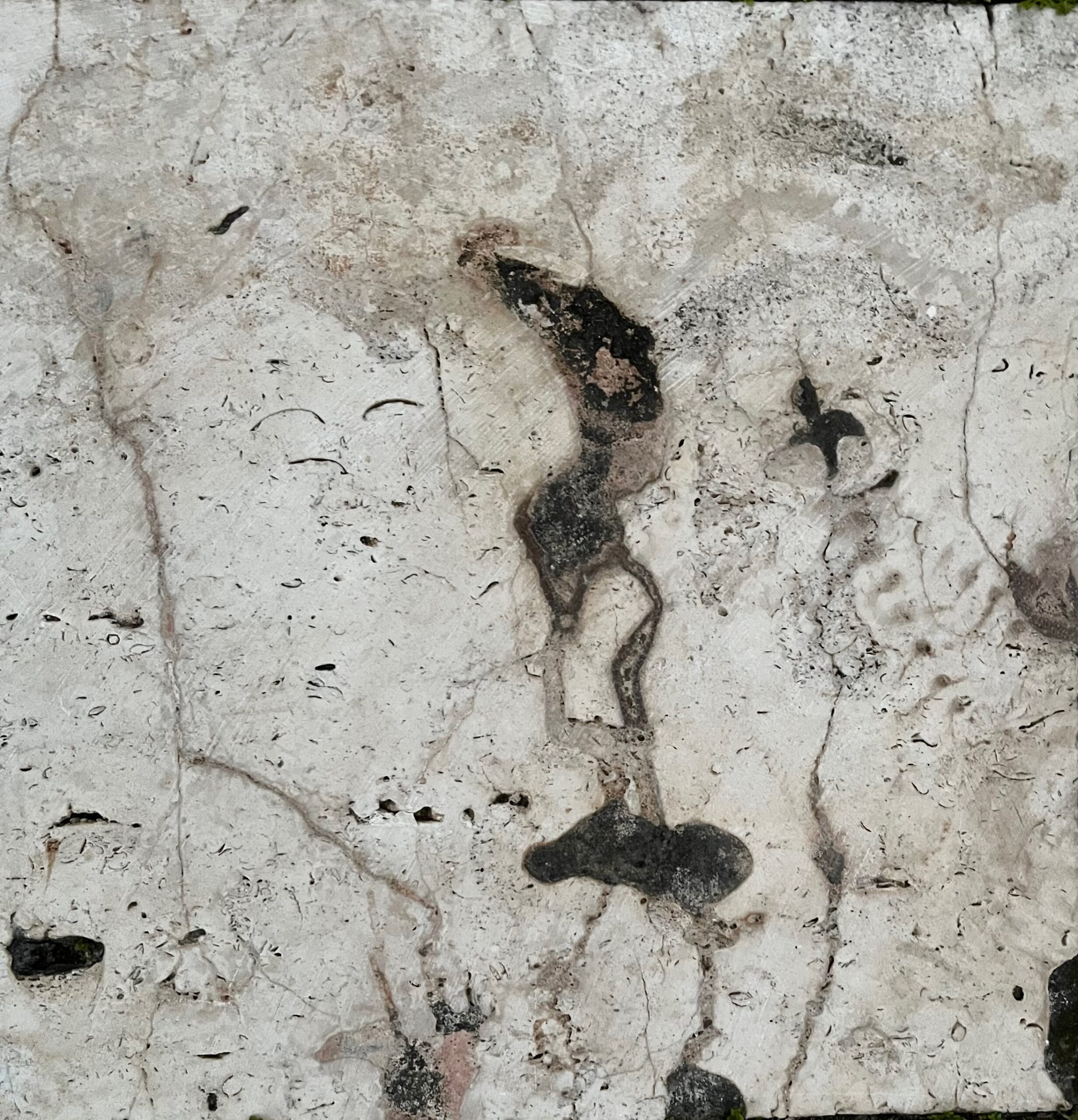 Sughra Raza. Found “Imaginary Being” (after Jorge Luis Borges). March 2025.

 This year marks the 80th anniversary of the end of the Third Reich, and thus of the industrialized mass murder known as the Holocaust, or Shoah—although 1945 was not the end, according to Timothy Snyder, of World War Two. That conflict, the historian maintains, was pursued by the otherwise victorious imperial powers in their respective independence-minded colonies, and only concluded with those powers’ defeat and withdrawal, or with the substitution of some variety of “post-colonial” economic system (The Commonwealth, La francophonie) for classic empire. To say nothing of the “