
by Leanne Ogasawara
Which do you think is worse: a scenario in which every single email you ever wrote, (including all the drafts) and every last photo and video you ever took, are stored on the cloud for eternity. This is made publicly available, and is used to construct a book about your life.
OR
You destroy all trace of yourself in the digital record, and still a novelist uses your life as fodder for material, attributing thoughts and experiences to you, using your real name in the story, relating things that never happened.
1.
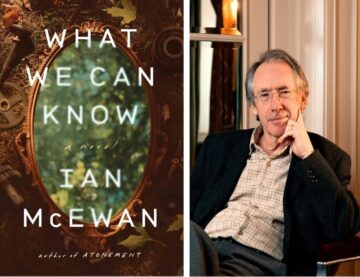
Set one hundred years in the future, the world depicted in Ian McEwen’s new novel, What We Can Know, is a very different one from our own. War and climate disaster have reshaped everything (surprise, surprise). The oceans have risen, and England is now an archipelago. Meanwhile, North America is ravaged by warlords and gangs, and China’s thirty-year experiment with democracy is collapsing amidst the people’s growing desire to wage war on Nigeria, a country which is now the sole remaining superpower and the only place which has managed to keep the lights on.
In England, people mainly eat protein bars and drink acorn coffee. The population has been halved. It’s not such a dire place when the story opens. It’s just harsher, with daily life more constrained. And not surprisingly people look back with longing—and also fury—to the people of our day.
We had so much. Oceans filled with fish and all those vineyards producing delectable wines. In the Age of Derangement, a term borrowed from Amitav Ghosh, why was our relentless avarice allowed to ravage the world unchecked?
One thing that has not changed over the hundred years separating our time with theirs is the human predilection for love and obsession.
Take the novel’s protagonist. Thomas Metcalfe is an academic in the Humanities—a field which has somehow survived to the year 2119, but only barely. Professors are sharing seven to a bathroom and there is no money. And yet, that does not stop Metcalfe from devoting himself to unraveling a certain poem by the poet Francis Blundy. Despite not having access to the work itself, he knows from the massive amounts of data that it did once exist and that it was read aloud by the poet at a legendary dinner party that occurred in 2014, when Blundy, one of the most renowned writers of the time, recited from memory what was a love poem for his wife.
McEwan says he was inspired to write this novel after his own reading of a John Fuller poem called “Marston Meadows: A Corona for Prue,” saying he knew he had to write a novel about it as soon as he read it. Read more »



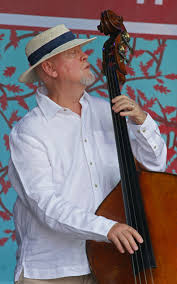 There can have been very few musicians who played such key roles, in so many different bands in so many different genres, as Danny Thompson. When he died at 86 in September, music lost one of its great connectors.
 Language: Ooh, a talkie!
 There are contradicting views and explanations of what dopamine is and does and how much we can intentionally affect it. However, the commonly heard notions of scrolling for dopamine hits, detoxing from dopamine, dopamine drains, and
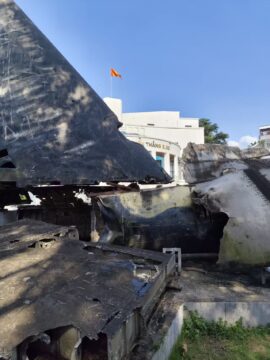 When you walk through the gates to enter the B-52 Victory Museum in Hanoi, you immediately find the wreckage of what has been one of the most terrifying machines ever built: an American Boeing B-52 Stratofortress. Apparently, this wreckage largely came from Nixon and Kissinger’s “Christmas Bombings” of 1972.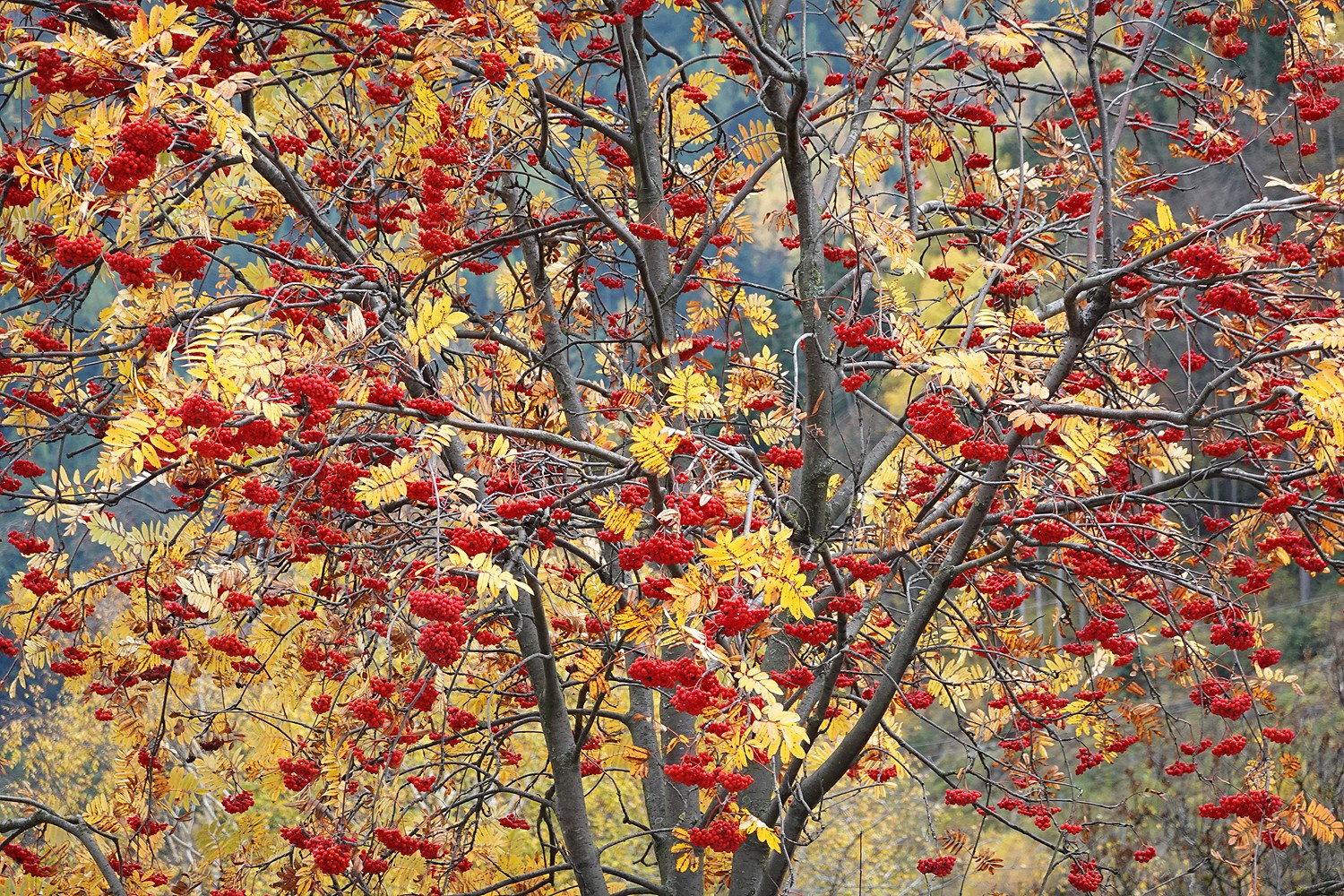

 Throughout most of the UK (Northern Ireland is
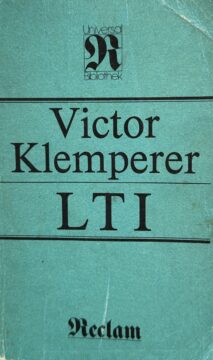 In June 1932, half a year before Adolf Hitler was sworn in as German Chancellor, Victor Klemperer watched Nazis on a newsreel marching through the Brandenburg Gate in Berlin. A professor of Romance languages at the Technical University of Dresden, whose area of specialization was the 18th century and the French Enlightenment, Klemperer (1881-1960) was unpleasantly gripped by this first encounter with what he termed “fanaticism in its specifically National Socialist form,” and by the “expression of religious ecstasy” he discerned in the eyes of a young spectator as the drum major passed by, balanced precariously on goose-stepping legs while he robotically beat time.
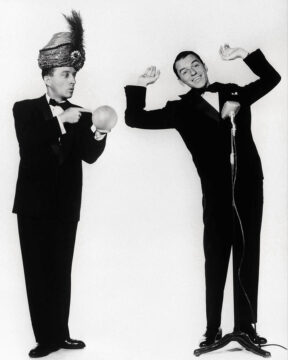 When my mother was a teenager in the early 1940s, a NY-area radio station ran a weekly contest, asking listeners to vote for their favorite singer among two: Crosby or Sinatra? How people made this preference known remains unclear to me: did you need a phone in your house to make a call to the station or was sending a postcard enough? Whatever the method, the winner would be announced each Sunday afternoon. While Sinatra often took the prize, Crosby occasionally outpaced the Jersey boy who grew up two towns south of Cliffside Park, my mother’s hometown. On those occasions, she told me, she’d stamp around my grandparents’ railroad apartment, enraged at the abject stupidity of her fellow listeners. When she’d tell this story, my mother would marvel at her parents’ forbearance, the way they’d accept these outbursts without comment, though they were highly disciplined, gloomy people for whom the idea of having an “idol,” or caring about his fate on a weekly radio show was surely alien. I like this insight into them, a softer side that I myself had only witnessed a few times.
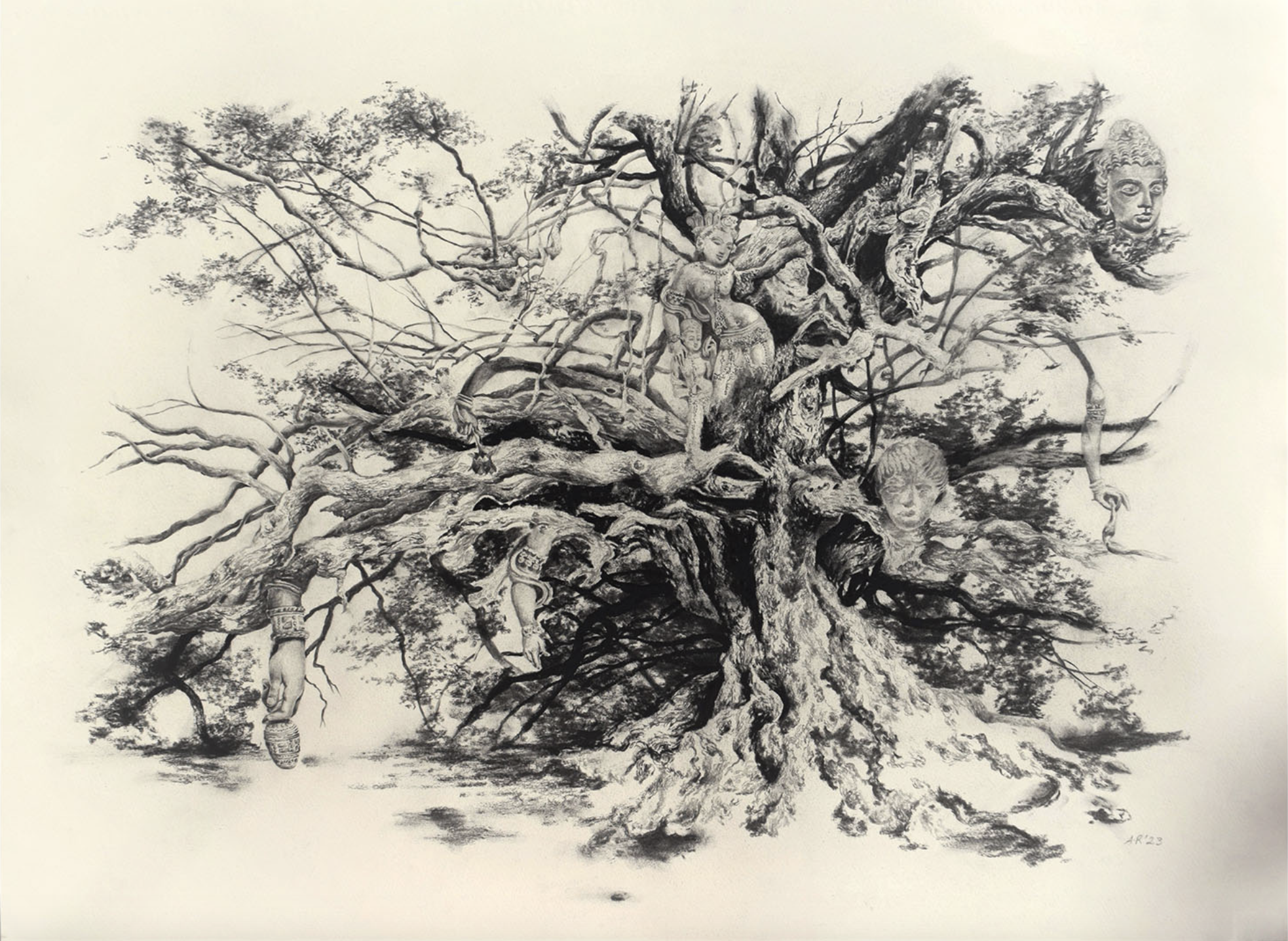 Anushka Rostomji. Waq Waq Tree, 2023, of the Flesh and Foliage Series.
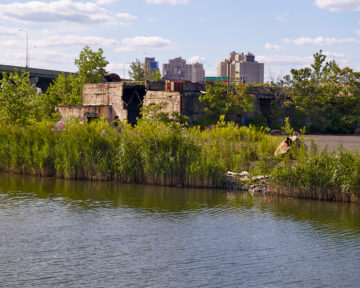 Jersey City is a medium-size city on the West bank of the Hudson River across from Lower Manhattan. Up through the middle of the 20th century it was a port and a railroad hub but that disappeared when containerized freighter became too deep to travel that far up New York Bay. Without any freighters the railroads were no longer needed. Light industry disappeared as well. Jersey City became back-offices and bedrooms to Manhattan-based business.