
by Angela Starita
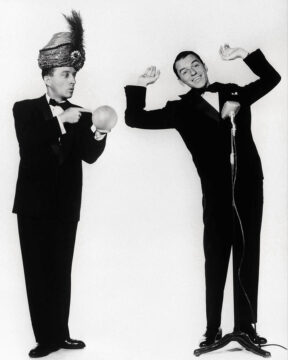 When my mother was a teenager in the early 1940s, a NY-area radio station ran a weekly contest, asking listeners to vote for their favorite singer among two: Crosby or Sinatra? How people made this preference known remains unclear to me: did you need a phone in your house to make a call to the station or was sending a postcard enough? Whatever the method, the winner would be announced each Sunday afternoon. While Sinatra often took the prize, Crosby occasionally outpaced the Jersey boy who grew up two towns south of Cliffside Park, my mother’s hometown. On those occasions, she told me, she’d stamp around my grandparents’ railroad apartment, enraged at the abject stupidity of her fellow listeners. When she’d tell this story, my mother would marvel at her parents’ forbearance, the way they’d accept these outbursts without comment, though they were highly disciplined, gloomy people for whom the idea of having an “idol,” or caring about his fate on a weekly radio show was surely alien. I like this insight into them, a softer side that I myself had only witnessed a few times.
What I like even more about the story is what it says about my mother’s taste—excellent—and that her knowledge and passion for the American songbook went way back. I suppose you could say that last statement was true for almost anyone young in those years, but I doubt there were many casual listeners who, years later, could pick out the pop standard undergirding the inventive tangents of Cecil Taylor or Milt Jackson recordings. But none of this was an identity for my mother or something she talked about or was even aware of as somehow unusual: she liked the music, knew it deeply, and there was no more to it. Her tastes were definite and clean, like the beautiful seams of well-made clothing that don’t depend on distracting accessories or patterns. She dismissed the likes of Judy Garland and Sammy Davis Jr.—too needy—and championed Johnny Mathis, Jo Stafford, and Sinatra for their understated elegance. Despite her own performance as an irate teenager, she was her parents’ daughter in prizing reserve on stage. No big gestures or frenetic moves across the stage.
I love Garland and Davis, am moved by their ability to make smallness big. Some wag claimed that before a show, Garland would stand in the wings saying, Fuck ’em, fuck ’em fuck ’em, until she seemed to expand in size, outpacing the limitations of a mere body. But I’m suspicious of my own taste, well aware of my many missteps in years past and recent. (I chalk up last spring’s obsession with the Terry Kath years of Chicago to nostalgia for AM radio as a way of contending with unmoored times.) My mother believed in the ethos of the bella figura, that is, working hard to make performance look easy. It’s a position I respect, but can never implement in my own performances, always struggling at mastery of all kinds, so I feel for the Judy’s of this world, putting all their angst on display.
That her outburst was prompted by a radio show seems fitting; a big part of our lives together was mediated by radio. My parents as a matter of course kept the radio on 24 hours a day. In the middle of the night, they’d tune in to a show hosted by Long John Nebel and his wife, Candy Jones. The next morning they’d complain about Long John’s obsession with cancer or laugh about Candy’s claims of being drugged by the CIA. Before bed, my mother would listen to one Carleton Fredericks, who gave holistic medical advice. Mornings usually belonged to John Gambling over on WOR, the man who would announce school closings for snow days. But in the early evenings when we’d eat dinner, my parents and I would listen to a radio show dedicated to the American songbook hosted by Jonathan Schwartz, the long-time DJ famous for his pregnant pauses, monologues about trips across the California desert, and recollections about songwriters and singers he’d met as a child of the composer Arthur Schwartz. The show consisted of Schwartz talking at length about songs and asking a pianist, one Tony Monte, to play a few bars to illustrate whatever point Schwartz wanted to make. It was a great education, despite Schwartz’ regular critique of Monte’s playing, brutal and unfair takedowns that appalled us but cracked us up all the same.
I’ve always associated my mother with John Coltrane’s rendition of “My Favorite Things,” think of her coming in the house after work as a high school teacher, still in a skirt and stockings, having a snack, looking through mail. Something about that piece, and about Coltrane himself—a model of clarity and economy—has always brought her to mind, though she rarely sought out jazz radio or albums. I wonder now if the association was more of a stylistic one. She and John Coltrane moved through the world without much ornament or ostentation. They were both more solid than that. Once I called her and asked, guess what year John Coltrane was born? She didn’t know the answer, but she knew me. After a moment’s silence, she said, “1926.” Same year as her.