by Malcolm Murray
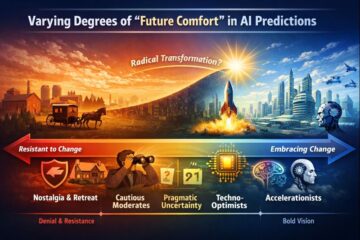 Back when I worked for large corporations, people would often talk of being in “period of change” or how they could “see the light at the end of the tunnel” after a period of heavy restructuring or similar. These days, you might be forgiven for wondering where the tunnel went. Change is incessant and showing no signs of slowing down. In fact, it is quite the opposite. We are entering a period when change might in fact actually be speeding up, even from its currently historically high levels. While not the majority view, nor the most likely scenario in my estimation, there is still a nonzero likelihood that we are in fact in the last few years of an era. Through the development of AGI – artificial general intelligence – the world could become unrecognizable in just a few years.
In a recent Astral Codex Ten piece, Scott Alexander referenced several examples of people seeing the clock as ticking down to a near-term singularity-level change, which would leave permanent patterns locked in. In one of the most talked-about AI forecasts from last year – AI 2027 – 2026 is not far from where the hockey stick starts to get seriously steep. This scenario, of humanity facing a potential precipice in our near future, makes for an interesting exercise in examining the varying levels of comfort people have in entertaining this possibility. We can name it “Future Comfort”. The degree to which people accept this possibility, fight against it, deny it, or even embrace it. Especially now at the turning of the year, with everyone making predictions, this seems like a useful lens for examining the world right now.
Let’s first look at the varying schools on the Future Comfort spectrum. On one far end, we have people who are deeply uncomfortable with this notion. They are actively fighting against the future and are actively and quixotically trying to bring back the past. We have seen this in some of the main political strands over the past years, driving everything from Brexit to MAGA to Soviet nostalgia. A little bit towards the center of the spectrum, instead of active resistance, you could place the groups exercising passive resistance. This would include people choosing to go “off the grid” or “back to nature” or other variants of the Amish lifestyle.
On the other far end of the spectrum, we have those who are deeply comfortable with a radically different future. Here, we find groups such as transhumanists and effective accelerationists. They are looking to bring the future closer, not further and long to merge with the machine, becoming cyborgs. Moving slightly toward the center, we find the libertarian techno-optimists such as Marc Andreesen, who want to let technology rip loose, in a wild Schumpeterian dance of creative destruction. It would be easy to dismiss these end points as fringe fanatics, were it not for the fact that they win elections in major Western democracies and have their own Super PACs with millions of funding. Read more »

 Sughra Raza. Bey Unvaan. January, 2026.
 Oy. Where to start? Let me begin with a recent abuse involving percentages. Trump’s absurd claims about price declines of more than 100% have elicited a lot of well-deserved derision. How could someone with an undergraduate degree in business from Wharton make these mathematically impossible claims?
 In almost every medical school in the world, there is a cupboard—or a quiet back room—full of bones. The skulls are numbered, the femurs stacked like firewood, the ribs threaded onto metal wire. Officially, they are “teaching aids”. Unofficially, they are the remains of actual lives, reduced to objects that can be ordered from a catalogue.
 2025 was a good year for books.



 “This is the mentality of our society. If someone is speaking English, he or she is really good, he or she is from a very good background,” one subaltern English learner tells the researchers in this study. “When someone speaks good English, Shah says, people assume that person is educated, knows how to carry himself, and is, crucially, ‘a good person’,” notes another.
 Dear Reader,

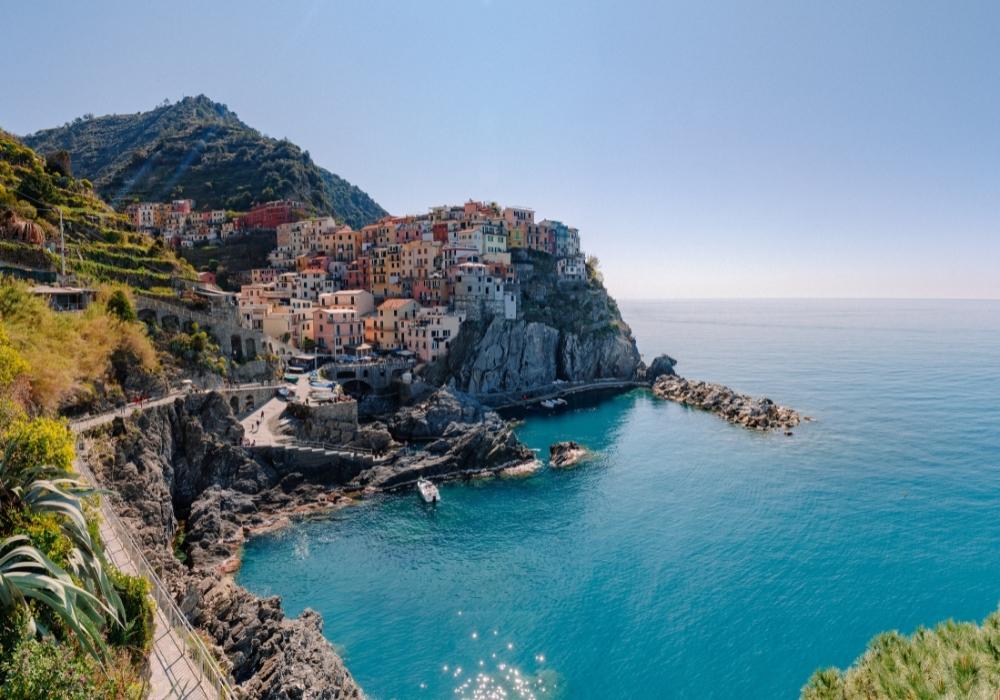 The town had only one grocery store, and Steve wondered where the locals did their shopping. Certainly not here, but perhaps in a supermarket outside of town, one that required a car. Along with Julia, he picked up some Italian cheese, prosciutto, grapes, and a bottle of local wine, and they made their way up the hill to the house they’d rented for the week.
 Never before have I worried about rolling out of my bed or a chair and falling down, kerplunk! For no reason. Now I have to. I feel like a spacer on the first outer space mission, alert with every breath, having always to think about where to place each foot. constantly aware. As I walk, my legs sometimes shake. Sharp pangs wander erratically across my legs, occasionally intersecting with a joint, others centered around a muscle.
 Marco A Castillo. Mangle I, 2025.