by Gary Borjesson
In my essay, On the Eleusinian Mysteries, I described the origin story of the Mysteries and what we know about the rites of initiation, which lasted as long as nine days. Here I will focus on the role of the psychedelic kykeon, and how this contributed to the flowering of philosophy, science, and art in ancient Greece and Rome.
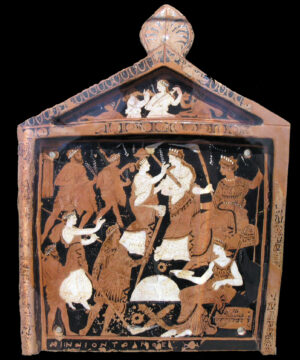
1. The heart of the mysteries
At the heart of the Mysteries was an initiatory experience, not a teaching. In other words, you couldn’t gain what the mysteries had to offer by hearing about it from someone who had been initiated, even if they would tell you—which they wouldn’t because the punishment for speaking about details was death. The experience was life-changing. Cicero, an initiate, wrote that “by their means we have been brought out of our barbarous and savage mode of life….and have gained the power not only to live happily, but to die with a better hope.”
The key experience that the Mysteries facilitated is boundary dissolution. The teaser with which I ended the first essay points to this: the experience of the Mysteries was open to everyone, regardless of the conventional identities that bound them—man or woman, slave or free, citizen or foreign worker. Even if you tried to hold on to your identity, say, as a high-born Athenian statesman, the rites of initiation promised to dissolve this limited view of yourself. Moreover, it’s not just social identities that are loosened, it’s the boundary between the living and the dead, and between the human and the divine.
As the origin story suggests, boundary crossings are at the heart of the Mysteries. In that story Hades crosses the boundary from the Underworld, abducting Demeter’s daughter, Persephone, and carrying her back to the Underworld. Demeter’s scorched-earth grief leads Hades to release Persephone, who then crosses back from the dead to the living. Her journey is memorialized each year, for Persephone’s return to the land of the living brings spring and its promise of rebirth. Read more »

 Sughra Raza. Esplanade Walks As Days Get Longer. Boston, March 2022.
 I recently read about a man who arrived in the United States from India with just thirty dollars in his pocket and, three decades later, had become a billionaire. When asked about the most important lesson of his journey, he answered without hesitation: money matters.

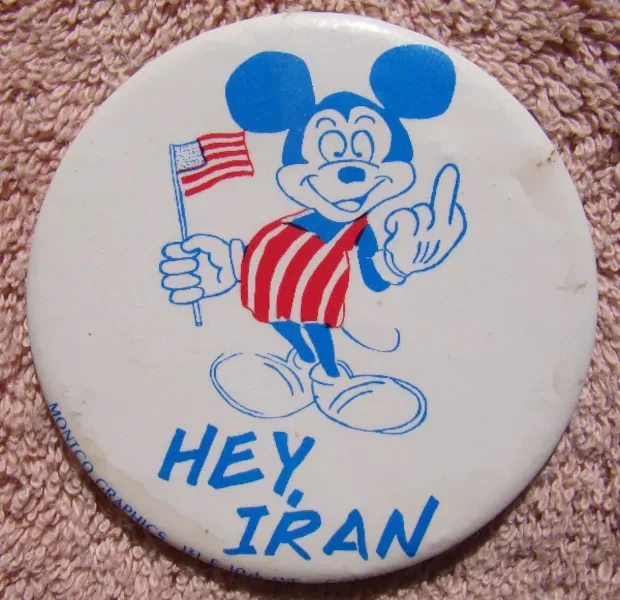 I was 12 years old when I walked down a street in my Bronx neighborhood and saw the poster in the window of Cappie’s. Cappie’s was a certain kind of corner store common in 20th century New York. It sold newspapers and magazines, candy and soda, lotto tickets, cigarettes, and various tchotchkes aimed at kids and teens. Cheap toys, baseball cards, posters, etc. Most of their posters were pinups of the era’s sex pots such as this or that Charlie’s Angels in various states of near nudity. But this poster featured a cartoon mouse, a clear copyright infringement on Walt Disney’s famed vermin. The caption read: Hey, Iran! The mouse held an American flag in one hand. The other flipped the bird.
 A couple months ago I wrote that we should not feel blame-worthy if we can’t do all the most courageous things in order to protect our neighbours or help stop a war or try to undermine the entire system. There are less courageous things we can do within our capacity. While that’s true, it doesn’t mean we shouldn’t
 OpenAI released