The Months have ends—the Years—a knot
Can You Hear the Shape of a Black Hole?
by Jonathan Kujawa A few hours’ drive north of my home is the Laser Interferometer Gravitational-Wave Observatory (LIGO) in Hanford, Washington. LIGO was designed and built to detect gravitational waves. When the LIGO project was started in the 1980s, gravitational waves were a purely theoretical phenomenon predicted by Einstein’s theory of general relativity. General relativity…
Information Wants to be Free
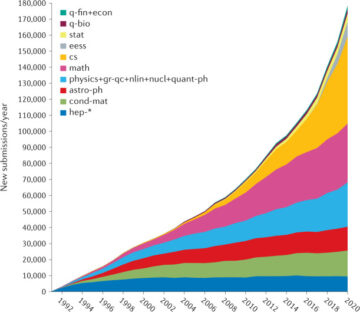
by Jonathan Kujawa Recently, Chris Drupieski and I released a new research paper. If we were a tech company, we would announce the paper at a lavish event. There, every lemma would be amazing, every proposition would be magic, and every theorem would be world-changing. Instead, we put it on the arXiv. The arXiv (pronounced…
The Power of Twos
by Jonathan Kujawa The humble 2. It’s not big, like the Brobdingnagian numbers. It’s not nothing, like zero. It’s not the first something, like one. It’s hard to imagine much can be said about the unremarkable two. Of course, Covid gave us a newfound appreciation for the power of exponential doubling. If you know of…
The Usefulness of Useless Knowledge
by Jonathan Kujawa Among our many flaws, humanity prefers to be shortsighted. We tend to set our priorities by what we see right in front of us. This makes some sense. After all, there is no point in worrying about storing food for the winter when facing down a saber toothed tiger. But eventually winter…
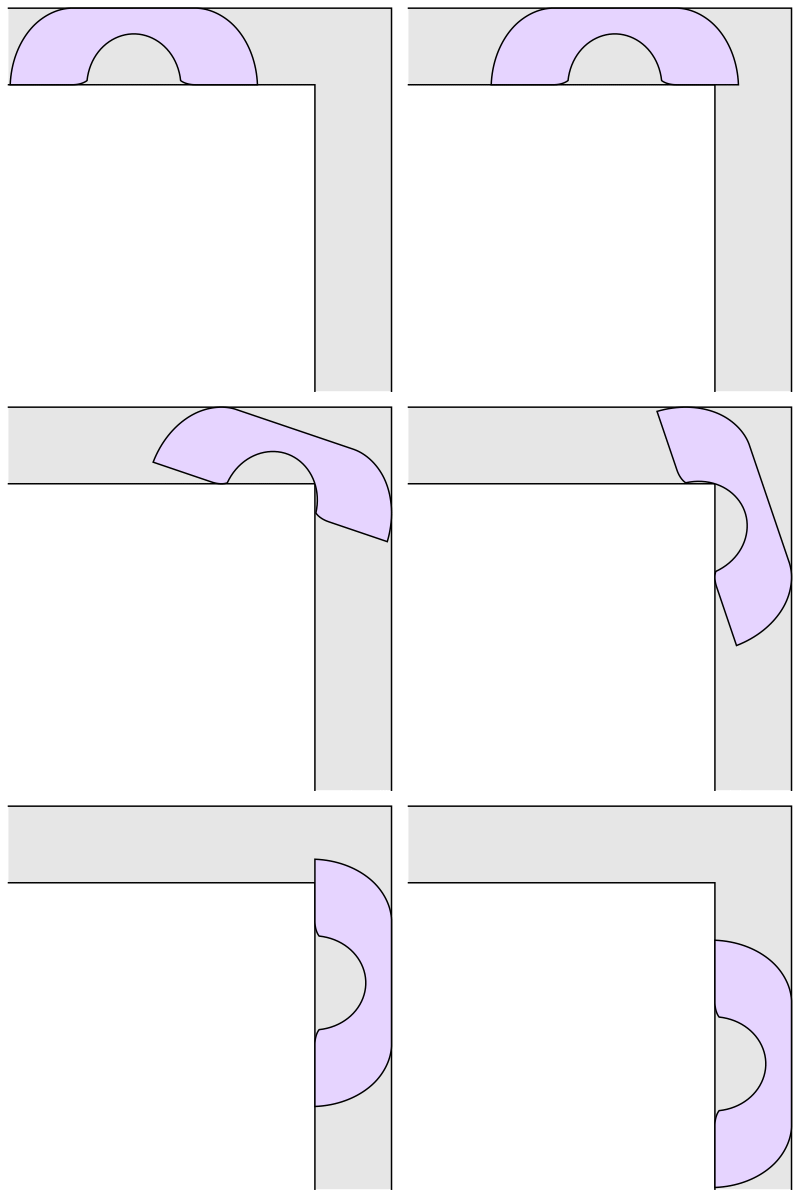
On Pushing Big Sofas Down Narrow Hallways
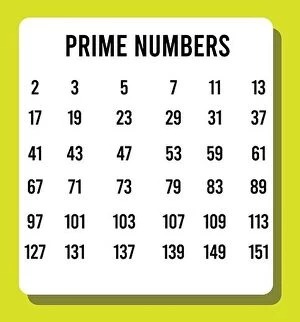
The Puzzling Problem of Finding Prime Numbers
Making Progress on Beavers, AI, and Math
by Jonathan Kujawa Nearly two years ago we talked at 3QD about the Busy Beaver problem [1]. Since then, the beavers have been busy. As discussed in that essay, the Busy Beaver problem measures how complicated a computation might be. It does so by measuring how long a Turing might run before stopping. A Turing machine…
The Hidden World of Gauss and His Periods
by Jonathan Kujawa One of the great pleasures in life is learning about something today that you couldn’t have imagined yesterday. The infinite richness of mathematics means I get to have this experience regularly. However much I think I know, it is a drop in the ocean of things yet to be learned. And even…
Puzzles, Spherical Cows, and Applied Geometry
by Jonathan Kujawa My nieces, Hannah and Sydney, came to visit for the weekend. Since they’re 8 and 9, the delightful Guardian Games in downtown Corvallis was a must-stop. Along with games galore, they have an amazing assortment of puzzles. They have puzzles with micro-sized pieces, puzzles with jumbo-sized pieces, puzzles with only a few…
Big Money Guaranteed!
What are the odds?
by Jonathan Kujawa In 2016, here and here at 3QD, we talked about some of the inherent paradoxes in democratic voting [1]. We discussed Arrow’s Impossibility Theorem, along with related results like the Gibbard-Satterthwaite Theorem. They tell us that there is no way to convert the individual preferences of the voters into a single group…
A Murmuration of Zeros
by Jonathan Kujawa Functions are machines that take in a number as an input, apply some rule to that input, and generate an output. The input might be cost, temperature, wind speed, a politician’s favorability rating, or whatever you like. The output could tell you the resulting profit, windchill, chance of a tornado forming, the…
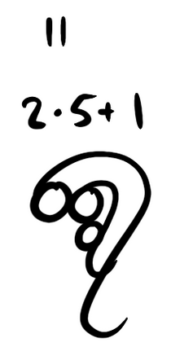
On the Typography of Numbers
by Jonathan Kujawa Mathematicians can be extraordinarily fussy about how they write. From having a near fetish on their choice of chalk to Donald Knuth taking 10 years in the middle of writing a multi-volume book series to develop an entirely new typesetting system [1], they spend an inordinate time thinking about how to write something.…
A Spectre is Haunting Mathematics
by Jonathan Kujawa In March David Smith, Joseph Samuel Myers, Craig S. Kaplan, and Chaim Goodman-Strauss announced that they discovered an “Ein Stein”. The choice of name can only be described as a tour-de-force of PR: Ein Stein translates as One Stone but also evokes a certain physicist. The Ein Stein got wide play in…
On the Importance of Community
by Jonathan Kujawa In the movies the mathematician is always a lone genius, possibly mad, and uninterested in socializing with other people. Or they are Jeff Goldblum — a category of its own. While it is true that doing mathematics involves a certain amount of thinking alone, I’ve frequently argued here at 3QD that math…
The Joy of Abstraction
by Jonathan Kujawa On “The Joy of Abstraction” by Eugenia Cheng. Category theory has variously been called “abstract nonsense,” “diagram chasing,” or the “mathematics of mathematics.” Some mathematicians find it a useful language, some a crucial tool for developing insights and obtaining new results, and more than a few have no use for it at…
Human Flourishing in the Age of Machines
by Jonathan Kujawa Recently some colleagues and I were out to lunch. It was our University’s “Dead Week.” This is the week before finals when students are in a last-minute rush to finish projects and study for exams, and faculty are planning how to wind up their courses and beginning to draft their final exams.…
On Busy Beavers and the Limits of Computability
by Jonathan Kujawa Some years ago we discussed Brobdingnagian numbers. You can find the 3QD essay here. These are numbers that are so mind-bogglingly large they defy human imagination. Perhaps the most famous is Graham’s number. It’s so large I can’t write it down for you. It’s not that I refuse to write it down; I can’t.…