
by Barry Goldman

It was more than 50 years ago that Mike and I invented Corn Mush Latke Pie. We were living in a flat on Margaret Street near 7 Mile and Woodward in Detroit. We paid 110 bucks a month for the place. It had white walls, white drapes, red carpeting and the kind of bathroom sink that has the hot water coming out of one faucet and the cold out of another. For furniture we had two lawn chairs and a big brass ashtray. We were “in school.”
One night it got to be time to eat and neither of us had any money so we had to look in the cupboard. Naturally, there was nothing in there you could just eat. Stuff you could just eat we had long since eaten. The stuff that was still in the cupboard you had to cook. It was left over from the first week we moved in when we said we would stop eating in restaurants all the time and save money.
What we came up with was some potatoes with giant tubers growing out of them and some Jiffy Corn Muffin Mix. We snapped off the tubers and grated the potatoes, mixed the corn muffin mix with some water and garlic powder and hot pepper flakes, and put the whole thing in a cast iron skillet and put it in the oven. We called it Corn Mush Latke Pie because we didn’t know what else to call it and because latke is Yiddish for potato pancake and potato pancakes are traditional on Hanukkah and it was roughly Hanukkah as near as we could figure.
It was awful, as you might have guessed. Read more »


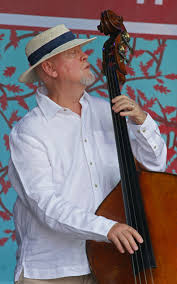 There can have been very few musicians who played such key roles, in so many different bands in so many different genres, as Danny Thompson. When he died at 86 in September, music lost one of its great connectors.
 Language: Ooh, a talkie!
 There are contradicting views and explanations of what dopamine is and does and how much we can intentionally affect it. However, the commonly heard notions of scrolling for dopamine hits, detoxing from dopamine, dopamine drains, and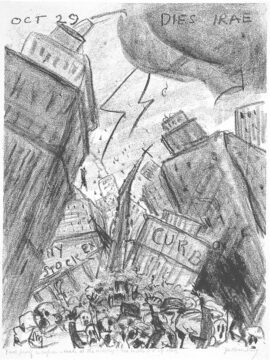
 When you walk through the gates to enter the B-52 Victory Museum in Hanoi, you immediately find the wreckage of what has been one of the most terrifying machines ever built: an American Boeing B-52 Stratofortress. Apparently, this wreckage largely came from Nixon and Kissinger’s “Christmas Bombings” of 1972.

 Throughout most of the UK (Northern Ireland is
 In June 1932, half a year before Adolf Hitler was sworn in as German Chancellor, Victor Klemperer watched Nazis on a newsreel marching through the Brandenburg Gate in Berlin. A professor of Romance languages at the Technical University of Dresden, whose area of specialization was the 18th century and the French Enlightenment, Klemperer (1881-1960) was unpleasantly gripped by this first encounter with what he termed “fanaticism in its specifically National Socialist form,” and by the “expression of religious ecstasy” he discerned in the eyes of a young spectator as the drum major passed by, balanced precariously on goose-stepping legs while he robotically beat time.
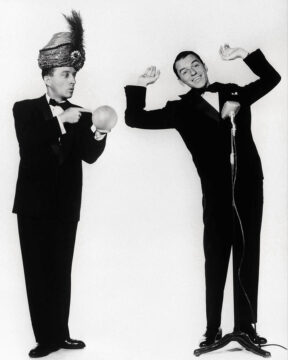 When my mother was a teenager in the early 1940s, a NY-area radio station ran a weekly contest, asking listeners to vote for their favorite singer among two: Crosby or Sinatra? How people made this preference known remains unclear to me: did you need a phone in your house to make a call to the station or was sending a postcard enough? Whatever the method, the winner would be announced each Sunday afternoon. While Sinatra often took the prize, Crosby occasionally outpaced the Jersey boy who grew up two towns south of Cliffside Park, my mother’s hometown. On those occasions, she told me, she’d stamp around my grandparents’ railroad apartment, enraged at the abject stupidity of her fellow listeners. When she’d tell this story, my mother would marvel at her parents’ forbearance, the way they’d accept these outbursts without comment, though they were highly disciplined, gloomy people for whom the idea of having an “idol,” or caring about his fate on a weekly radio show was surely alien. I like this insight into them, a softer side that I myself had only witnessed a few times.
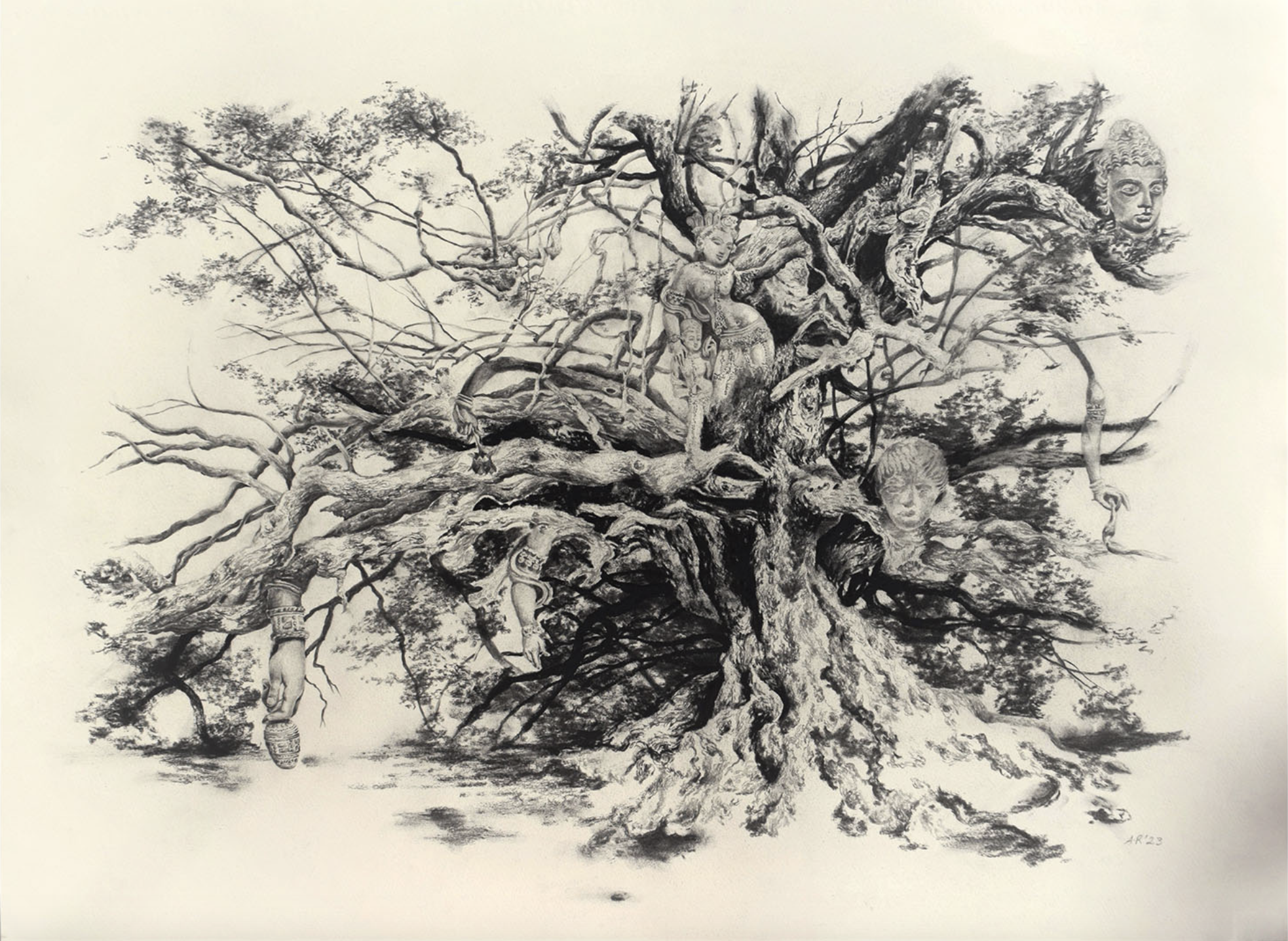 Anushka Rostomji. Waq Waq Tree, 2023, of the Flesh and Foliage Series.
 Jersey City is a medium-size city on the West bank of the Hudson River across from Lower Manhattan. Up through the middle of the 20th century it was a port and a railroad hub but that disappeared when containerized freighter became too deep to travel that far up New York Bay. Without any freighters the railroads were no longer needed. Light industry disappeared as well. Jersey City became back-offices and bedrooms to Manhattan-based business.