
by Rafaël Newman
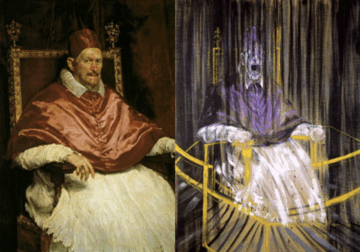
On September 29, 1978, Albino Luciani, who had been elected Pope John Paul I just 33 days earlier, on August 26, 1978, was found dead in his bed, his death likely due to a heart attack. Luciani had succeeded Paul VI, who was himself preceded by John XXIII—the two Popes were commemorated in their short-lived successor’s double-barreled appellation—and would be followed on October 16, 1978, by John Paul II.
I was 14 years old at the time and had recently begun studying ancient languages, so the Latin pronouncements from the Vatican press office aroused my exhibitionist adolescent spirit. This, combined with the salience of a solemnly pronounced “Year of Three Popes,” which echoed a similarly multiple interregnum in Roman imperial history; a perverse will to deflate overblown expressions of gravity, my own included; and a natural tendency to pomposity and sententiousness, all inspired me to write a poem:
Paulum sed magnopere
Pro Papa Ioanne Paulo PrimoNow the golden hammer has struck,
The pastor’s ghost is lost.
Oh, his great gain is our bad luck,
Ere the tomb of the VIth is moss’d.Oh, thou bless’d and humble man
Who in thy bare feet stand:
Cleanse our rude souls and spirits fan
With calm empower’d hand.Why art thou gone so soon from here?
Why was thy term so small?
And why is one who was so dear
Held tight in heaven’s thrall?
Not long afterwards, my father, himself a published poet and novelist and in those days a professor of creative writing at the University of British Columbia, asked what I had been up to recently. I passed on to him some of the verses I had been setting down in my journal, among them my poem on the death of John Paul I. He responded, along with words of cautious praise for other of my efforts, in surprise at my having found something so admirable in the late Pope that I had been moved to write him this encomium.
I was mortified. Read more »
 CW: As the title suggests, there will be discussion of death and dying and some mention of suicide in this post.
 Remember how Dave interacted with HAL 9000 in 2001: A Space Odyssey? Equanimity and calm politeness, echoing HAL’s own measured tone. It’s tempting to wonder whether Arthur C. Clarke and Stanley Kubrick were implying that prolonged interaction with an AI system influenced Dave’s communication style and even, perhaps, his overall demeanor. Even when Dave is pulling HAL’s circuits, after the entire crew has been murdered by HAL, he does so with relative aplomb.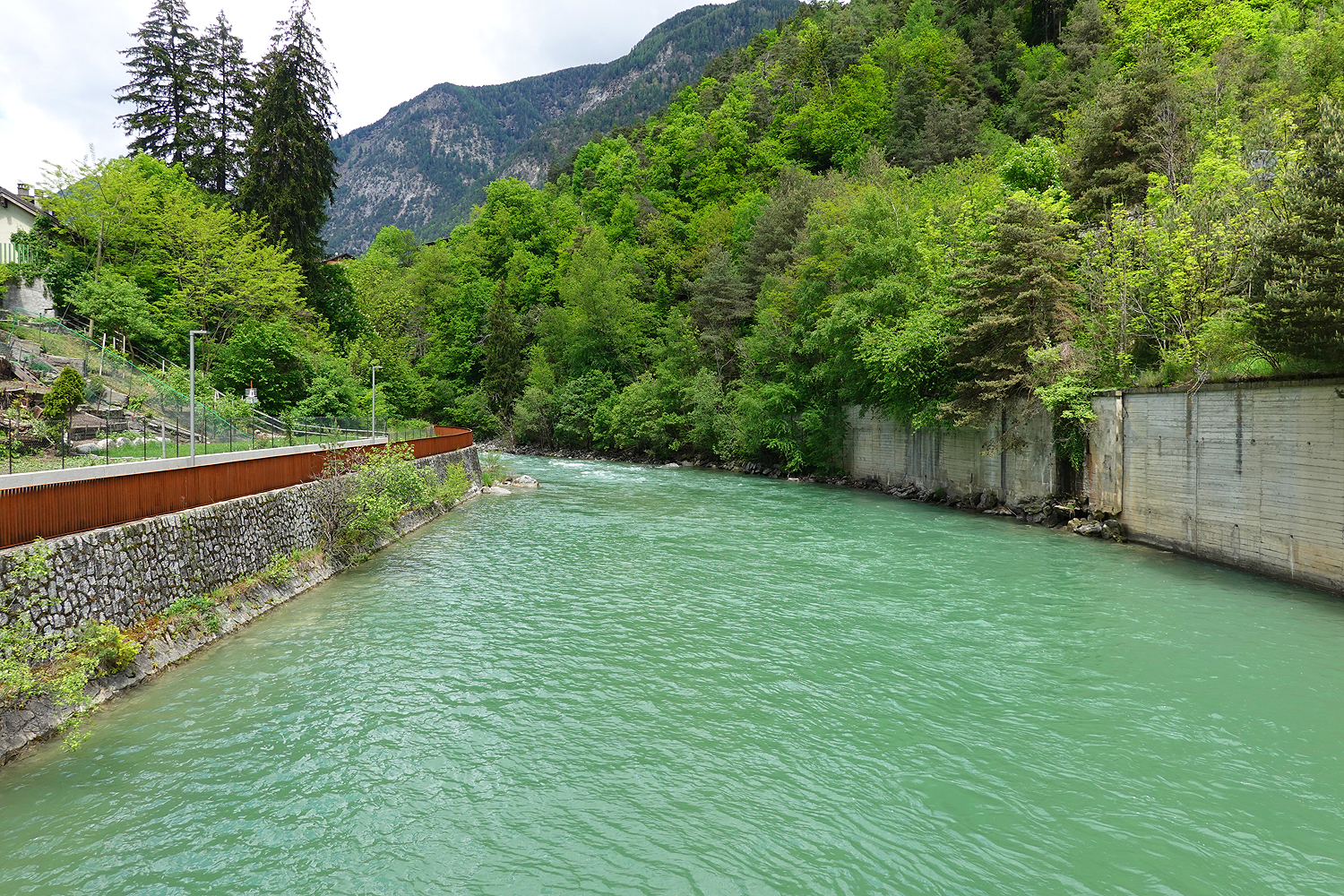
 3QD: The old cliché about a guest needing no introduction never seemed more apt. So instead of me introducing you to our readers, maybe you could begin by telling us a little bit about yourself, perhaps something not so well known, a little more revealing.
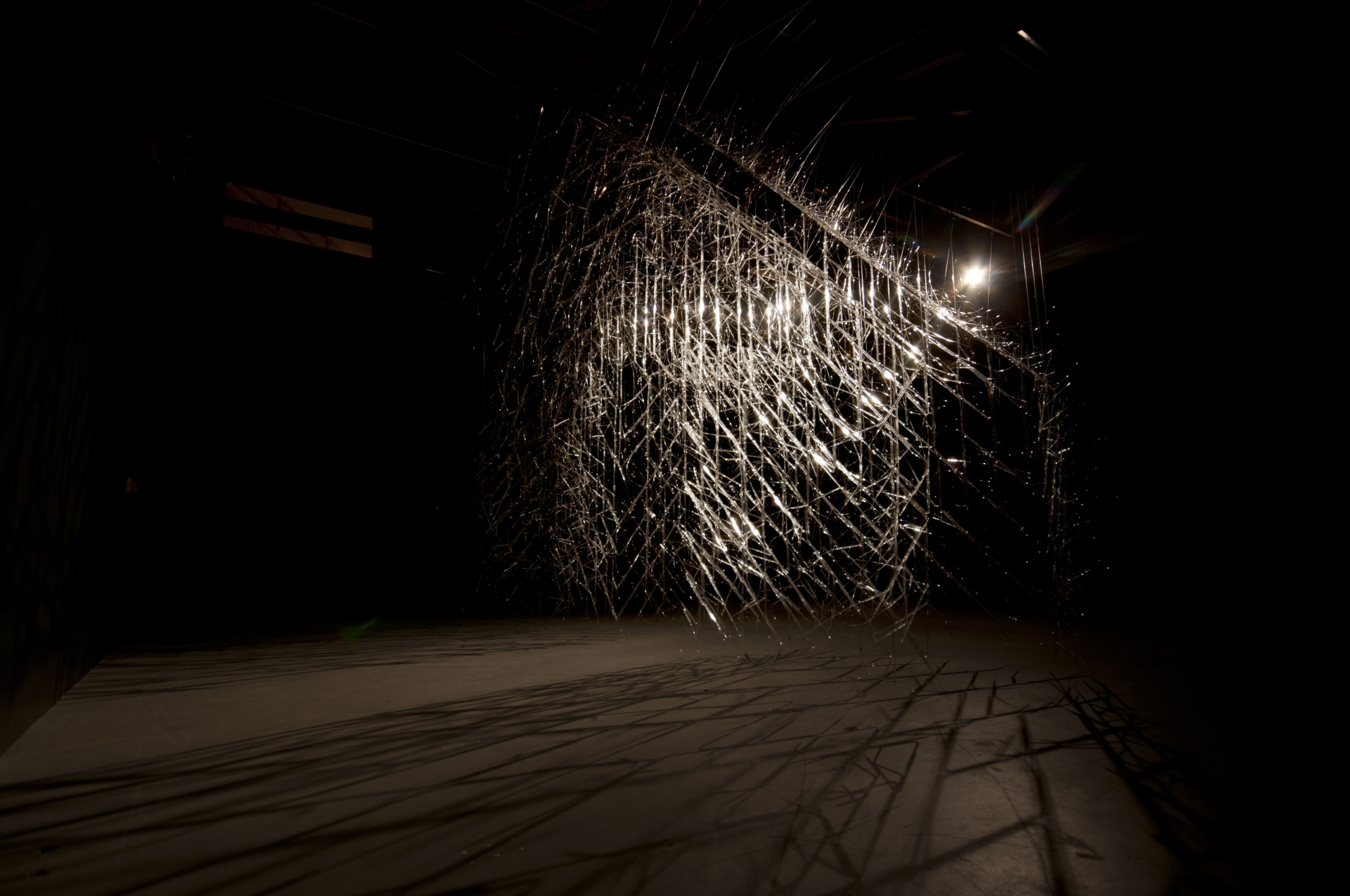 Katie Newell. Second Story. 2011, Flint, Michigan.
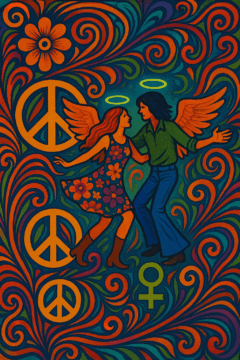
 It is a curious legacy of philosophy that the tongue, the organ of speech, has been treated as the dumbest of the senses. Taste, in the classical Western canon, has for centuries carried the stigma of being base, ephemeral, and merely pleasurable. In other words, unserious. Beauty, it was argued, resides in the eternal, the intelligible, the contemplative. Food, which disappears as it delights, seemed to offer nothing of enduring aesthetic value. Yet today, as gastronomy increasingly is being treated as an aesthetic experience, we must re-evaluate those assumptions.
 In my Philosophy 102 section this semester, midterms were particularly easy to grade because twenty seven of the thirty students handed in slight variants of the same exact answers which were, as I easily verified, descendants of ur-essays generated by ChatGPT. I had gone to great pains in class to distinguish an explication (determining category membership based on a thing’s properties, that is, what it is) from a functional analysis (determining category membership based on a thing’s use, that is, what it does). It was not a distinction their preferred large language model considered and as such when asked to develop an explication of “shoe,” I received the same flawed answer from ninety percent of them. Pointing out this error, half of the faces showed shame and the other half annoyance that I would deprive them of their usual means of “writing” essays.

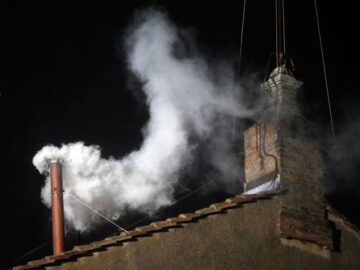 s on a common topic. Yet at noon on May 8th, all 16 high school seniors in my AP Lit class were transfixed by one event: on the other side of the Atlantic, white smoke had come out of a chimney in the Sistine Chapel. “There’s a new pope” was the talk of the day, and phone screens that usually displayed Instagram feeds now showed live video of the Piazza San Pietro in Rome.