
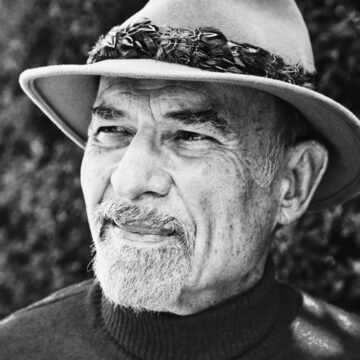
Yalom on Approaching Death

by Marie Snyder

CW: As the title suggests, there will be discussion of death and dying and some mention of suicide in this post. 

I thought nothing of following up my last post on Irvin Yalom on the meaning of life with Yalom on the meaning of death, until I started writing here. The very reality of being a bit wary of broaching the subject reveals the strength of societal taboos against admitting that we’re all going to die. Until it’s staring us in the face, we delude ourselves into thinking we will get better and better, mentally and physically, despite that our brain starts to shrink in our 30s, and our joints and organs will start to give out not so long after. We work hard to keep death clean and sanitized so the reality doesn’t seep in too much, and we try to do all the right things to keep death at bay: exercise, various special diets, wearing masks to avoid viruses. We can fix some evidence of erosion with meds and surgeries, sometimes miraculously, but some people even hope to keep their brain going long after their body dies. 

A few recent shows and films have me thinking of death further. The final episode of How To with John Wilson explores the cryogenics world, which appears to be an incredibly lucrative insurance scam. The movie Mickey 17 lightheartedly explores what it might be like to regenerate over and over again, and it doesn’t look pleasant. But Lee, the story of photographer Lee Miller, who took famous photos of the holocaust, helps us feel the resolve it requires to look death in the face. Kate Winslet captures the instinct to turn away and then intentionally turn back to open that door over and over. The ending takes a slightly different path, exploring how little we might be known even as we live. In burying our past, we can end up hiding from life. Yalom wants us to come to terms with the endpoint of our lives, and points out that the desire to be fully known, which is impossible, is yet another defence against accepting the finality of death by remaining alive in memories. We look for any loophole to refuse to believe we’ll be well and truly gone. 

In the documentary, Yalom’s Cure, Yalom explains that he started out working with a support group for people dying of cancer. One of the participants said that it’s too bad it took dying of cancer to learn how to live, and Yalom decided we need to figure out how to do that sooner. It was then he noticed how strongly we defend ourselves from any acknowledgement of death. Read more »
Sunday, March 16, 2025

A Look in the Mirror

MORE LOOPY LOONIES BY ANDREA SCRIMA

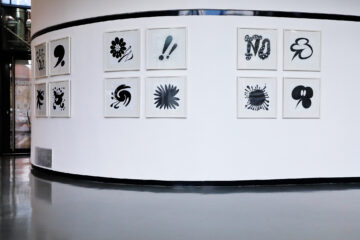
For the past ten years, Andrea Scrima has been working on a group of drawings entitled LOOPY LOONIES. The result is a visual vocabulary of splats, speech bubbles, animated letters, and other anthropomorphized figures that take contemporary comic and cartoon images and the violence imbedded in them as their point of departure. Against the backdrop of world political events of the past several years—war, pandemic, the ever-widening divisions in society—the drawings spell out words such as NO (an expression of dissent), EWWW (an expression of disgust), OWWW (an expression of pain), or EEEK (an expression of fear). The morally critical aspects of Scrima’s literary work take a new turn in her art and vice versa: a loss of words is countered first with visual and then with linguistic means. Out of this encounter, a series of texts ensue that explore topics such as the abuse of language, the difference between compassion and empathy, and the nature of moral contempt and disgust. 

Part I of this project can be seen and read HERE

Part II of this project can be seen and read HERE

Images from the exhibition LOOPY LOONIES at Kunsthaus Graz, Austria, can be seen HERE

 
Andrea Scrima, LOOPY LOONIES. Series of drawings 35 x 35 each, graphite on paper; edition of postcards with text excerpts. Exhibition view: Kunsthaus Graz, Austria, June 2024.

7. EEEK

Michel de Montaigne’s famous statement—“The thing I fear most is fear”—remains, nearly five hundred years later, thoroughly modern. We think of fear as an illusion, a mental trap of some kind, and believe that conquering it is essential to our personal well-being. Yet in evolutionary terms, fear is an instinctive response grounded in empirical observation and experience. Like pain, its function is self-preservation: it alerts us to the threat of very real dangers, whether immediate or imminent.

Fear can also be experienced as an indistinct existential malaise, deriving from the knowledge that misfortune inevitably happens, that we will one day die, and that prior to our death we may enter a state so weak and vulnerable that we can no longer ward off pain and misery. We think of this more generalized fear as anxiety: we can’t shake the sense that bad things—the vagueness of which render them all the more frightening—are about to befall us. The world is an inherently insecure and precarious place; according to Thomas Hobbes, “there is no such thing as perpetual Tranquillity of mind, while we live here; because life it selfe is but Motion, and can never be without Desire, nor without Fear” (Leviathan, VI). Day by day, we are confronted with circumstances that justify a response involving some degree of entirely realistic and reasonable dread and apprehension, yet anxiety is classified as a psychological disorder requiring professional therapeutic treatment. Read more »