
by Mark Harvey
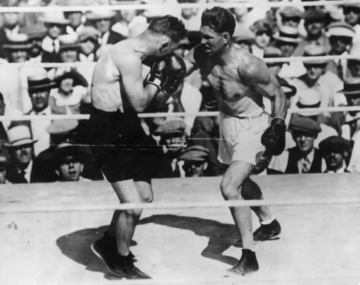
On a hot Ohio day on July 4th, 1919, a young man named Jack Dempsey from the tiny town of Manassa, Colorado, stepped into the ring to fight Jess Willard, a boxer who was sixty pounds heavier and five inches taller. The two were fighting for the heavyweight championship of the world, and the odds favored Willard, the bigger man and defending champion.
The fight was the most anticipated event across the country. Radio broadcasting wasn’t a thing yet, so men and women gathered at newspaper offices in every state to hear the “megaphone men” announce the fight from telegraph dispatches.
In Toledo, thousands of men surrounded the ring, wearing straw boaters with grosgrain hatbands.
The fight didn’t last long: Dempsey knocked Willard down six times in the first round. That Willard got up six times and survived four rounds before throwing in the sponge is a testament to his toughness. But he paid a terrible price. Dempsey broke his jaw, his cheek, his ribs, and gave him permanent hearing loss.
A surviving film of the fight shows Dempsey moving around the ring like a cat dwarfed by a slow-moving Willard. In modern boxing, the fight probably would have been stopped in the first round.
After his win, Dempsey became arguably the most famous and celebrated man in America. When he met President Coolidge a few years later, the President said, “Well, Mr. Dempsey, you’re a creditable champion, and you’re a more popular man than I am.”
Dempsey’s went on to win many more boxing matches, became a millionaire, and was hosted and toasted by the cream of America and Europe. If you knew his beginnings, you never would have imagined him becoming one of the world’s most famous men. Read more »
 3QD: The old cliché about a guest needing no introduction never seemed more apt. So instead of me introducing you to our readers, maybe you could begin by telling us a little bit about yourself, perhaps something not so well known, a little more revealing.