by Angela Starita
Teddy lives in two houses. They’re equally bereft of taste–good or bad. Teddy’s a dog and his nominal doghouse is inside the house of his owner, Jonathan. It’s built inside the closet under a stairway, with its entrance, the side facing Jonathan’s living room, covered in pale rusticated stone.
Jonathan calls it “the world’s most famous doghouse.” In interviews on feel-good segments of news shows, he refers to Teddy as “the world’s most famous dog” and explains that he himself is “blessed with a creative mind.” This last is in reference to the scenarios he dreams up for TikTok videos that feature Teddy as a Rabelaisian prankster interested only in buying toys and treats with Jonathan’s credit card, watching movies, and playing video games. He spends an inordinate amount of time on a couch.
It’s Teddy’s house that launched him to fame. Jonathan had been making DIY construction videos, and the one that garnered the most views was the closet-to-doghouse conversion. It had hit some collective nerve, the one that delights in miniatures and accounts for the popularity of dollhouses and children’s beauty pageants. Its fitted with a couch, shelves for photos a copy of PlayDog, and a television over a faux fireplace. My favorite of the videos has Jonathan crawling inside for Teddy-hosted sleepovers.
In the two years I’ve been watching Teddy videos, the mise en scene has moved from the doghouse to what I presume is Jonathan’s actual house, a place as scared of distinction as the model home developers “stage” for potential buyers—sparsely furnished in off-whites with names like Chantilly Lace and White Dove. Predictably, the first floor is an open-plan centered around a beige sectional sofa facing a high-definition television. Occasionally there are shots of a dining “area” and, in a behind-the-scenes video, Jonathan shows off his home gym, a room with a treadmill and other equipment. He and Teddy sometimes watch movies in the “home theater” a room with swollen, black recliners presumably facing an even larger screen. Read more »
 In February, after a month-long consideration, I set my New Year’s resolutions into a five-by-five grid. I made a BINGO card—twenty-four resolutions plus the FREE space. It was my attempt to gamify the whole tired resolution process that I’ve failed at so well. Surprisingly the trick seems to have worked, at least partially.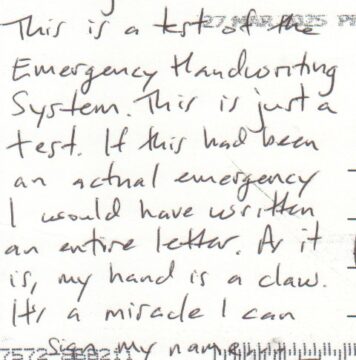
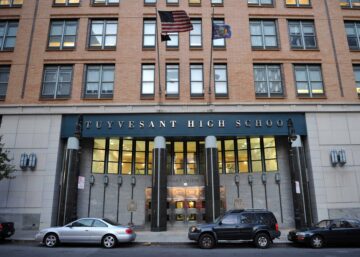 In the context of growing concern about educational equity, the persistent racial disparities associated with the Specialized High School Admissions Test in New York City continue to spark debate. As cities and school systems nationwide reconsider the role of standardized testing, the story of the origins of this test shed light on how deeply embedded policies can appear neutral while, in reality, reinforcing inequality.

 Nirmal Raja. Entangled / The Weight of Our Past, 2022.
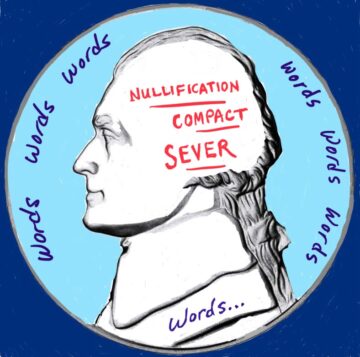 Words, so many words. Words that inspire “Ask Not,” and those that call upon our resolve “[A] date that will live in infamy.” Words that warn about the future “[W]e must guard against the acquisition of unwarranted influence, whether sought or unsought, by the military-industrial complex,” and those that express optimism about it “I’ve been to the mountaintop.” Words that deny their own importance “[T]he world will little note nor long remember what we say here,” while elevating themselves and the dead they honor to immortality.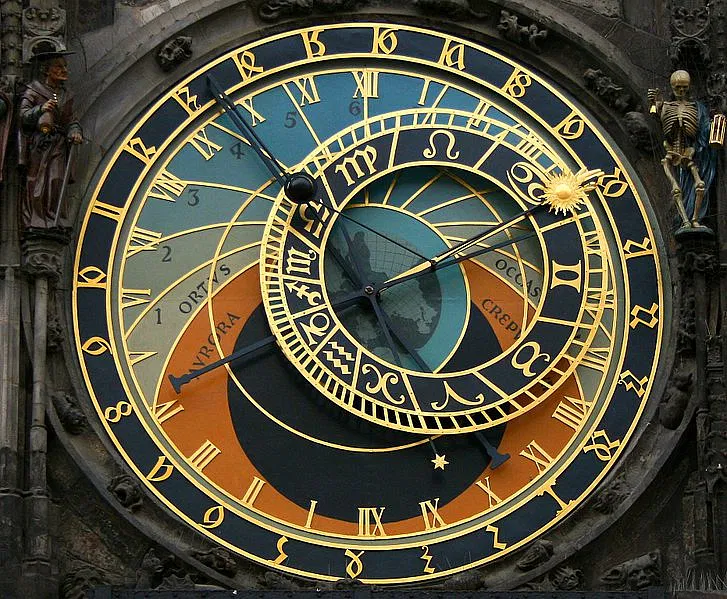
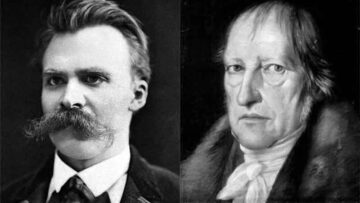
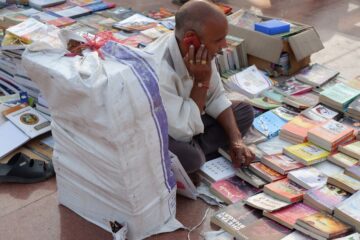
 Dhingra’s book is built on many months of Sundays spent walking the market, talking to traders and readers, and mapping the bazaar’s assemblages and syncopations. I was lucky enough to tag along on one of these expeditions in July 2023. Arriving empty-handed, we traced a circuitous route between tables piled high with dog-eared paperbacks under billowing canopies. I departed clutching lucky finds: a 1950s Urdu story collection and a strange out-of-print children’s novel called
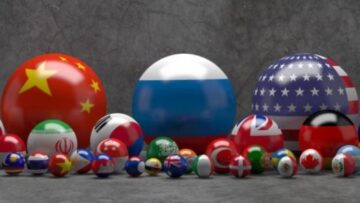 In 2007, at the Munich Security Conference, Vladimir Putin announced that the current world order had changed. The unipolar world order, with one centre of power, force and decision-making, was unacceptable to the leader in the Kremlin. Yet, more than that, Putin’s speech prepared the replacement of the unipolar world order, a replacement, he would later come back to, over and over again: multipolarity.