
by Daniel Gauss
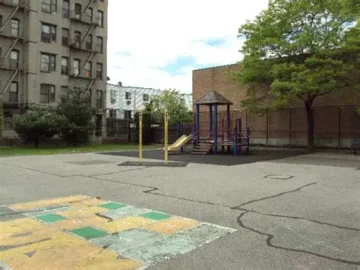
This story goes back to a time when Williamsburg was just starting to become the hipster promised land and just before 9/11. It can be classified as an obscure but, hopefully, interesting part of previously untold Brooklyn history, history which still resonates as gentrification continues its relentless march across the city. It’s basically about how I accidentally triggered a small, neighborhood political crisis by doing something no one expected: trying to clean up a neglected city park that had the same name as my old dog.
In 2000 I was looking for an inexpensive apartment to finish graduate school at Columbia. Contrary to any stereotypes, not every student who goes to Columbia has a trust fund, especially at Teachers College, where the student body was and still is more racially and economically diverse than at Columbia’s main campus. Yes, 120th street is still one of the widest streets in academia.
Colleges of education often draw students with a strong sense of social commitment and a desire to be of service. Diversity, thus, emerges less from institutional efforts and more from self-selection: people who choose this course of life tend to bring a wider range of backgrounds and experiences with them.
Each time I needed to move it was so difficult because I was living on such a small amount of money, from a little community center where I worked. So, I inadvertently became the type of person who becomes part of the first stage of the gentrification of a neighborhood. Like many struggling students, teachers, artists, and social‑service workers, I was just looking for a place I could afford.
I eventually found it on Ellery Street, near the Marcy Houses and the JMZ subway line – an area referenced in lyrics by Jay‑Z, who once lived around there. Geographically it was between Williamsburg, Bushwick and Bed-Stuy. Some well-heeled wag I knew at Columbia once sardonically quipped that the neighborhood formed a kind of “fertile crescent of economic deprivation.” Times have changed; that type of wag probably lives there now.
A young woman from the state of Washington named Nikki and I were the first white tenants to move into a walk-up, tenement-like building there. Nikki was a social work student and both of us had been motivated to move to Ellery Street by the same drive – a roof over our impoverished heads. Neither of us imagined that our presence might later be worked into an overall, neighborhood, real‑estate strategy designed to attract wealthier newcomers and displace the people who had resided in the neighborhood for years.
Now, I’ve thought about this issue considerably since then and concluded that when white, socially conscious young people move into neighborhoods that have been segregated for decades, without expecting the place to change for them, and intending to be a good part of the community, that action isn’t the problem. In fact, it defies the expectation of racial segregation in our cities that white America maintains for its own comfort.
What happens next, however, is not good or about integration at all, but about real‑estate opportunism. In our case, developers ultimately took the simple fact of two broke, white students renting inexpensive apartments, in conjunction with the other recent transplants, in other buildings, and used it to lure wealthier tenants in and push out the people who had sustained the neighborhood for generations. The real estate professionals knew how to turn even the smallest breach in racial boundaries into profit and displacement.
This was, at the time, a severely neglected neighborhood by the city. Giuliani was mayor then and I was tired of hearing about what a great job he had done cleaning the city up – he had, in fact, not spent much time or effort in this area.
More attention to this area by the city could have prevented gentrification, possibly ensured a healthful type of integration instead of displacement and, in fact, helped the neighborhood thrive on its own terms. But gentrification has been, I am guessing, the hidden agenda of New York City for quite a while.
Maybe it will stop with Mamdani as he is keenly aware of housing issues. I saw it blossom during the stultifying three terms (one forced on all of us) when Michael Bloomberg was mayor. Symptomatic of the governmental neglect of the neighborhood was a children’s park near our walk-up called Charlie’s Place.
Charlie’s Place was a patch of hard concrete with a few rusted pieces of equipment and broken booze bottles scattered across the surface. On some Saturdays, on my way to Manhattan, I might see a couple of kids horsing around in there.
I once had a dog named Charlie. He’d been rescued as a puppy from a neighbor who planned to drown a litter, and I raised him on baby bottles of veterinary milk from the age of 3 days. Years later I still miss the guy. So when I discovered a neglected playground nearby called Charlie’s Place, it struck a nerve in a way I can’t really explain.
I had been thinking about how I could meet more people from the neighborhood as I didn’t want to be the transplant who leaves early in the morning and cocoons at night. So Charlie’s Place gave me an idea. I wasn’t trying to improve the neighborhood, I knew only the city could really do that by infusing money and opportunity; I was trying to and hoping to find a meaningful place in the community.
Being an emotional goofball, it was also going to be a type of tribute to my old friend, Charlie. This was a time when the internet was in its beginning stages, so using my free printing account at Columbia, I typed up and printed out a number of flyers headlined: “Help Clean Up Charlie’s Place!” There was no real social media at the time.
I met with Nikki and a guy named Reuben. I brought the finest Mexican food from the Chinese burrito shop on Flushing Avenue and a few bottles of the inexpensive, surprisingly good beer you could find easily in the outer boroughs. Reuben was squatting in our building. In fact, about half the residents were. They had signed leases, but once they realized the landlord, Sam, didn’t have the money to take anyone to housing court, they simply stopped paying rent. The building was such a wreck that a judge might not have looked kindly on Sam anyway.
Eventually, he ran out of options and a group of nearby real‑estate investors bought the building from him and decided to renovate it from top to bottom. From what I understood at the time, doing so allowed them to reset the existing stabilized rents much higher. They had the resources to move the squatters out, and they did. But all of that came later. At this point in the story, we were just three people sharing cheap food and beer in a Brooklyn walk‑up.
I discussed my plans to tape flyers up around the neighborhood, to encourage residents from around the neighborhood to come to Charlie’s Place and, maybe, help clean it up. Neither of them liked the idea.
Reuben said, “Well, crusader, you must think people around here are pretty passive if they haven’t cleaned up the park.”
“No,” I said, “I don’t see passivity here, I see lots of families with hard-working moms and dads. I think people might be exhausted. When you’re working twelve hours a day for wages that barely cover your rent, it’s tough to fight City Hall over a small cement park the kids might not even really need. I’m guessing Charlie’s Place would be low on a list of priorities here.
“And, Reuben, who cleans up a park anyway? People on the Upper West Side don’t grab shovels and garbage bags and clean up their parks, why should the people here? This isn’t the neighborhood’s fault, it’s the city’s, which has left everyone to their own devices here. The city keeps the tourist zones spotless for the Disney crowd, and the people who voted for Giuliani get their nice parks. The city provides next to nothing over here.” I finished.
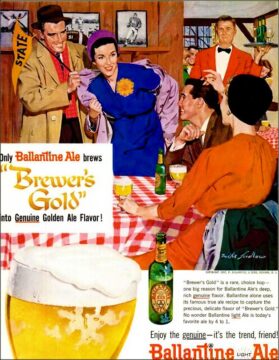
“But we all have to clean up the park now?” Reuben said, taking a big swig of one of the 22-ounce bottles of Ballantine Ale I had brought over to his place. Ballantine, $1 a bottle, brewed in the USA, but with that sweet import flavor. It had once been a famous brand in New York; you could see its logo on old historic photos of baseball fields from the 1950s and 1960s. Somehow it was still hanging on, even if you only found it in certain corners of the city.
I answered, “No, Reuben, nobody has to clean the park, but I had the idea. I want to meet people here – how am I going to meet anyone otherwise? I work and go to school from morning until night – and, frankly, why the hell not try it? I had the idea and I want to try it. Give me one reason why I should not try it.”
“What are you going to do when nobody shows up?” was Reuben’s rebuttal. “I mean, you said it yourself. Everybody works hard here. Everybody is busy. Most of the people I know in this building bust their asses every day for peanuts and, frankly, they are going to say what you previously said, ‘Why should I clean that park – the rich bastards in Manhattan don’t have to do that. Tell Giuliani to get his ass over here and clean the park.’”
“Well,” I said, “I get that. I am just hoping to meet people. I’ll bring my own garbage bags, my own gardening gloves, my own big broom. Who knows. If people see me out there, maybe they will stop by and chat. People are friendly. And, Reuben, this is kind of personal, I wasn’t going to say this, but I’m also doing this as a tribute to my old dog, Charlie.”

I explained the whole story: three-day-old pup whose eyes had not even opened when he was given to me, feeding him with a little baby bottle on a rocking chair, buying a playpen for him, having him become a good companion during a tough and formative period of my life. He lived to be twelve years old. His death was one of the most devastating moments of my youth.
Reuben and I had had plenty of the sweetness of Ballantine and were primed for mawkishness. My unofficial knick-name for Ballantine was the Elixir of the Maudlin. Reuben said, with tears forming in his eyes, “I had a dog when I was a kid, Bandito. I miss that little rascal as well more than anything. If the park were called Bandito’s Place, I’d clean it up too! OK, you got a partner in crime. It’s a hell of a good idea to meet people by cleaning up that park.”
So I started posting my fliers on a Monday, on my way to work and school. Monday night, when I returned, I saw that all the fliers had been pulled down. No matter. I could print out a good number at Columbia for free, so I was ready for the next morning. Columbia was becoming the de facto funder of the advertising portion of my community enrichment plan.
Again, the next morning, I taped the fliers up all over the place. Upon arrival home I discovered all the fliers had been torn down again. It reminded me of a war movie where one side would build a bridge only to have the other side dismantle it the next day.
I could see a huge number of old political posters stretching back years, and other flyers all over the place, though. These were not being torn down. My “Help Clean Up Charlie’s Place!” was being torn down. What kind of malicious guy, I wondered, was spending his time walking around deliberately tearing my flyers down but leaving all the old garbage up?
Monday through Thursday I posted my flyers in the morning and noticed when I arrived back home that they were all gone. Every single one. I had hoped that enough people might have seen them before they were taken down.
Friday morning, I had my usual stack of flyers and scotch tape. Walking toward the park, however, I was met with an amazing surprise. Charlie’s Place was overrun by City of New York Parks and Recreations workers. THEY were now cleaning the park, replacing equipment, vacuuming up glass shards etc. I was shocked and initially disheartened; they were ruining my plans to meet with my neighbors. I put my flyers and tape into my backpack and walked over to them. I innocently approached a guy who looked as if he might be a supervisor.
“Hey, uh, sir, how are you? Uh, you know, some group or something has been placing flyers around the neighborhood. They were going to come here tomorrow and fix this place up. Are you with them? Starting early?”
He looked at me with anger in his eyes. “Do you know who the hell this group is? The politician’s office has had us coming here every afternoon to pull down their damn flyers. They put up so many damn flyers every day of the week! What the hell. Every flyer is supposed to be worth a $50 fine. We sure as hell would like to find out who they are. We at Parks and Rec wanna bust their asses big time.”
Oops.
“Well, sir, I don’t know. I saw these fliers up every day on my way to work. So you guys decided to help out?”
“Help out. New York 1 called the politician to try to find out what was going on. Someone from New York 1 even saw a flyer. What is New York 1 doing in this neighborhood? They were going to send a news van out on Saturday to interview the people who showed up. The local politician was made to look like a lazy, incompetent bozo. They asked him why he didn’t clean his parks and why ordinary people had to do it for him.
“Parks has to fix this damn place before New York 1 can publicly embarrass anyone. How are we going to get this chunk of cement park to look like the Hanging Gardens of Babylon by tomorrow? The politician ordered everything you can have in a park, but it’s a little park, more like a playground, made almost completely of cement.
“How the hell can they call a chunk of cement a park anyway? I think it’s a playground, just not much here to play with. This look like a park to you? Well, at least we’ll clean it up and come back on a schedule. It should have been on a schedule anyway. Part of me doesn’t blame those bastards with the flyers. But if you know who they are, tell me!”
I said, “Thanks for your effort. I think the kids will like this.”
How did I feel about this? Part of me felt proud, part of me felt robbed. When I saw all the great efforts they were putting into the park, I decided this was, of course, the best outcome. We could never have fixed any of the equipment, sparse as it was. I had wanted to meet neighbors and try to be a good member of my community, invite people over to the building with Nikki and Reuben for some Ballantine and Chinese/Mexican, participate in some of the barbeques in the summer, but I would need to find another way to do this.
Although I wasn’t trying to put pressure on my local politician, I inadvertently did and now perhaps the kids around Ellery Street were going to benefit just a little. OK, I thought, I’ll take it. Charlie will take it.
Analysis by an ex-sociology student, now a wandering ex-pat in Asia:
I’m not claiming to have proved anything. There’s no regression table here, no statistically significant correlation. But I do think the Charlie’s Place episode reveals something about how our democracy now functions, or fails to. I studied sociology at Wisconsin during one of the peaks of that department, when folks like Charles Camic, Hans Joas, Phil Gorski, Nina Eliasoph, Stephen G. Bunker and Mitch Duneier were all in the same building. So I guess I want to show I at least learned something there.
The strange thing was that the city didn’t react to a complaint. It reacted to the possibility that ordinary residents might take action before a politician, and that television cameras might record it. Elected officials panicked and went out of their way to make sure they did something before the people could do anything.
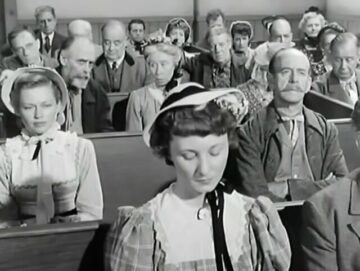
We now have a system where we hire people to handle our civic responsibilities, and then we retreat into our private lives. Maybe that’s the painful truth: we’ve become like the townspeople in High Noon. When the moment for collective action arrives, we insist we’ve already paid someone else to do it.
If those public officials ever delivered something genuinely transformative, maybe the arrangement would make sense. But the fact that they don’t, or don’t do as much as they could, is tied to this very structure. A government that expects passivity from its citizens eventually learns to meet their expectations.
I’ve been living and working in China since 2019 and the political life of an American who votes does not always seem substantially different from the political life of a non-voting Chinese person. In the U.S., we’re allowed to vote, but the range of choices seems to be narrowed down before we enter the booth.
For example, in 2016, when Bernie Sanders seemed ready to win, the Democratic Party’s machinery, long aligned with Hillary Clinton, demonstrated the power of a system designed to favor the established candidate. In 2020, many believed moderate Democratic elites worked behind the scenes to rally behind Joe Biden and stop Sanders, the progressive frontrunner, from securing the nomination. This suggested a coordinated effort among party leaders, donors and media outlets to ensure Biden’s victory. The overall result is a system I call ‘airline food democracy,’ where the menu is fixed, and we’re invited, ultimately, to choose between two stale entrées.
Actually, the Chinese people around me, who don’t vote, seem to experience a government that is very responsive to everyday needs. I see no homelessness, no street crime, consistently strong infrastructure, affordable, quality health care and a higher share of young people going to college and actually graduating than in the United States. It’s hard for me to argue that a typical American enjoys a democratically empowered daily life, and the Chinese citizen seems to be receiving excellent services.
There’s another aspect to this, one that Franklin Roosevelt understood and spoke about directly. I wrote about it last month when discussing his argument that economic democracy is a prerequisite for political democracy. FDR pointed out that people who are barely getting by financially will struggle to participate fully in civic life. Exhaustion and scarcity narrow one’s capacity for democratic duties. His view was simple: if you put money in people’s pockets, you also create citizens who have the time, energy and stability to participate in public life.
Passivity was never meant to be the essence of democracy. Even Alexis de Tocqueville, who came here from France and admired the energy of our civic life, probably wouldn’t recognize this version.
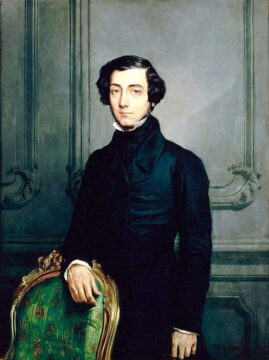
De Tocqueville, in Democracy in America (1835/1840), repeatedly observed that Americans form associations for all kinds of purposes – charitable, religious, educational, political – and that these voluntary groups trained people to collaborate, solve problems and hold officials accountable. Without this civic participation, he argued, democracy would weaken.
De Tocqueville saw citizens actively managing schools, roads and local affairs. People didn’t just vote; they were involved in governing in small ways that kept the system alive and dynamic. He warned that if citizens become passive and rely entirely on elected officials, the “spirit of participation” diminishes, and democracy will calcify into a hollow, bureaucratic shell.
The small victory at Charlie’s Place also suggests something larger: nothing improves when we stop putting pressure on our elected officials. Our basic relationship with our politicians is built on low expectations. If they avoid scandal, they can hold a comfortable seat for decades. And what system could better encourage self‑interest than one where citizens rarely demand anything significant?
The costs of that passivity are everywhere. Homelessness persists at unacceptable and ever-increasing levels, a problem other countries have effectively eliminated while we barely attempt serious solutions. Our cities remain racially segregated in ways that reproduce unequal opportunities, yet this is no longer even a topic in mainstream political debate. Our overcrowded prison system is fed by poverty and economic inequality.
The educational system struggles for the same reason. Children in low‑income communities face economic conditions that undermine learning long before they enter a classroom. And growing numbers of people live paycheck to paycheck, which creates a vicious cycle: the more precarious their lives become, the less capacity they have to participate in democracy or demand reform from the people who claim to represent them. Franklin Roosevelt warned that poverty breeds demagoguery and authoritarianism. It’s hard not to see that warning becoming reality in our national politics today.
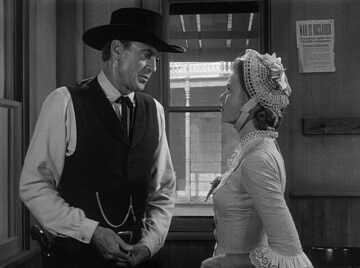
Nothing moves in a positive direction when the people do little but vote. We have become fully comfortable with caretakerism. Perhaps Roosevelt was right and poverty has hollowed out American democracy, a process accelerated by decisions like Citizens United, which handed even more influence to the wealthy. We seem to have drifted from de Tocqueville’s civic energy to the townspeople we mocked in High Noon.
The solution isn’t that tough: we can start with term limits and break the cycle of career caretakers. Restructure the process so teachers, mechanics, artists, nurses, custodians, not just wealthy lawyers, can realistically run for Congress. In 1969 we were close to implementing a form of universal basic income that might have eliminated poverty entirely, but the lawyers in the Senate ruined it.
We can do what Roosevelt wanted to do before he died: develop economic democracy as the foundation for political democracy. We need to re‑engage our civic responsibilities, learn how policy actually works, learn about education, homelessness, economic security, and recover our large‑scale visions: a second Bill of Rights, another war on poverty, another attempt at universal basic income.
The more informed we become about what is possible, the more pressure we can exert, even on the caretakers who currently run the show. The small “victory” at Charlie’s Place suggests that democratic life only moves forward when ordinary people do. We have to enable one another economically to participate. We have to learn more. We have to expect more. We have to reclaim the work that we once assumed someone else would do.
Enjoying the content on 3QD? Help keep us going by donating now.