
by Daniel Gauss
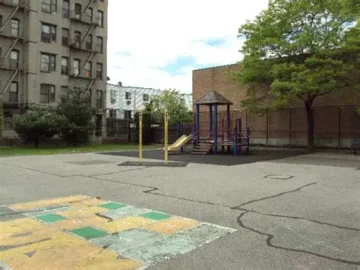
This story goes back to a time when Williamsburg was just starting to become the hipster promised land and just before 9/11. It can be classified as an obscure but, hopefully, interesting part of previously untold Brooklyn history, history which still resonates as gentrification continues its relentless march across the city. It’s basically about how I accidentally triggered a small, neighborhood political crisis by doing something no one expected: trying to clean up a neglected city park that had the same name as my old dog.
In 2000 I was looking for an inexpensive apartment to finish graduate school at Columbia. Contrary to any stereotypes, not every student who goes to Columbia has a trust fund, especially at Teachers College, where the student body was and still is more racially and economically diverse than at Columbia’s main campus. Yes, 120th street is still one of the widest streets in academia.
Colleges of education often draw students with a strong sense of social commitment and a desire to be of service. Diversity, thus, emerges less from institutional efforts and more from self-selection: people who choose this course of life tend to bring a wider range of backgrounds and experiences with them.
Each time I needed to move it was so difficult because I was living on such a small amount of money, from a little community center where I worked. So, I inadvertently became the type of person who becomes part of the first stage of the gentrification of a neighborhood. Like many struggling students, teachers, artists, and social‑service workers, I was just looking for a place I could afford.
I eventually found it on Ellery Street, near the Marcy Houses and the JMZ subway line – an area referenced in lyrics by Jay‑Z, who once lived around there. Geographically it was between Williamsburg, Bushwick and Bed-Stuy. Some well-heeled wag I knew at Columbia once sardonically quipped that the neighborhood formed a kind of “fertile crescent of economic deprivation.” Times have changed; that type of wag probably lives there now. Read more »