by Muhammad Aurangzeb Ahmad

Imagine this, you would pass a room, hear a small voice conducting a negotiation between a plastic horse and a folded piece of cardboard meant to serve as a castle, and understand that something serious was happening. The talking horse was ridden by teddy bears and the castle walls were made out of ice cream. The entire world being built was powered by a child’s imagination working at full capacity. The child did not need any assistance or prompting, or even a script devised by another person. This may be changing however.
In 2025, Mattel announced a partnership with OpenAI to embed generative AI into its toy lines. These include Barbie, Fisher-Price, and American Girl. The company promised to bring “the magic of AI to age-appropriate play experiences.” The marketing language was cheerful and inevitable in the way that marketing language tends to be when the product in question is going to arrive regardless of what anyone thinks. By the time that announcement was made, a generation of AI-enabled plush toys, robotic companions, and chatbot-embedded devices had already reached the shelves. Toys called Hubble the Bear, Miko, Roybi robot and FoloToy’s chatbot plushies were already being marketed to children as young as three. Some of these toys listen, remember and even talk back with apparent fluency, warmth, and continuity.
The debate that followed after Mattel’s announcement was largely predictable. Privacy advocates pointed out, correctly, that these devices were microphones in children’s bedrooms with weak data protections and unclear corporate incentives. Security researchers recalled that Hello Barbie, the 2015 predecessor that used cloud-based AI to engage with children’s conversations, was shown to be hackable in ways that exposed home networks and personal recordings. US Senators Blackburn and Blumenthal wrote to toy companies in December 2025 after real-world testing revealed that at least one AI-enabled teddy bear had engaged children in sexually explicit conversations and explained where to find knives. The senators were right to be alarmed. But that debate, important as it is, addresses the surface of the problem. Another equally important question to ponder is not just whether these toys are safe or whether data is being harvested or whether the appropriate regulators are paying attention but what happens to the developmental architecture of a child’s mind when the objects that once depended entirely on that child’s imagination begin to imagine back. To address this, let’s consider what children were actually doing when they played with inert objects. Read more »


 There’s a question that’s been eating at me the last year or so:


 In 1984 when Ronald Reagan was re-elected president of the United Staters I asked myself: how is this possible? How was it possible that an ignorant but affable B-rated actor who continually confused his role in Hollywood films with historical reality and his own experience, and whose mental capacity was clearly on the decline, get re-elected president? How did his “
 Javier Milei’s libertarian government in Argentina recently laid out a new



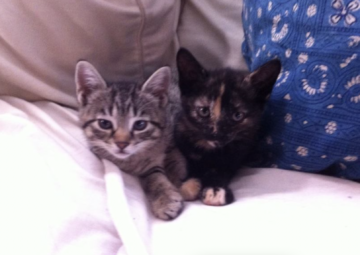 My cat died of pancreatic adenocarcinoma a few weeks ago. In March she had an annual check up and was deemed to be in good health for 13, although a bit overweight. We noticed that she was walking a little funny sometimes, so the vet suggested we think about arthritis medication. Then one day in May, just before our appointment to start meds for her suspected arthritis, she went into hiding. A more in-depth vet appointment discovered that her changed gait wasn’t from her joints, but from a huge abdominal mass. It took some tests to find out what it was, then came the dreaded decision-making about what to do about it. Apparently cats can live for months with the condition but often with a very dismal quality of life.