
by Jochen Szangolies
In my day job, when I’m not regaling the readers here at 3 Quarks Daily with rash ruminations on free will, power and politics, or why people sometimes erect huge stones for no apparent reason, I work on finding prospective applications of quantum computing for the German Aerospace Center (Deutsches Zentrum für Luft- und Raumfahrt, DLR). With the timelines on useful quantum computation widely seen as contracting (at least according to those entities that stand to profit the most from this belief), I’m suddenly faced with an awkward question for a theorist: what does it mean for society at large if my area of expertise suddenly makes the leap from the page into the real world? And what are my own responsibilities in shaping this transition?
It’s probably not a hot take to suggest that humanity might not have the greatest track record in shepherding the rollout of new technology in such a way as to minimally disrupt, much less aid, social progress. Sure: technological marvels are instrumental in having brought about a revolution in wealth, health, and knowledge. But in fingering such easily-tracked metrics, we must be careful not to lose touch with more difficult to quantify markers of human flourishing, like meaning, community, joy, or kindness. As argued previously, each selection of greedily optimized KPIs for the human project relegates what falls beyond their ambit to mere externalities, hidden from view—often literally by exporting unwanted byproducts, material and ideological, to countries less able to make their concerns heard on the world stage. While it’s great that ‘we’ in the sense of a fictitious ‘average person’ enjoy greater wealth than ever, if this comes at the prize of exploiting 5 times the resources our planet generates per year, we’re not looking at a great long-term strategy.
The creed of the modern tech entrepeneur has long been ‘move fast and break things’. But with technological capabilities that encompass anything up to the wholesale destruction of a livable ecosystem, and a sixth mass extinction already underway, we should perhaps slow down a little before breaking any (more) things that can’t be fixed.
Quanta Don’t Kill People
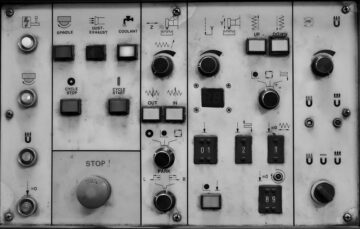
The first immediate temptation for the theorist is to wash their hands of messy real-world issues like application and implementation. The second is a collapse to a mollifying pragmatism: if I (or more perniciously, ‘we’) don’t do it, somebody else (‘they’) will. I think these are both essentially cop-outs, ways to isolate a theoretically ‘pure’ pursuit from the sticky moral implications of moving earth (by which I mean putting shoulder to handle and facilitate some change in the world, however minute, and with whatever consequences to the people living in it). What quantum computing (potentially) does is to provide us with new handles, new ways of interacting with the world, new means of shaping the streams of resources, production, and power. In short, it furnishes new affordances: the operating panel we use to interface with the world gains new knobs, levers, and dials to push and twiddle as we see fit. Such an increase in control is never neutral: how we interact with the world shapes the way we conceptualize it. Try to put a shiny red button in front of somebody with the injunction not to push it: how confident are you they won’t?
The safer bet seems to be that any button built will eventually be pressed. Thus, the ethics of the act of building it must be thought in conjunction with those of the act of pressing it. Perhaps there is research in the rarefied strata of pure mathematics that can be done solely for its own sake, but whatever stands a chance to leak out into the world should take consideration of the consequences of such leakage.
The second attempt to insulate research from real-world considerations, aimed at abstracting individual responsibility away and substituting a diffuse ‘somebody’ as the ultimate agent instead, fares not much better. On this notion, somebody will only build it if that somebody thinks that if they don’t, somebody else will. But this immediately collapses the ethical weight back onto the person articulating this presumption: if they themselves didn’t do so, they wouldn’t have reason to think others, in their place, would. So this becomes just a self-fulfilling prophecy: it is only their belief that shapes the conditions for its truth. After all, it is perfectly possible to agree, on a social scale, that something could be done—and then, to just not do it. Acting against this possibility is then an act of individual responsibility.
This, of course, invites the question: why do it at all? Why build quantum computers? Why, indeed, do anything if it just carries the prospect of novel moral quandaries to untangle?
There is no general answer to this question. The closest one can probably come is to appeal to simple hope: that, all else said and done, in the end, there stands a sufficient probability that a given technology may be used for greater gain than loss, where of course those two concepts themselves hide a great deal of complexity behind useful handles (gain, or loss, for whom, and how should we individually weigh the losses of one against the gains of another?). But before coming to its specific ethical considerations, let me make the case for hope about quantum computing.
Bread From Less Than Air
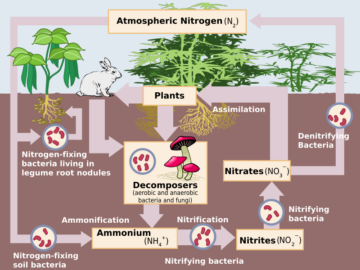
In all brevity, then, here’s a pitch for the positive transformative potential inherent in quantum computing. The Haber-Bosch process is a means for synthesizing ammonia (NH3) from atmospheric nitrogen (N2) and hydrogen (H2). This ammonia is a key ingredient in fertilizer around the globe—contributing to providing nutrition to billions. Indeed, without this process, advertised a hundred years ago as creating ‘bread from air’, feeding the population of the world would not be possible without devoting huge amounts of land to agriculture.
Yet the process is highly energy intensive: running at temperatures exceeding 400°C (750°F) and a pressure of 150 bar, it alone is responsible for up to 2% of global energy production and 3% carbon emissions, while consuming roughly 3% to 5% of the total natural gas output.
But we know that a better way is possible. The chief energy consumption is thanks to breaking up the highly stable N2 triple-bond (which incidentally is what makes nitrogen a key ingredient in most modern explosives) in the process of nitrogen fixation. In nature, nitrogen-fixing bacteria can perform the process at remarkable efficiency, at room temperature and ambient pressure, providing plants with crucial fertilizer in a symbiotic relationship. Learning their tricks could open up a crucial pathway to greener food production for a substantial fraction of the world’s population.
It’s here that quantum computing becomes potentially relevant. Nitrogenase, the enzyme that catalyzes nitrogen fixation, hosts the iron-molybdenum cofactor (FeMoco) in its active sites. Understanding the energy levels of this fairly small molecule may then point the way to more efficient pathways towards ammonia, and hence fertilizer, production. But even fairly small molecules are difficult for classical computers to calculate exactly. The main culprit here is the quantum superposition principle: for any two possible states of a quantum system, their combination again yields a possible state. Thus, classical devices face an exponential burden in tackling such problems. At least for certain classes of problems, the computation of molecular energy levels among them, quantum computers are believed to provide a substantial speedup, solving problems infeasible for classical devices.
The extremely optimistic stretch goal is then that quantum computing might not just aid in reducing the energy (and thereby, also financial) costs of current food production, but might also help put food on the table of those that are currently threatened by hunger and starvation—approximately 673 million people.
Of course, whether this hope proves realizable remains to be seen. However, as a motivating example, we can take this as emblematic of the kind of hopes one might pin onto quantum computing as a real force for the betterment of society.
With thus a plausible case for engaging in this kind of research in hand, let us return to the ethical questions.
Pernicious Paradigms
The first question, then, is whether there are any specific ethical questions that are raised by quantum computing, or if, for all its novelty, it is ultimately just more of the same—new ways of moving earth, but still just moving earth, at that. In principle, that a technology enables us to do something more efficiently doesn’t mean that any truly novel ethical considerations come into play, so there may seem to be a question of scale, of quantity, but not necessarily of quality. And it’s true: quantum computers can, in the end, compute all the same things classical computers can, just (sometimes) more efficiently. So, one might say, no genuinely novel ethical conundrums should be expected.

But I think this falls ultimately short. The ability to manipulate the world in novel ways leads to the emergence of equivalent novel ways of thinking our relationship with the world, and thus, changes in both our own self-image and in the concepts we apply to the natural world around us. A good example is the development of steam power: while its most immediate consequence is literally only to move earth more efficiently, its rapid deployment and ease of use invites thinking of anything as mere earth to be moved, and of us as primarily earth movers. That is, it enters us into a relation of production with respect to the natural world, and likewise transforms the latter into what Heidegger calls Bestand, standing reserve, a repository of resources to be exploited (see also this essay). When all the world is opened up to exploitation, it becomes perceived as an object of exploitation, and we ourselves become its users, beneficiaries to its riches to be expended at our leisure. The mode of production superimposes itself onto any other possible engagement with nature—the forest becomes an as-yet unharvested repository of lumber, rather than a quiet place of an afternoon’s respite and recreation.
In the words of condensed matter physicist and Nobel laureate Philip W. Anderson, more is different—at least sometimes. Quantitative changes can bring about qualitative novelty. Moving more earth more efficiently leads us to thinking differently about earth (or even the Earth) and the act of moving it.
There is a useful analogy here to the transformative effect Kuhnian paradigm shifts can have on society, and on the human self-image. Most science, according to historian and philosopher of science Thomas Kuhn, proceeds according to fixed basic principles, within a given research paradigm. But eventually, discrepancies to the fundamental assumptions of the paradigm accumulate, until a new paradigm emerges, whose basic principles rebuke, and are to a certain extent incommensurable with, those of the old one. An example is the wholesale replacement of the rigid spacetime structure of Newtonian mechanics with the dynamic manifold of Einsteinian relativity: from an immutable background against which all motion in the universe can be measured, to an active participant in the universe’s ongoing unfolding.
Sometimes, paradigm shifts spill over beyond narrow scientific debates into broader society, and if they do so, they can bring about social changes all on their own. Consider the Copernican revolution ejecting humanity from the center of the cosmos; or the advent of Darwinian evolution demoting us from the crown of creation to just one more of Earth’s creatures, continuous with apes and all animals; or the doubt Freud managed to sow in our conviction of being the sole sovereigns of our own minds. All of these represent not merely discontinuous jumps in our knowledge about the world and ourselves, but reframed how we think about ourselves as beings within the world.
But just as scientific paradigm shifts can have profound effects on our self-image, so can technological innovations. Indeed, as science and technology are profoundly intertwined, the latter may serve as a vector for bringing the full force of the former to bear: think for instance of the film Gattaca that imagines a society fundamentally changed by genetic engineering, based ultimately on the insights of Darwin.
Quantum Quandaries
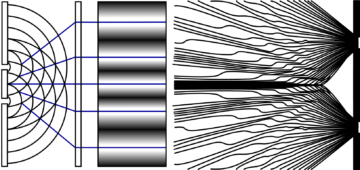
Technology, we have seen, may radically shift the human experience in the world, even if it poses no radically novel means to shift earth as such. What then are the dangers and chances of quantum computing specifically? There are two related issues with answering this question. First of all, in general terms, conceptualizing the specifics of a novel paradigm from within the preceding one is always fraught, because one should expect that the assumptions at the basis of such speculation are exactly what will be overturned (an error common to most AI prophecies, be they of doom and gloom or utopian futures). But there is a more specific worry related to the quantum roots of quantum computing: while there is widespread agreement that the development of quantum theory represents a paradigm shift at least as big as that of relativity theory, there is little consensus regarding what, exactly, the new paradigm entails.
It might perhaps be fitting that the quantum future is mired in uncertainty, even more so than with more quotidian perspective shifts from adding a few knobs and levers to our control panels. But perhaps it is also an opportunity: an invitation to, for once, not merely stand idly by and let technological change wreak whatever it will, which all too often seems to be the concentration of power and wealth in the hands of those quick enough to bring such new means of production under their control. Perhaps we are invited to choose our own future in the absence of a pre-paved pathway. In closing out this essay, let me thus be an unabashed optimist for a bit, and sketch a way how quantum computing and its possible paradigm shift not only promises to feed the hungry, but also points towards a more harmonious way of engagement with the world an each other than the logic of production and exploitation of the steam engine.
In their 2007 book Meeting the Universe Halfway, physicist, philosopher and feminist theorist Karen Barad offers up a new metaphysics for quantum theory called agential realism. It questions the traditional subject-object divide that sees us as removed operators acting on nature—moving earth—and instead, recasts matter, meaning, or subjective experience as emerging through ‘intra-actions’. The neologism here is intended to signify that the objects of the world are not pre-existing things that come to (inter-)act with one another, but rather, that their nature is only shaped by means of a mutual process of enactment. This forms an antidote to the logic of working on a standing reserve of raw materials, and instead invites us to consider ourselves as part of an active mesh of differentiations, agential ‘cuts’ where boundaries are temporarily enacted to allow an approximate object-subject description, giving rise to individual phenomena.
Should the novel paradigm introduced into society by quantum computation take this form, perhaps we can take it as a jumping-off point to question capitalist logics of production and exploitation, and find a less objectifying framework to replace it with. Realizing this possibility almost certainly necessitates a wise shepherding of the deployment of quantum technology, together with dispelling the aura of mystery that surrounds both quantum theory and alternatives to traditional metaphysics. It’s a long shot to be sure, and pragmatists and realists alike will scoff at the suggestion. But every revolution has played out to the sound of such scoffing, as every paradigm considers itself the only viable alternative. (Thinking of the world as merely offering up raw materials to be exploited might seem equally risible from a different cultural paradigm.) The first step is always to allow the idea of something else being possible, even at the danger of seeming naive. So for the moment, let’s allow ourselves to be unreasonable optimists and believe that, just maybe, with quantum computers, we can learn how to better make bread and community.
Enjoying the content on 3QD? Help keep us going by donating now.