by Barbara Fischkin
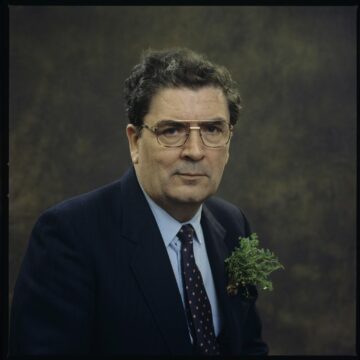
“John Hume would not have tweeted. He would have been on Kinnaird Avenue.” —As stated by Sara Morrison in conversation with Jenny Holland
A twenty-first century version of the Northern Irish “Troubles” erupted this month on Kinnaird Avenue in Belfast. This was not a continuation of the centuries-long war between Catholics and Protestants. It was about race, not religion. The attacker was a Sudanese immigrant. The victim and his main savior were white men born in Northern Ireland. The attacker brutally stabbed his victim, gouging out an eye. The savior ended the attack with a hurley stick, the Irish version of a baseball bat.
The riots that followed—labeled as anti-immigrant which sounds correct to me, if over simplified— involved masked mobs, weaponized bricks, petrol bombs and the ensuing arson, burnt homes, displacements and similar decibels of the fear that has engulfed Ireland for centuries, albeit with different enemies. And then, of course, as happens everywhere riots occur, the police arrived: The Police Service of Northern Ireland, with its riot squads and water cannons.
This happened between June 8 and 11. On June 13, thousands in search of a happier ending, gathered outside City Hall to condemn racism in Northern Ireland.
The above is what I think happened from reading news reports. And social media. Most not from Belfast, itself.
Northern Ireland has long been a place reported on from afar. My husband and I, as American journalists, moved to Ireland to live in both Dublin and Belfast in 1984, as that sectarian violence—religion-based with many eruptions over centuries—was underway. We went on a grant my husband was given from St. John’s University in New York, pushed by Irish-Americans who felt the current “troubles,” were underreported. Despite knowing this, it was shocking to find out that so many other international foreign correspondents reported on Northern Ireland from London. Or from farther away. A New York Times reporter based in London, described how terrified she was to finally spend an overnight—or perhaps more—in Belfast. This was something my husband and I did regularly. Read more »