by Nils Peterson
1. Today mind wanted to think back to all of the houses I lived in with my parents growing up and on into my young manhood. There were five, and mind tried to walk through each of the rooms in all of the houses. It was more difficult than I would have thought. I remember so much and forget so much. Give it a try. It is interesting because sometimes you are still there and you can find yourself.
One of the things I noticed was that all of them had formal dining rooms with a good table and matching buffet. It was a room not used except for dinners. And I realized that this was true of all the houses, even the humblest, of my parents’ friends, a formal place to be used in a formal way when guests arrived, the best china taken out of the buffet along with the silver and set carefully around, along with maybe an elegant crystal center piece. I am struggling now to remember if we used it for supper after my father would come home from work in the evening, of course with ordinary plates and flatware. My mind seems unable to answer yes or no when I ask it that question. I think we might have eaten in the kitchen though I can’t quite picture the kitchen table though the word is familiar.
But I started thinking about how in the modern house, there is no such room to be formally gathered together in for a meal, no dining room and no front room (what we called the living room) either where easy chairs, sofa and the Stromberg Carlson radio would sit. Everything is freeform, a flowing from one state of being to another. No sense of a room for this and a room for that, a place for everything and everything in its place. Even the kitchen is open and part of the flow. Well, that’s the way we live now. Is this a memory of loss? an elegy? an “In Search of Lost Time or Space?” Can’t quite tell if this is an important observation about the world we live in or just a wondering. Read more »

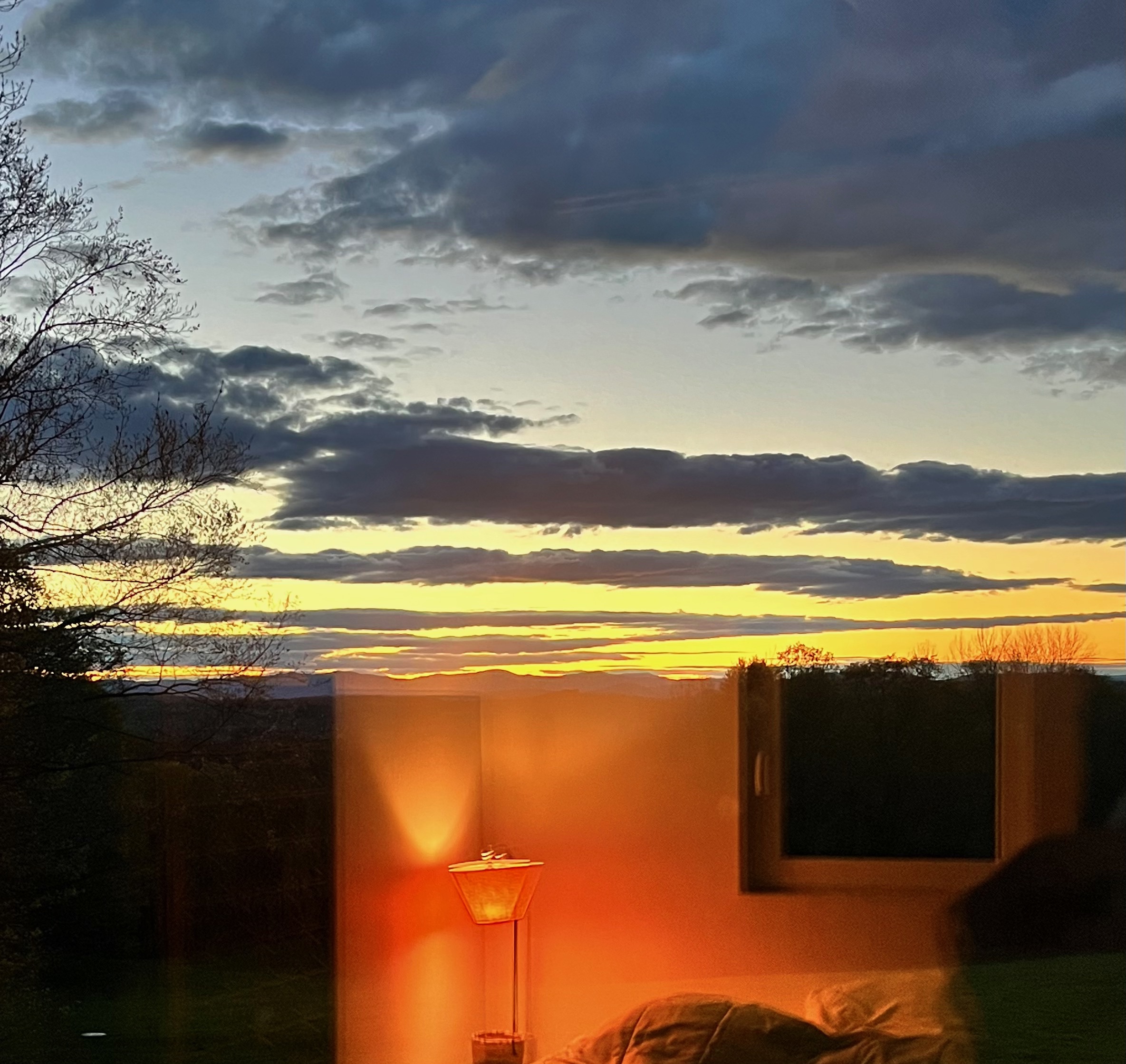 Sughra Raza. Surreal Sunsets, Vermont, May 2026.
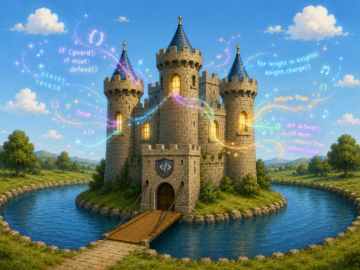 A moat is what protects a business from competition. The term comes from Warren Buffett’s image of a castle surrounded by water. The castle is the business; the moat is whatever prevents rivals from storming the walls. A moat might be a famous brand, a patent, a network effect, control over scarce resources, high switching costs for consumers, or a regulatory barrier that makes it difficult for competitors to enter the market. The deeper the moat, the easier it is for a firm to charge high prices, preserve margins, and survive imitation.
 Dear Readers and Writers,
 Every spring, as reliably as pollen, universities summon the unusually successful to advise the temporarily credentialed.