by Laurie Sheck
1.
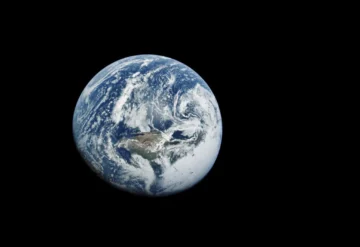
It has been almost 58 years since astronaut William Anders lifted his Hasselblad camera toward the window of Apollo 8 and captured the now-iconic image of Earth hovering beyond the gray, desolate edge of the moon, blue-white and small and fragile, hanging in the pure blackness of space. How beautiful it looked, how vulnerable and unprotected. As if emptied of political borders and human strife. As if we had never touched it after all. Unbuilt, unpolluted. Familiar and strange at the same time.
“We came all this way to explore the Moon,” Anders said, “and the most important thing is that we discovered the Earth.”
And yet how secretive it looks from a distance, how beyond human knowing.
My online searches tell me there are now over 942,562 CCTV surveillance cameras in London; in Shanghai there are 12,825, 589; in Hyderabad, 900,000; that in a single day a human being in London could expect to be captured on CCTV an average of 70 times.
But in Anders’ photo the Earth looks mysterious, un-warlike, uninhabited, unpoliced.
2.
In the astronauts’ descriptions of Earth, the word fragile recurs often.
“It looked so fragile, so delicate, that if you touched it with a finger it would crumble and fall apart”—this from James Irwin, crew member of Apollo 15. Lauren Acton spoke of seeing it “contained in the thin, moving, incredibly fragile shell of the biosphere.”
To Alexi Leonov, the first person to walk in space, Earth looked “touchingly alone.”
When cosmonaut Vitali Sevastyanov was asked by ground control what he saw, he replied, “Half a world to the left, half a world to the right. I can see it all. The Earth is so small.” And Neil Armstrong remarked, “I put up my thumb and shut one eye, and my thumb blotted out the planet Earth. I didn’t feel like a giant. I felt very, very small.”
Ulf Merbold said: “For the first time in my life I saw the horizon line as curved, accentuated by a thin seam of dark blue light. I was terrified by its fragile appearance.”
For those of us who’ve never been to space, the reality of Earth’s vulnerability can be harder to hold onto. The way its beauty is inseparable from its vulnerability. How in a sense they are the same thing. Read more »

 Dear Reader,
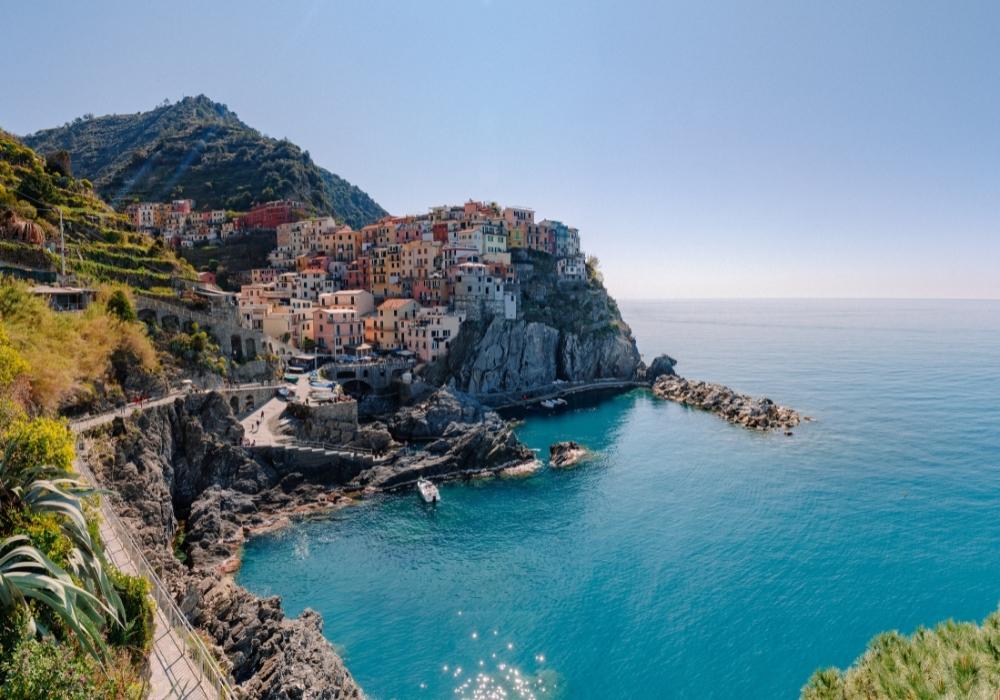 The town had only one grocery store, and Steve wondered where the locals did their shopping. Certainly not here, but perhaps in a supermarket outside of town, one that required a car. Along with Julia, he picked up some Italian cheese, prosciutto, grapes, and a bottle of local wine, and they made their way up the hill to the house they’d rented for the week.
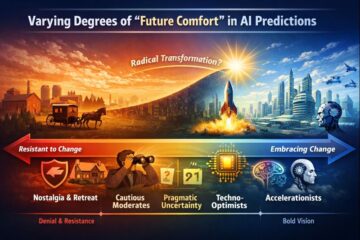 Back when I worked for large corporations, people would often talk of being in “period of change” or how they could “see the light at the end of the tunnel” after a period of heavy restructuring or similar. These days, you might be forgiven for wondering where the tunnel went. Change is incessant and showing no signs of slowing down. In fact, it is quite the opposite. We are entering a period when change might in fact actually be speeding up, even from its currently historically high levels. While not the majority view, nor the most likely scenario in my estimation, there is still a nonzero likelihood that we are in fact in the last few years of an era. Through the development of AGI – artificial general intelligence – the world could become unrecognizable in just a few years.
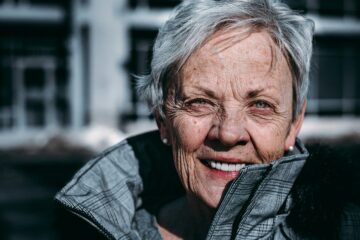 Never before have I worried about rolling out of my bed or a chair and falling down, kerplunk! For no reason. Now I have to. I feel like a spacer on the first outer space mission, alert with every breath, having always to think about where to place each foot. constantly aware. As I walk, my legs sometimes shake. Sharp pangs wander erratically across my legs, occasionally intersecting with a joint, others centered around a muscle.
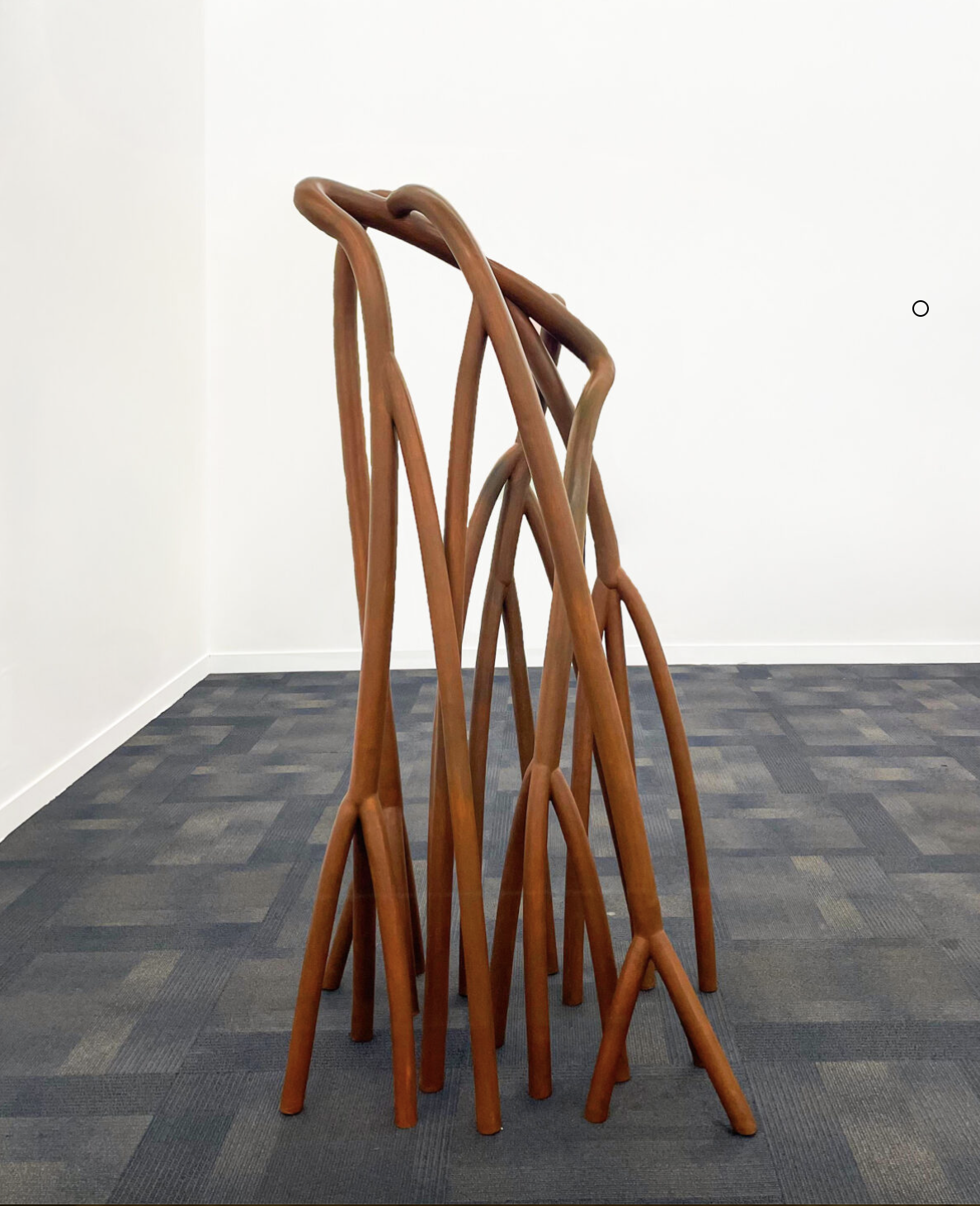 Marco A Castillo. Mangle I, 2025.