
by Eric Feigenbaum
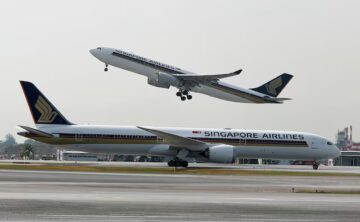
In 2016, my then-wife and I took our one and three-year-old children from Los Angeles to Bali, Indonesia. It took 21 hours of flight time with one stop in Tokyo to refuel and another in Singapore to change planes – making for a roughly 26-hour journey with two kids in diapers. It is not the easiest way to begin a vacation.
My wife and I were seasoned travelers – both of us having lived abroad before meeting. Asia was no stranger to either of us, and in fact I had lived in both Bali and Singapore in my 20’s. There was a time in both our lives when the best flight was the cheapest one. When flying from Bangkok to Kathmandu for the first time with two buddies aboard Royal Nepal Airlines, we laughed about the used TV cart the flight attendants pushed through the aisle instead of the Boeing-issued ones – purposely included with the plane both for functionality and safety.
One British friend used to take Biman Airlines of Bangladesh back to London from Bangkok, sleeping on the floor of the Dhaka Airport in order to save the most money. Once on a budget flight from Bangkok to Udon Thani, there was so little leg room, I couldn’t sit forward and had to pivot to fit into the row.
It didn’t matter – it was part of the adventure and made for great stories.
Traveling with a one and three-year old across the world was an adventure in and of itself – and suddenly inconveniences were enemies and comforts our best friends. We needed any and every advantage we could get. It became clear to my wife and I that we had reached the age where reducing friction was worth a premium. We needed to rely on everything we couldn’t control going right.
After all, when something goes right, we often don’t notice or comment – but when it goes wrong, it becomes clear that “nothing” is really the hallmark of incredible accomplishment.
This is the bedrock success of Singapore Airlines. At worst, nothing goes wrong. More typically, they build in extra comfort and ease – including staffing up to attend to their passengers with care. They deliver an experience.
Even Singapore’s Economy seats have better pitch and width than most international carriers and include plusher cushions and headrests. Of course, Singapore’s Business or First Class sections are their own amazing experiences. I once had the good fortune of flying Business Class from Los Angeles to Singapore nonstop dining on Lobster Thermador and chatting with an oil executive in the next seat.
So it was that from 2016 onward, over the course of many trips to Southeast Asia with our children, Singapore Airlines was our go-to – no matter the price differential. Little things like flight attendants who introduce themselves to the kids, gifts for children as they board the plane and early boarding for families cost the airline little and made a giant difference to us. Big things like being on-time, if not early and never losing our luggage were even more important. Eventually, nonstop flights between Los Angeles and Singapore saved us time.
Just as the gifts for children and the Lobster Thermador were no accidents, neither was the success of Singapore Airlines itself. In fact, it was born of a very strategic decision.
In 1965, Singapore split from Malaysia and the two countries gained independence separately rather than together as had hitherto been planned. As often happens in divorces, they were saddled with several remaining entanglements. Malaysia-Singapore Airlines was one of them. The small but profitable airline provided both domestic travel within Malaysia and limited regional travel. Two issues quickly became thorns in the partnership: more Singaporeans than Malaysian were employed by the airline and growth was largely driven by expansion of international routes including Australia and New Zealand.
From 1968 to 1972 grumbling from Malaysian leadership forced both sides to realize the continued co-ownership of the airline was untenable. Malaysia was focused on serving its internal transportation needs – only the domestic routes were not profitable. From the Singaporean perspective, complaining about lucrative international expansion when it was funding Malaysia’s internal infrastructure was both ungrateful and made bad business sense.
Singaporean leaders such as MSA’s Lim Chin Beng and Prime Minister Lee Kuan Yew quickly understood Malaysia’s myopia could work to Singapore’s advantage. Singapore was too small for domestic flights – flying anywhere was an international affair. Splitting MSA into two airlines and taking the international routes was a natural win for Singapore.
That’s why Singapore correctly believed itself to be in pole position when Singapore International Airlines and Malaysia Airline System (whose acronym MAS means gold in Malay) were born out of MSA in October 1972.
In his memoir, From Third World To First, Founding Prime Minister Lee Kuan Yew wrote:
At a dinner in July 1972, with all union leaders and top management present, and before SIA was launched, I spelt out the need for a Singapore airline to be competitive and self-supporting; it would close down if it incurred losses. We could not afford to run an airline just to show the flag like other countries did. Right from the beginning, management and union clearly understood that their survival depended on being profitable. Cooperation between union and management helped SIA succeed.
Nascent Singapore Airlines – or SQ as it is often referred to in Singapore because of its IATA designator – used its handful of B-707 and B-737 aircraft to cover routes to Tokyo, Hong Kong, Jakarta, Bangkok and most importantly, London – giving it a toehold in Europe for the first time. By 1976, SIA had a fleet of 21 aircraft including five new B-747’s – allowing it to operate longer-range flights which began to include Amsterdam, Paris, Osaka, Perth, Aukland Guam, Honolulu and San Francisco as well as most of the Indian Subcontinent. By 1977, SIA even ran a Concorde in a joint effort with British Airways between London and Singapore via Bahrain.
SIA’s leaders understood early that Singapore is a small country, far from the minds and homes of most of its desired customers. For many, Singapore would not be a destination, but a transit point helping to connect Europe and North America to Australia, India and East Asia. To get business, Singapore had to either offer better prices or better quality than its competitors. It chose to fish upstream and distinguish itself as being a top tier airline.
The results are measurable in many ways. In 1996 and ever-since, Singapore Airlines became the most profitable airline in Asia. It has also won Skytrax Best Airline Of The Year five times while usually remaining in the top three when not in the top slot and holding a five-star rating by Skytrax for more than twenty years. Singapore carries 19 million passengers per year to 74 destinations using 133 aircraft. Moreover, SIA owns 20 subsidiary companies and has stake in 27 joint ventures including with Rolls Royce and Boeing. It has grown considerably from its original dozen or so aircraft in 1972.
Of course, there’s a second, often unspoken component underlying the airline’s success – Changi International Airport. Being a strong international carrier, whose home country/city is frequently not its passengers’ “final destination” means at minimum, transits have to work well. Better yet, if they are pleasant, even enjoyable – you start to have a formula for success.
In 1977, the Singaporean government realized it would need to invest in the development of an airport both for the growth of Singapore and Singapore Airlines. While the location and construction timelines and costs played important parts of the considerations – a larger goal was clear: Singapore’s airport had to be superior.
As Lee Kuan Yew explained in his book:
The challenge is in running it so that a passenger has a smooth and swift passage through customs, immigration, baggage collection and transport into the city. If he has to make a connecting flight, then there must be facilities for rest, recreation and work. Changi has all these – rest and shower rooms, a swimming pool, business and fitness centres and a science discovery and amusement area for children. As head of the Civil Aviation Authority of Singapore, Kee Boon made Changi into a world-class airport, winning topratings in travellers’ magazines almost every year.
Since Mr. Lee’s writing, Changi International Airport has added two large, modern terminals, remodeled its original one and added features like a butterfly garden, waterfall from the roof of Terminal 4, a luxury hotel and more to progressively outdo itself.
Like so many aspects of Singapore, the success of its airline – one of the world’s premier international carriers – has come from forethought, planning and the execution of new strategies that are often predicated on the successes and failures Singapore’s leaders observed elsewhere.
This is another way where Singapore highlights the rewards of systems-based thinking. Singaporean leadership realized it could use its location and circumstances – in this case, a co-owned airline ready to split due to political stress – to pursue a new and unique niche.
In typically Singaporean fashion, the government acted as a startup incubator – taking an initially state-owned enterprise and spinning it into a highly profitable, private corporation to bolster the city-state’s growing and now outsized economy – much as it did with its healthcare system, taxis, public transportation and banking.
And while none of Lee Kuan Yew, Lim Chen Beng or Kee Boon could have imagined, they helped my young family make it twice to Bali and three times to Thailand with as much comfort and harmony as any airline can offer. The only downside is that even at ten and twelve years-old, my kids still ask – even if we’re going to Europe or New York, “Can we take Singapore Airlines there?”
Enjoying the content on 3QD? Help keep us going by donating now.