
The War Room Is Still a Playground: The Politics of Fragile Egos and Mishandled Emotion

by Daniel Gauss 

Two school children pass replicas of US 500lbs bombs from WW2. From the Osaka Peace Museum, Dan Gauss photographer.

There are more than 50 armed conflicts going on in the world right now. In fact, depending on how you define “armed conflict,” the number from the most trustworthy sources ranges from around 60 (using a strict, high-intensity definition) to over 150 (using a broader, low-intensity definition). We wake up, take a look at the news and often see that it’s war again. Again. An airstrike, retaliation, another round of funerals and recriminations.

A recent, well-publicized armed conflict was in South-East Asia between a government run by a father/son dictatorship duo and a government still dominated by its military establishment, where generals retain substantial power to influence and often overrule civilian politics at will. Both of these governments demanded and marshalled the patriotic fervor of their respective populations to square off over who “owned” a largely inaccessible 1,000-year-old temple in the middle of a forest, which does not even generate much tourism money. People died.

All these wars, clashes and skirmishes…if you listen closely, really closely, past the rattle of gunfire, the buzz of drones, missiles smashing into concrete buildings, the somber gravitas of the news anchor, you’ll hear it…the soft whimper of a bruised ego.

There is the assumption that war is often rationally motivated. Somewhere in a quiet, high-tech, air-conditioned war room, serious, highly educated and seasoned adults in formal attire or uniforms decorated with medals did the math, weighed strategic interests and analyzed existential threats. We then read that they had no choice but to take action, and, of course, according to the “humanitarian” rules of war, they tried to minimize civilian casualties.

But I sense that beneath all the theatrics is something simpler. Read more »
Monday, December 12, 2016

The Electoral College Can and Must Stop Donald Trump

by Evan Edwards

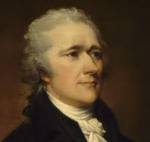
Hamilton

Before getting to the argument for why the electoral college should reject Donald Trump on December 19th, let me begin with that which now seems to be more and more dangerous to risk: a bit of reasoning. What I want to establish, right off the bat, is why it is right to at least consider the possibility of putting someone else in the Oval Office; only after that can we begin to consider why it is right to actually do so.

We begin with two options with respect to the authority of the electoral college: either we accept it or reject it. If we reject it, then Clinton wins the election. By a long shot. The latest tally puts her ahead of Trump by at least 2.8 million votes, which makes this year’s outcome “the biggest gap between the popular vote and the electoral college in almost a century and a half.” As Atlantic author Ronald Brownstein put it, Trump “is on track to lose the popular vote by more than any successfully elected president ever.” But the question of whether or not we should change the way that elections work is one that we need to return to down the road. There is no reasonable situation in which between now and January 20th, the electoral college is be abolished and popular sovereignty is established through direct election. Since that is the case, let us, like Socrates in the Crito, “honor the decisions the polis makes,” and also its laws.

If we accept that the electoral college is what ultimately decides the highest office, then we have two further options: the college either votes with the dictates of tradition, choosing Trump, or it chooses otherwise, and rejects him in favor of someone else. There’s no reason not to do the latter, since there is no provision or law requiring that voters in the electoral college vote the way that their states did. It is, as I just said, simply traditional to do so. Trump’s campaign, and his followers, argue that to do so would be to “reject the will of the people.” But what “people” are they talking about? Does “the people” mean everyone in the nation or just a select subset? If it is the former, then to accept Trump would, in fact, be against the will of the people, since he did not win the vote of most actual people. They must mean, then, some other kind of “people.” We’ll come back to this.

Read more »