by Gary Borjesson
Become what you are, having learned what that is. —Pindar
[To protect their privacy, I have changed identifying details of those mentioned here.]
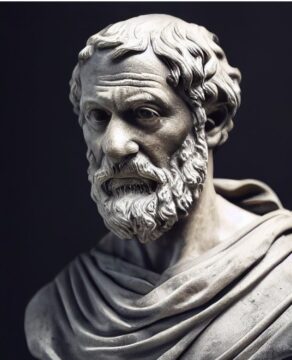
What do we want for our lives? It’s a peculiarly human question; other animals don’t appear to be worrying about it. I’ve asked myself this question, sometimes with curiosity, sometimes more desperately, for as long as I can remember. I’m always moved when patients raise it in their therapy. A man who retired from a successful career said that when he looks into the future without the mantle of his professional title and status, he feels empty and lost, ashamed that at 70 he doesn’t know what he wants.
Sometimes we raise the question ourselves; sometimes the world raises it for us. Another patient, whose boyfriend just “dumped” her, is wrestling with her alcohol use. The men she wants in her life don’t want an alcoholic in theirs. She’s angry at the thought of sobering up for someone else, “Wouldn’t that be inauthentic?” At the same time, she (authentically) wants a partner in her life.
She knows what most of us know, that we want to be authentic. By “authenticity” I mean living in a way that is true to oneself and to one’s situation in the world. (For the bigger philosophic picture, see my previous column, Reclaiming Authenticity as an Ethical Ideal.) Authenticity resonates because it is that rare thing, an ideal that most of us embrace—despite our divergent religious, ethnic, social, and political values. After all, each of us faces (or not) the question of how to become our best selves.
Although we must ask and answer that question for ourselves, I will suggest a few core principles that can guide our way. I’ll start with Aristotle’s view, that the one thing we all want from life is to flourish, which means living in such a way as to be fulfilling our nature. This might sound about as helpful as telling someone who is struggling, “Just be true to yourself!” How do we even know what our true self is? If we’re a lonely alcoholic, is our true self more of the same, or is it sober and in a relationship?
We can find some guidance by unpacking two principles of flourishing that extend to living authentically. Read more »

 Egypt
Egypt Germany


 In her provocative, genre-defying book,
 There is a
  Drug overdose deaths have more than doubled in America in the past 10 years, mainly due to the appearance of Fentanyl and other synthetic opioids. These drugs combine incredible ease of manufacture with potency in tiny amounts and dangerousness (the tiniest miscalculation in dosage makes them deadly).


 Death has stalked me of late, claiming those whom I was once close to, or who remained closest to those who are closest to me.
 Sometimes, when you least expect to, you learn something about your country and the toll it has imposed on certain of its citizens. In ancient times these learnings weren’t so serendipitous. During WWII, for example, you would have known folks on your block who served and came back. And some who didn’t come back.