by David Winner
Angela, my wife, and I are over-educated middle-class white New Yorkers of a certain age.
My six months on Avenue D gave me a leg up in my search for further teaching positions around New York. I was now deemed capable of teaching non-white students because I had taught non-white students before as if the teaching of non-white students were a skill unto itself.
I don’t know how cynical to be about such a formulation, but given the rowdy students of color depicted in so many movies and TV shows, it’s hard not to imagine that non-white students are somehow considered more difficult, their white instructors more trainers than teachers. For the record – please forgive the invidious comparison – my biggest classroom struggles have been with white students, the kid at NYU who wrote “David Winner is an asshole” on his student evaluations.
Non-white classrooms have often been identified in job descriptions by peculiar racial dog-whistling, terms such as “population” (as if white people somehow aren’t that), “community” (same thing), “inner city,” “urban,” as if no white people live in cities. “Diverse” and “multicultural” often just mean non-white rather than a confluence of different cultures.
Are all non-white students the same? Can I be a “Black expert” and say, Judy, my fellow white person, be a “Latinx expert” and, Frank, an “Asian and Pacific Islander expert?” Graduate education in both the fields of ESL (English as a Second Language) and Social Work has sometimes answered these questions by the encouraging of stereotypes. On a hiring committee for an ESL professorship, I once listened to recently minted job candidates explaining to us about Chinese, Egyptian, Dominican people using hair-raisingly broad labels whereas a friend (white non-Hispanic like myself) “learned” in NYU’s Masters in Social Work program that she needed to be careful while working with Latinas because they might have an attack of “ataque,” a sort of loud hysterical fit that women from all over Latin America were deemed to be prone to. Read more »
 My great-grandparents were among the 12 million immigrants who passed through Ellis Island and equally a part of the wave of 20 million immigrants who entered the United States between 1880 and 1920. America’s fast-growing economy needed more manpower than its existing population had available, and the poorer classes of Europe were the beneficiaries including four million Italians (largely southern) and two million Jews.
 An empire, threatened on its flank, vents spleen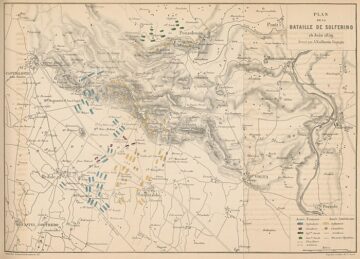


 Some people use religion to get their life together. Good for them. I’m all for it. Although I myself am an atheist, I don’t think it much matters how someone gets their life together so long as they do.
 On the one hand, nothing has changed since August 2020, when I wrote
 Anatomically, it’s the optic disc – the spot on each retina where neurons with news from all the light-sensitive rods and cones of the retina converge into the optic nerves. The optic disc itself,

 Sughra Raza. Rorschach Landscape, Guilin, China, January 2020.


 Of course there was no guarantee that Gerver’s couch was the biggest possible. Dr. Gerver’s approach made no promises that it gave the best possible, after all. A little more convincing is the fact that in 30 years we haven’t been able to do any better. But mathematics is a game of centuries and millennia — a few decades is small potatoes. In 2018, Yoav Kallus and Dan Romik proved that the couch could be no larger than 2.37 square meters. But the gap in size between Gerver’s couch and the Kallus-Romik upper bound is an order of magnitude larger than that between the couches of Gerver and Hammersley.