by Scott Samuelson

One of my early memories is lying awake at night, trying to discern through the sounds of the wind the creeping of an Iranian on the roof outside my bedroom window. For a few months, when I’d look both ways to cross the street on my walk to school, I’d scan less for oncoming traffic (my rural town had almost no traffic) than for a stampeding horde of Iranian college students.
I was six years old—just mature enough to pick up on the anxieties of the news. After footage of angry Iranians storming over fences under the banner of a severe bearded old man, Walter Cronkite would sign off each night by numbering how many days the Americans had been held hostage. I must have heard in passing the phrase “American embassy in Tehran,” but it entered my young mind like “city hall in Paducah.” For all I knew, the elementary school of Ainsworth, Iowa was going to fall next. Doesn’t our country have an army supposed to protect us? Why isn’t anyone doing anything? How can we let Iranians snatch up innocent Americans?
The best argument for the United States’ war against Iran (insofar as reason has anything to do with it) hews closely to my six-year-old self’s fears and demands. Don’t we have a mighty military? Why haven’t we done anything for the past five decades? We can’t let Iran have weapons, especially nuclear weapons, because Iran threatens the whole world with impunity.
Setting aside the pile of important procedural and strategic objections to the current war, let’s say—against all odds—that its ostensible goals are realized: the military power of Iran is obliterated, and the vicious ruling regime is eliminated. Obliterate and eliminate—and then what? Many years ago, in a discussion of disarmament talks, E.B. White wrote,
Every ship, every plane could be scrapped, every stockpile destroyed, every soldier mustered out, and if the original reasons for holding arms were still present the world would not have been disarmed. Arms would simply be in a momentary state of suspension, preparatory to new and greater arms.
If that’s true of disarmament talks, how much truer is it when another country has destroyed your stockpiles in an act of aggression? Read more »
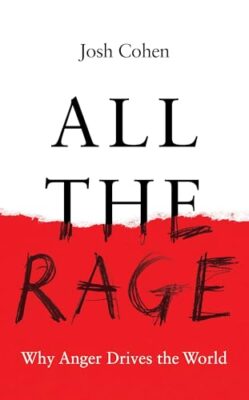 How can we possibly approach the world today without being in a constant stage of rage? Philosopher and psychoanalyst Josh Cohen’s
 In November 2023, in an essay for the German national newspaper die taz, I wrote that Germany’s Jews were once again afraid for their lives. It was—and is—a shameful state of affairs, considering that the country has invested heavily in coming to terms with its fascist past and has made anti-antisemitism and the unconditional support of Israel part of its “Staatsräson,” or national interest—or, as others have come to define it, the reason for the country’s very existence. The Jews I’m referring to here, however, were not reacting to a widely deplored lack of empathy following the brutal attacks of October 7. In an open letter initiated by award-winning American journalist Ben Mauk and others, more than 100 Jewish writers, journalists, scientists, and artists living in Germany described a political climate where any form of compassion with Palestinian civilians was (and continues to be) equated with support for Hamas and criminalized. Assaults on the democratic right to dissent in peaceful demonstrations; cancellations of publications, fellowships, professorships, and awards; police brutality against the country’s immigrant population, liberal-minded Jews, and other protesting citizens—the effects have been widely documented, but what matters most now is now: the fact that the German press is still, four months later, nearly monovocal in its support of Israel and that over 28,000 civilians, two-thirds of them women and children, have died.
 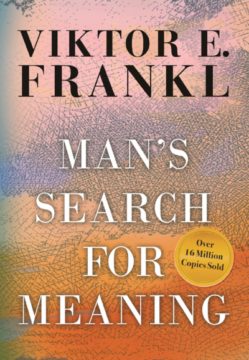 A dear friend of mine recently passed away unexpectedly. He had recommended I read Viktor Frankl’s
 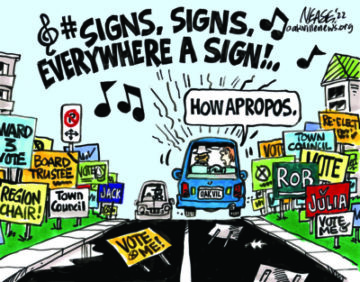 trustee. It’s a relatively minor position and non-partisan, so there’s no budget or staff. There’s also no speeches or debates, just lawn signs and fliers. Campaigning is like an expensive two-month long job interview that requires a daily walking and stairs regimen that goes on for hours. Recently, some well-meaning friends who are trying to help me win (by heeding the noise of the loudest voices) cautioned me to limit any writing or posting about Covid. It turns people off and will cost me votes. I agreed, but then had second thoughts the following day, and tweeted this:
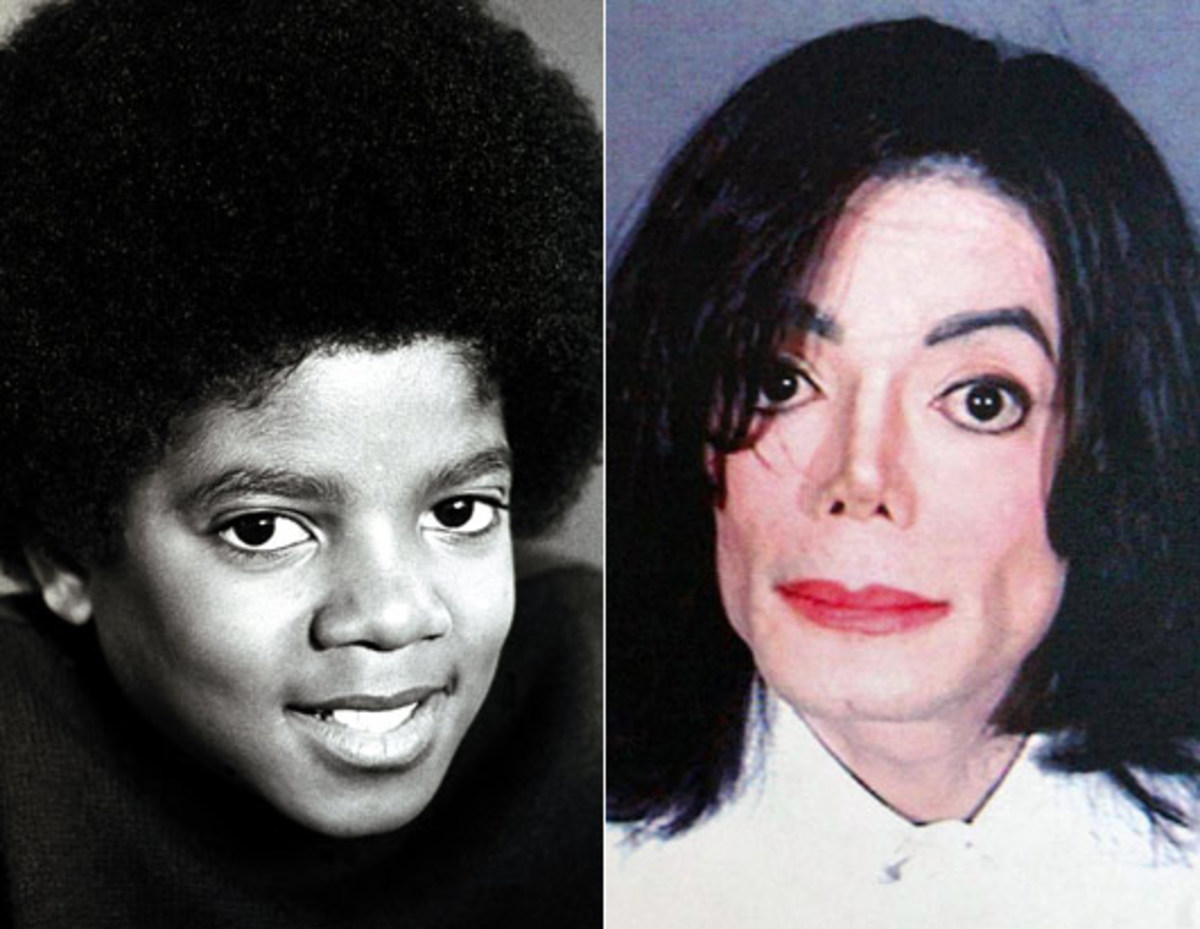 Over the course of more than a decade, Michael Jackson transformed from a handsome young man with typical African American features into a ghostly apparition of a human being. Some of the changes were casual and common, such as straightening his hair. Others were the product of sophisticated surgical and medical procedures; his skin became several shades paler, and his face underwent major reconstruction.
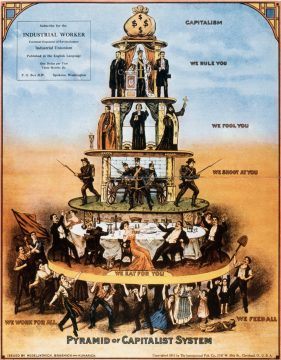 The political philosophy, and more importantly, political practice that took root in the wake of the ‘Age of Revolutions’ (say 1775-1848) was liberalism of various kinds: a commitment to certain principles and practices that eventually came to seem, like any successful ideology, a kind of common sense. With this, however, came a growing sense of dissatisfaction with what it seemed to represent: ‘bourgeois society’. Here is a paradox: at the very point at which the Enlightenment promise of the free society seemed to be coming true, discontent with that promise, or with the way it was being fulfilled, took hold. This was a sense that the modern citizen and subject was somehow still unfree. If this seems at least an aspect of how things stand with us in 2020 it might be worth looking back, for doubts about the liberal project have accompanied it since its inception.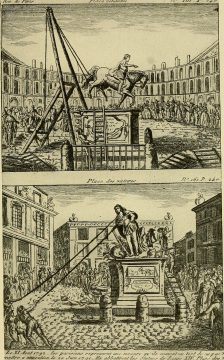

 A.S.: Liesl, I love the part in your story where a pack of kids is playing “Murder in the Dark” and the young narrator’s crush, who plays the part of the killer, draws near her in the dark yard: “I didn’t try to back away, I thought maybe he was going to kiss me, but then he killed me which was so predictable.”