
by Kevin Lively
Introduction
This article is part two of a longer series. Check out part one for my framing of the Cold War Military-Keynesianism which characterized the US and USSR economies at the dawn of the space-age.
I’ve opened many questions in my last article and I shan’t be able to close them. Oceans of ink have been spilt trying to satisfactorily answer questions of war and peace; I am not deluded enough to believe that I shall be able to do so. Nonetheless I would humbly submit to your consideration a collection of stories from the perspective of people who found themselves in a rare moment of history, when the old world order had drowned in an orgy of blood and a new one was rising from the ashes. At this inflection point in history, questions of land, power and death were in open debate within global centers of power which were endowed with a freedom of decision-making rarely seen in the long history of international affairs. If you fear, as I do, that this historical precedent bears increasing relevance in today’s geopolitical climate, then we should seek to understand the perspectives of these long dead warlords, the considerations which shaped the world and the consequences which we as a species continue to grapple with.
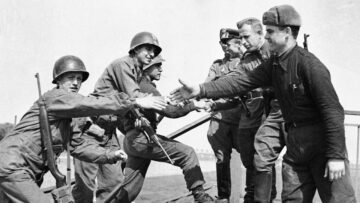
Topics this large must necessarily be broken into multiple essays. In this one I shall begin with the choices made at the end of WWII to recover from what may as well have a stage rehearsal for the apocalypse. I want to chart how, in quieting some of the guns around the world, US military spending transitioned through its low-point in 1949 into an abrupt reversal — leading to a steady-state war economy at the outset of the Cold War in 1950. The course of events underlying this coincided with an onset of USSR nuclear capability, the “loss of China” to the Chinese Communist Party, and the beginning of the Korean war, all while setting the stage for Vietnam. Here I will only have space to begin this story.
Framing the Narrative
Captain Hindsight is the patron saint of historians and armchair generals alike. After the primary actors are long buried and the security situation so changed as to make classification irrelevant, the internal planning documents which weren’t hastily burned are finally released. The USA in particular used to have a strong commitment to regular declassification of non-technically sensitive material. Internal planning documents from WWII and its immediate aftermath were slowly released within a roughly 30-40 year time horizon, continuing into the 1970s. One can peruse to their hearts content much of the internal records of US administrations up to Carter before the share of still-classified topics begins to balloon out of proportion. Nowadays one is reliant on the occasional leak, either from sites like Wiki leaks, The Intercept or somewhat bizarrely and with increasing frequency, video game servers like War Thunder. Read more »
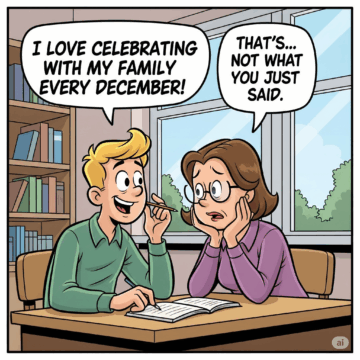 At a Christmas market in Germany, I told my German girlfriend’s mother that I masturbate with my family every December.
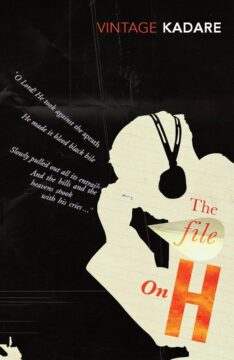 The File on H is a novel written in 1981 by the Albanian author Ismail Kadare. When a reader finishes the Vintage Classics edition, they turn the page to find a “Translator’s Note” mentioning a five-minute meeting between Kadare and Albert Lord, the researcher and scholar responsible, along with Milman Parry, for settling “The Homeric Question” and proving that The Iliad and The Odyssey are oral poems rather than textual creations. As The File on H retells a fictionalized version of Parry and Lord’s trips to the Balkans to record oral poets in the 1930’s, this meeting from 1979 is characterized as the genesis of the novel, the spark of inspiration that led Kadare to reimagine their journey, replacing primarily Serbo-Croatian singing poets in Yugoslavia with Albanian bards in the mountains of Albania.

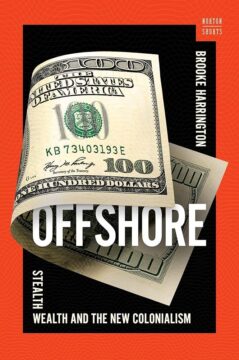 The Paradise, Pandora and Panama Papers, exposing secret offshore accounts in global tax havens, will be familiar to many. They are central to the work of economic sociology professor, Brooke Harrington. She has spent many years researching the ultra-wealthy and several books on the subject have been the result. Her latest book Offshore: Stealth Wealth and the New Colonialism is a continuation of her research; it focuses on ‘the system’, the professional enablers who support and advise the ultra-wealthy and make it possible for them to store and conceal their phenomenal fortunes in secret offshore accounts.

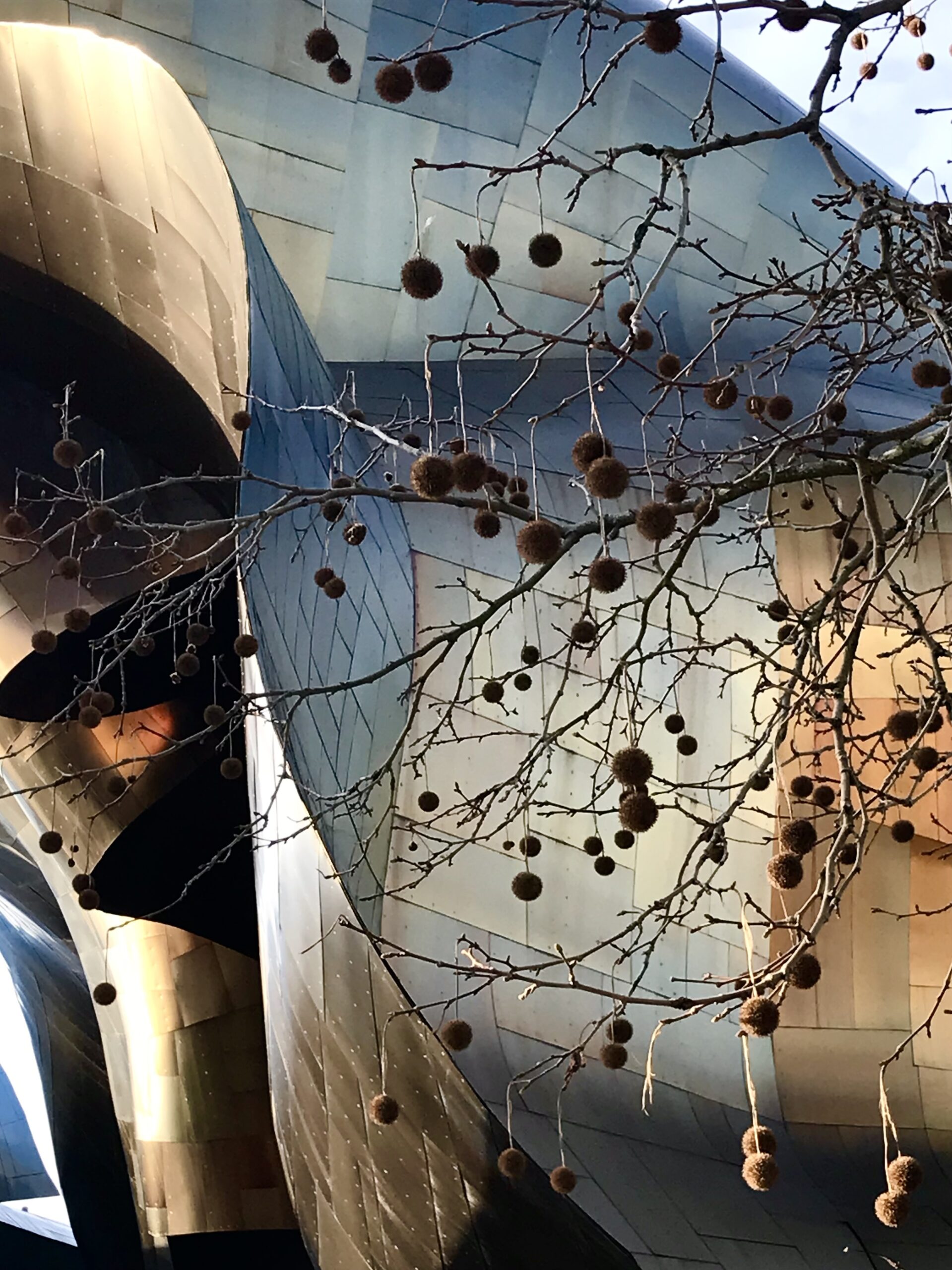 Sughra Raza. Light Tricks, Seattle, March, 2022.

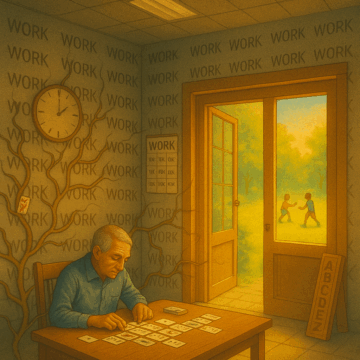 I have been thinking about artificial intelligence and its implications for most of my adult life. In the mid-1970s I conducted research in computational semantics which I used in
  At about 6:30 am, we pulled up to the Labor Ready office in the Central District. My friend – who for the sake of this column will be called Rick – and I were responding to a trespassing call: a woman who was asked to leave the day-labor agency office was refusing.
 Donald Trump is a con man. He was that for a very long time before he entered politics. Because he is a con man, it is tempting for critics to describe his presidential victories as successful cons. However, I think that interpretation does not hold up. Because while Trump at his essence may be little more than a sociopathic con man lacking a sophisticated and flexible inferiority, voters and citizens are not simply “marks.” The electorate, especially one as large as the United States’ (over 73 million registered voters), is maddeningly complex. It reflects a stunning amount of views, ideals, fears, and nuance. And the catch is that while the elected government can never hope to fully reflect this complexity, it can unduly influence it.