by Dick Edelstein
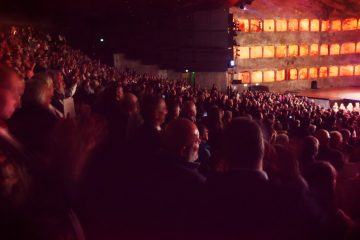
On account of the mood of economic restraint that looms over opera productions, preventing Barcelona’s Liceu from programming as many operas per season as it did just a couple of decades ago, each season now more often includes other orchestral works that feature singing, dance or theatre. And this effort, born of necessity, to engage the public in new trends in the performing arts has proved so successful that the non-operatic works often attract greater attention than the operas. Clear examples this season have been theatre director Romeo Castellucci’s revolutionary staging of Mozart’s requiem and a performance of two Gluck ballets organized and directed by the popular Catalan early music conductor Jordi Savall. Both of these events attracted as much public attention as the season’s operas.
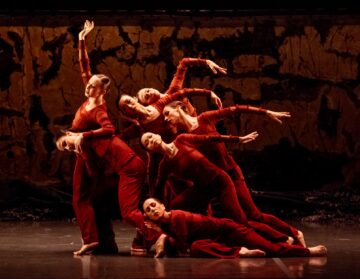
Barcelona’s importance as a hub for performing arts in the Northern Mediterranean region was evident last March when Savall brought the Ballet de l’Opéra National du Capitole from Toulouse to the Catalan capital to perform the Gluck ballets, which were co-produced in collaboration with the Théâtre National de l’Opéra-Comique de Paris and elegantly supported by Le Concert des Nations, Savall’s talented, multi-national period instrument orchestra. Savall is well known for his work in bringing baroque and other styles of early music to audiences in Spain, France and throughout the world, and in this case the regional synergy involved was evident. While Barcelona’s Gran Teatre de Liceu is an emblematic opera house with great international projection, unlike the Théâtre du Capitole in Toulouse, it does not have its own ballet company.
When Jordi Savall puts on a musical performance of any sort—whether as a virtuoso performer on the viola da gamba or as a conductor—he is sure to attract great public attention. On this occasion, he complemented the historical interest of Gluck’s ballets with superb performance values and the unique musicianship of his orchestra featuring period instruments. The performance of the two ballets by Christoph Willibald Gluck, Semiramis and Don Juan, was scheduled as part of the 8th edition of Dansa Metropolitana, a contemporary dance festival held in 12 cities and towns in the Barcelona metropolitan area.
These two pieces are important examples of works that transformed the art of ballet in the 18th century. They were the result of a collaboration between Gluck, the librettist Ranieri Calzabigi and the choreographer Gasparo Angiolini. At the time, these three artists were, in their different ways, all dissatisfied with the prevailing focus in ballet on technical brilliance, elaborate costumes and ornamentation to the detriment of dramatic intensity and more human and expressive values. Both works generated considerable controversy and marked a shift towards ballet as a more serious art form. Read more »