by TJ Price
In last month’s column, as in the month’s before, I began telling a story that has its beginnings in a therapeutic modality called “narrative reprocessing.” Essentially, this is the act of re-authoring one’s trauma(s) in order to defragment painful memories, which in turn allows for a type of spiritually retroactive agency over events that caused distress in the past. I would advise reading the prior segment first before reading this one, and the one which preceded that as well. (I apologize for the falsehood in the first post that there would only be two parts; the story rather took on a life of its own, and went to some surprising places—this is the third, and final instalment.) To those of you who have followed along with me to this point, thank you. For those of you who have read the thing in various states of its composition—and, in some cases, urged me to press through to the end—thank you isn’t enough.
Please be advised that—in this instalment, as in the first and second—there will be a number of sensitive topics involved, including mentions of sexual assault, suicidal ideation, threats of physical violence, and general injustice.
5.
I did go back to school in the fall, as planned. My old roommate, Eddie, even stuck with me, and we were granted a spacious room to share on one of the top floors of the building, looking down over the entrance into the dorm itself. The summer had done things to us both, and in different ways. He came out to me fairly early on, and saved the grand reveal for a few months later, expecting it to be a huge surprise. Instead, it was met with a lot of amusement and laughter—what, you thought we didn’t know?—and nothing changed except for how he spoke in mixed company regarding his feelings for other men. I didn’t envy him. He did seem happier after he came out, though it was tempered with a bit of brittle arrogance, as if he had attained this fragile apotheosis of identity, and now had no time for those of us who still mucked around in the quagmire of confusion. His way forward was clear to him, and he had ever been goal-minded. From that moment on, it seemed he was making up for lost time. He became driven, and focused—I probably could have learned a lot from his hustle, if I’d been in the right place to understand it. Eventually, he and another musical theater major took up with one another, a guy that my roommate had apparently been completely enamored of for some time, but who had also felt uncomfortable with announcing his sexual preference (and who also, when he finally came out, was greeted by the same response we gave Eddie.) They seemed happy. They spent a lot of their time together. I think they eventually broke up, but for a long time they lived together, in an apartment off-campus. I even visited them once or twice, before we all faded away from each other, as photographs and friendships are liable to do.
I didn’t get to find out what happened to Ricky. The last time I saw him was that fall, in the top-floor room I shared with Eddie, busy with my own creative endeavors. I was writing a full-length play, a fictionalization (loosely) of my own awakenings as a college student, as a man who desired the company of other men but was repulsed by the urge, someone who couldn’t abide being touched. The play is interspersed with scenes held at a local coffee shop, during open mic sessions, in which the protagonist and his cohort of various artists take turns reading poetry, or speaking monologues. Read more »





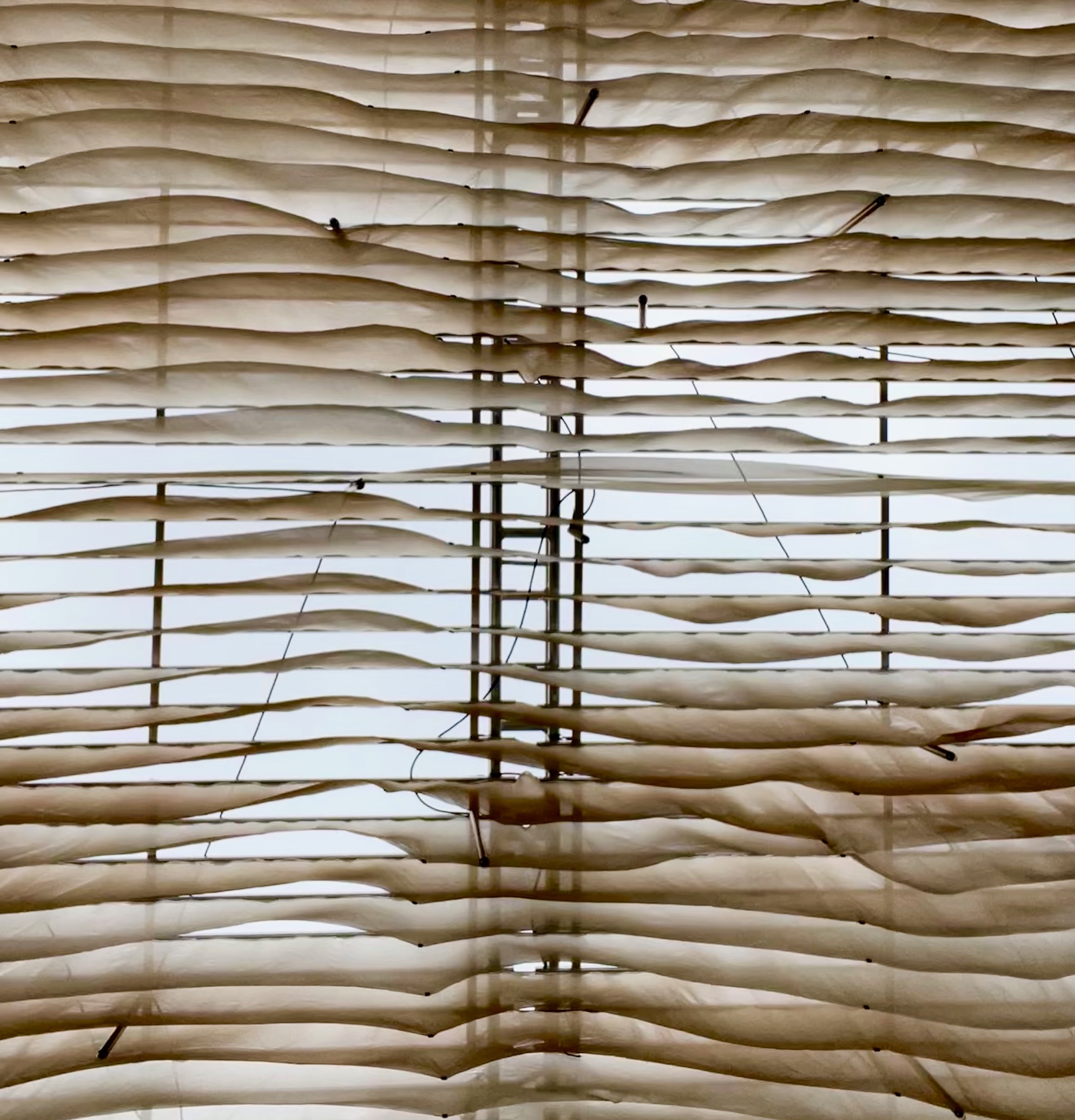 Sughra Raza. Light Breeze, Lincoln Center, June 27, 2026.
 John Williams’s Stoner


 There’s a question that’s been eating at me the last year or so: