
by Ken MacVey
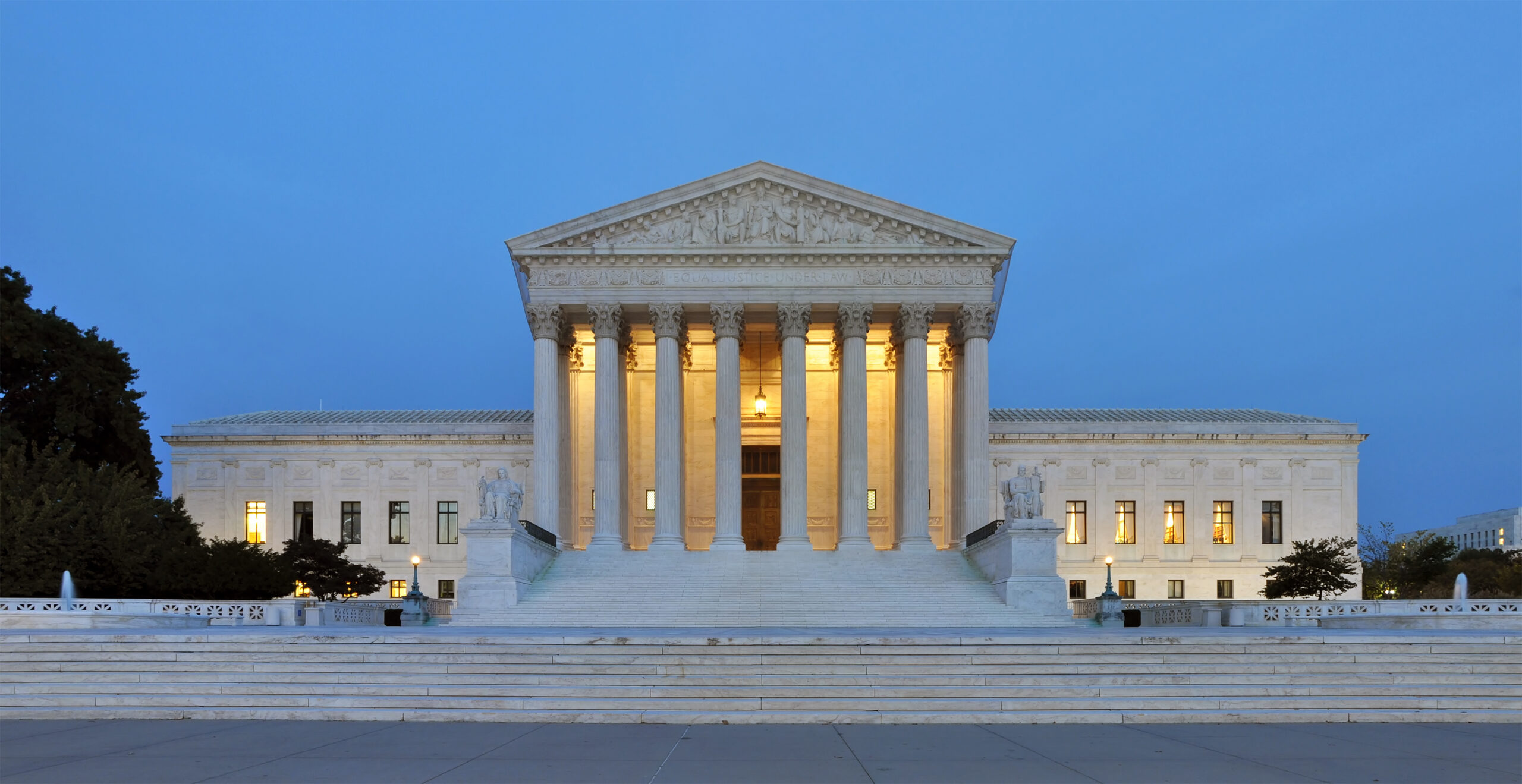 When promoting her new book in September, Supreme Court Justice Amy Coney Barrett stated in an interview as quoted in Politico : “I think the Constitution is alive and well.” She went on – “I don’t know what a constitutional crisis would look like. I think that our country remains committed to the rule of law. I think we have functioning courts.”
Contrast that with what conservative icon, one time Supreme Court justice contender, and retired federal appellate court Judge J. Michael Luttig wrote for Constitution Day – less than two weeks after Justice Barrett’s interview – about Trump’s current presidential term: “He has ruled as if he were a king who is above the law, when in America there are no kings, the law is king and no man is above the law. He has corrupted our democracy and asserted control over our elections in violation of our Constitution. He has refused to faithfully execute the laws, and he has waged war on our Constitution, our Rule of Law, and our Federal Courts . . . . He has sought absolute power, unchecked and unbalanced by other branches of our government, by the several states, by the free press, or by us. He has enthralled our Supreme Court, spellbinding it into submission to him and his will rather than to the Constitution and its will, and our Supreme Court has favored him with its affirmation and its acquiescence in his lawlessness.”
The Dred Scott Decision: What a Constitutional Crisis Can Look Like
The Supreme Court started its new term in October, which may prove to be one of the most consequential in its history in what it does or doesn’t do in protecting democracy and the rule of law. If Justice Barrett would like to know what a constitutional crisis can look like all she has to do is go back in time to another consequential Supreme Court term. In 1857 the Supreme Court helped to set the stage for a constitutional crisis with its infamous decision, Dred Scott v. Sanford, authored by Chief Justice Roger B. Taney.
Dred Scott was a slave whose owners took him from Missouri to US territory where slavery was banned. Afterwards as a resident of New York, Scott brought a lawsuit in federal court claiming his status as a slave terminated by entering jurisdictions where slavery was prohibited. Taney teed up the case this way: “The question is simply this: Can a negro whose ancestors were imported into this country, and sold as slaves, become a member of the political community formed and brought into existence by the Constitution of the United States, and as such become entitled to all of the rights, and privileges, and immunities, guaranteed by that instrument to the citizen?”
The answer was no. Taney and the Court found that when the Constitution was ratified slaves were considered “a subordinate and inferior class of beings, who had been subjugated to the dominant race, and whether emancipated or not, yet remained subject to their authority.” The Court concluded that those whose ancestors were imported and sold as slaves could never be considered citizens under the Constitution and therefore had no right to sue in federal court. It found that “the right of property in a slave is distinctly and is expressly affirmed in the Constitution” and thus any Congressional ban of slavery in US territory was void because it would result in an unconstitutional taking of the slave owner’s property without due process and just compensation. Even though it was legally unnecessary to resolve the case, the Supreme Court went out of its way to declare the Missouri Compromise passed by Congress that banned slavery in portions of US territory was unconstitutional.
The implications were startling. It meant that slaves were considered property as a matter of federal law. It meant that Congress was limited legally in barring slavery in US territory. It meant that instead of being regionally contained slavery could expand. It potentially meant that free states could be required to allow slavery if slaves were brought within their boundaries. It meant that Black people descended from slaves could never be citizens under the Constitution even if emancipated and could not sue in federal courts.
The decision became a key focus of the Lincoln-Douglas debates in1858 when Abraham Lincoln and Stephen Douglas ran for the Senate in Illinois. Lincoln attacked the Dred Scott decision, Douglas defended it. Lincoln lost the Senate race but the prominence of the debates launched Lincoln ‘s Republican Party presidential nomination in 1860. As the Republican Party presidential candidate, Lincoln opposed the expansion of slavery in the US. Upon Lincoln’s election as president, states in the South began to secede from the union. The American Civil War began.
That’s what a constitutional crisis can look like.
The Dred Scott Decision: A Paradigm of Originalism Gone Disastrously Wrong
The Dred Scott decision is universally labeled by historians, constitutional scholars, and Supreme Court justices (including Justice Scalia) as the Supreme Court’s worst decision ever and is widely thought to have helped ignite the Civil War. What is particularly noteworthy about the Dred Scott decision but generally ignored is its purported methodology of constitutional interpretation.
The cover story for the October 2025 issue of The Atlantic is “How Originalism Killed the Constitution,” written by historian Jill Lepore. The cover in bold lettering states: “This is the story of how partisans of the legal philosophy known as originalism have undermined the process of constitutional evolution envisioned by the Founders. The Constitution is not a living document, originalists say. In the words of the late Supreme Court Justice Antonin Scalia, it is ‘dead, dead, dead.’ And the only people who can be trusted to interpret its meaning, they argue, are the originalists themselves.”
The article describes in detail the rise of the “originalists” who now dominate the current Supreme Court. The term “originalism” is relatively new, going back to 1980. In her article, Lepore quotes Justice Scalia summarizing originalism this way: “The theory of originalism treats a constitution like a statute, and gives it the meaning that its words were understood to bear at the time they were promulgated.” Scalia is also quoted as saying “When I find it—the original meaning of the Constitution—I am handcuffed.” Lepore reports that despite the fact that Scalia claimed the task of determining constitutional meaning was better suited for historians than lawyers Scalia in practice favored his take on history over those presented by historians in briefs submitted to the Supreme Court.
Although the term “originalism” is new, its purported methodology is not. Lepore does not discuss the Dred Scott decision in her article but it is worth quoting what Taney said in the Dred Scott decision and see how it compares with Scalia’s assertions on how to properly interpret the Constitution. Taney said: “No one, we presume, supposes that any change in public opinion or feeling, in relation to this unfortunate race, in the civilized nations of Europe or in this country, should induce the court to give to the words of the Constitution a more liberal construction in their favor than they were intended to bear when the instrument was framed and adopted. . .. [I]t must be construed now as it was understood at the time of its adoption . . .. [I]t speaks not only in the same words, but the same meaning and the same intent with which it spoke when it came from the hands of the framers, and was voted on and adopted by the people of the United States.”
Deleting the reference to race, Scalia could have written these words.
Taney then purported to go into a historical review on what was understood at the time of the ratification of the Constitution. He claimed this review demonstrated Black people descended from slaves were never considered to be citizens under the Constitution nor were they ever considered to be covered by the “all men are created equal” proclamation in the Declaration of Independence. The two dissenters in the Dred Scott decision disputed this, noting, for example, that at the time of ratification of the Constitution in a number of states emancipated Black people were considered citizens of the state and had the right to vote. Lincoln in his debates with Douglas powerfully rebutted claims that the Declaration of Independence’s proclamation of equality was never meant to include Black people.
Ultimately Taney’s originalism that asserted the Declaration of Independence’s endorsement of equality really meant an endorsement of inequality and that the Constitution’s commitment to rights and liberty really meant no rights and no liberty for a whole class of persons was quite literally a bloody disaster.
The Contemporary Supreme Court and Its Off and On Originalism
This takes us to the contemporary Supreme Court, where the majority on the Court now claims adherence to originalism. Will such adherence protect us from a constitutional crisis? Or will its purported methodology once again help set the stage for a constitutional crisis?
One problem is that invocation of originalism can be an off and on proposition. Going back to Bush v. Gore in which the Supreme Court in the 2000 presidential election overturned the Florida Supreme Court’s decision on how Floridian votes were to be counted, originalists Justices Scalia and Thomas joined the per curiam (unsigned) majority opinion. By that opinion the Court guaranteed Republican George W. Bush’s election as president. The opinion was based on a first of its kind equal protection theory, a theory that legal commentators on both the right and left found to be a stretch and irreconcilable with Scalia’s and Thomas’ previous rejections of the vast majority of equal protection claims upheld by the Supreme Court. The theory was so unique the Court’s decision specifically said the decision was confined to its particular facts, another way of saying it should not be considered precedent. Justice Stevens, appointed by a Republican president, concluded his dissent this way: “Although we may never know with complete certainty the identity of the winner of this year’s Presidential election, the identity of the loser is perfectly clear. It is the Nation’s confidence in the judge as an impartial guardian of the rule of law.”
The decision can hardly be considered an exemplar of originalism. There was no attempt to demonstrate that the “original meaning” of the equal protection clause in the 14th Amendment dictated how a state should count or not count “chads.” When confronted with criticism from both conservative and liberal circles that the Court’s decision was poorly reasoned and result oriented, Scalia’s response was, to quote him, “get over it.”
In 2008 the originalist Scalia returned and invoked his vision in District of Columbia v. Heller, a 5 to 4 decision. In the majority opinion written by Scalia, the Supreme Court elevated the Second Amendment’s right to bear arms to an individual right to self-defense unconnected with militia service despite the Second Amendment’s textual reference to a “well regulated militia.” This decision and its progeny in setting the constitutional limits on gun regulations require reviewing what could be regulated when the Second Amendment was adopted in the late 1700s.
Scalia’s originalist vision lived on after his death. In Dobbs v. Jackson Women’s Health Organization the Supreme Court in 2022 overturned Roe v. Wade, ruling on originalist grounds that there is no constitutional right to abortion.
Let’s see how this originalist vision has worked in practice with respect to Donald Trump.
The Supreme Court in 2024 had two major cases addressing allegations of Trump’s illegal misbehavior. In Trump v. Anderson the Supreme Court addressed Colorado Supreme Court’s decision that the insurrection clause of the 14th Amendment barred Trump from being on the 2024 Colorado presidential ballot because of his role in the January 6 attack on the capitol . The US Supreme Court unanimously rejected the Colorado ruling. But it went beyond that, it went into an issue not before it and held that the insurrection clause could only disbar someone from federal office by formal Congressional action. Justices Sotomayer, Kagan, Jackson and Barrett expressed their concerns about this going too far.
Laurence Tribe, perhaps the nation’s most preeminent expert on Constitutional law, together with Judge Luttig, condemned the decision as “ a stunning disfigurement” and “ahistorical misinterpretation” of the plain text and original meaning of the 14th Amendment’s insurrection clause. Constitutional law scholars, William Baude and Michael Stokes Paulsen, both respected conservative oriented originalists, in a University of Pennsylvania Law Review treatise sized article did an in-depth historical and legal review of the insurrection clause. That review led them to conclude on originalist grounds that the clause automatically disqualified Trump from federal office because of his attempted overthrow of the 2020 election.
Shortly after that decision, the Supreme Court in Trump v. United States overturned the District of Columbia Court of Appeals decision which had rejected Trump’s broad claim of immunity for criminal charges relating to his role in disrupting the 2020 electoral college vote certification process in Congress. It was before the DC Circuit Court of Appeals when Trump’s lawyer suggested that a president could be immune from criminal prosecution even if a president directed Seal Team Six to assassinate political rivals.
To the shock of constitutional lawyers and scholars, the Supreme Court in an opinion written by Chief Justice Roberts held that a president was absolutely immune from criminal liability for exercising core constitutional presidential powers and otherwise was presumed immune for all other official conduct. This notion of presidential immunity is nowhere stated in the Constitution nor supported by any historical evidence dating to when the Constitution was ratified. The Court’s decision itself admitted historical evidence on the issue of presidential immunity was “fragmentary.” The decision made no attempt to ascertain what the “original meaning” of the Constitution was when ratified. Nor did the decision comport with common sense. As Justice Sotomayer pointed out in her dissent, the Court’s decision did not even attempt to put to rest the Seal Team Six scenario or rule out the possibility a president could take a bribe without fear of criminal prosecution.
In March 2025 President Trump gave a speech before Congress in joint session. After the speech, President Trump mingled with the audience, which included Chief Justice Roberts. Trump went out of his way to shake Roberts’ hand and say “thank you” twice and “will never forget.” The video of this encounter went viral. When criticized for this display, Trump immediately denied his expression of gratitude had anything to do with the Court’s decisions.
Trump’s Grab for Unprecedented Presidential Power
Whether rightfully or not, Trump in his second term may have taken these Supreme Court decisions giving him a green light in exercising unprecedented presidential power. He has canceled funding appropriated by Congress. He has threatened FCC licensed media with loss of their licenses because of program content. He has launched massive raids by masked federal agents who, based on racial and ethnic profiling, have physically seized people in public without warrants. He has fired Democratic governing members of the Federal Trade Commission, National Labor Relations Board, and the Federal Reserve contrary to statute. He has publicly and successfully demanded the Department of Justice prosecute his perceived political enemies. He has imposed massive tariffs on countries around the globe without Congressional approval despite the fact the Constitution gives the power and responsibility of setting tariffs only to Congress. He has sent military and national guard troops into Democratic based states and cities. By executive order he seeks to erase from the 14th Amendment birth right citizenship. He even seeks to pay himself $230,000,000 of taxpayer money in “compensation” for federal prosecution concerning his January 6 conduct and allegations that as ex-president he illegally took and held on to classified documents. This is just a sample.
Several lower federal courts at the district and appellate levels have risen to the occasion and issued restraining orders and injunctions against the Trump administration only to have several of them stayed or vacated by the Supreme Court in its “shadow docket” that rules on emergency applications without oral argument and full briefing. Some of these shadow docket rulings are accompanied by short opinions that according to Justices Gorsuch and Kavanaugh are precedent that lower courts must follow. One shadow docket action was accompanied by an opinion by Justice Kavanaugh explaining in effect why certain kinds of ethnic and racial profiling by ICE agents in stopping and arresting people may be permissible, thereby reportedly setting off a wave of what some commentators call “Kavanaugh raids.”
The Supreme Court’s March toward a Unitary Executive and a Possible Constitutional Crisis
In addition to promoting a Taney style originalism, Scalia promoted the idea of the unitary executive. The unitary executive theory is that all executive power is vested in the president and therefore a president has full authority to order and fire federal officials and to commander federal resources and power. Justice Scalia articulated support for a unitary executive in his 1988 dissent when the Supreme Court upheld the power of Congress to create the office of an independent special counsel and prosecutor. The theory purports to be originalist and textualist based. Constitutional scholar Peter M. Shane has disputed such originalist spins in his law review article “The Originalist Myth of the Unitary Executive” and other writings. Shane has noted that the text of the Constitution, the Federalist Papers, and other historical documentation concurrent with the ratification of the Constitution contradicts the unitary executive theory. Shane is hardly alone among constitutional lawyers and scholars in this assessment.
The unitary executive theory, not necessarily by name but by substance, is now before the Supreme Court. Challenges to Trump’s firing of a FTC commissioner and attempted firing of a Federal Reserve governor will be argued this term. Justice Kavanaugh has already suggested in one of his shadow docket opinions that a 90-year-old Supreme Court precedent upholding Congressional limits on the power of a president to fire a Congressionally confirmed federal official likely will be overturned. Trump himself has expressed his view that Article II of the Constitution that vests executive power in a president gives him the power to do whatever he wants.
The Supreme Court also has on its docket for oral argument in November a Federal Circuit decision that held Trump’s unilateral tariffs imposition on most countries around the globe exceeded his legal authority. Trump has announced he might appear in person in court during oral argument before the Court, which no sitting president has ever done.
The Seventh and Ninth Circuit US Courts of Appeals in October have made conflicting rulings on Trump’s legal power to send the National Guard to cities. The Seventh Circuit upheld a district court’s decision that Trump does not have that power in directing troops to Chicago. The Ninth Circuit in a 2 to 1 decision held that Trump must be given full deference in his decision to send troops to Portland, Oregon—a unitary executive theory on steroids. This conflict one way or the other will percolate to the Supreme Court.
If the Supreme Court ultimately legitimates Trump’s unprecedented grab for presidential power, it is highly likely it will do so by claiming that the “original meaning” of the Constitution mandates a “unitary executive.” To hand over the keys of the kingdom to a would be king under the guise of originalism would be the opposite of what the Declaration of Independence and the Constitution were designed or intended to allow, let alone require, under any fair reading of their wording and history. Indeed this would mean, to borrow from Justice Scalia, that the Constitution is truly “dead, dead, dead.”
Judge Luttig, who has been a friend of Chief Justice Roberts for four decades, has publicly and vocally expressed his disapproval of Roberts and the Supreme Court for being what he calls “enthralled” by Donald Trump. With the current Supreme Court term, we may get to find out whether the Supreme Court will remain enthralled with Trump, whether Chief Justice Roberts will prove to be the next Chief Justice Taney, and whether Justice Barrett will get to know what a constitutional crisis looks like.