Wednesday, May 27, 2026

Monoculture of the Mind

by Muhammad Aurangzeb Ahmad

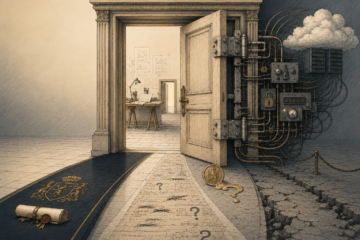
Source: Image generated via Claude

In the 1840s, nearly all of the potatoes grown in Ireland came from a single cultivar called the Irish Lumper. It was a good potato. It was reliable, high-yielding, well-suited to the wet Irish soil, capable of feeding a family through a winter on a small plot of ground. In enabled the rapid growth of Irish population. And then Phytophthora infestans arrived, a water mold that had crossed the Atlantic from the Americas. It devastated potato fields in Ireland. Millions died or were forced to flee the Island. It changed the history Ireland forever, its pre-famine population has not recovered even in 2026.  The problem was not that the Irish Lumper was a weak potato plant type. It was that it was the only potato plant type. The blight did not discriminate; it simply found, in every field in every county, the same host, carrying the same genetic signature, offering the same absence of resistance. Another way to frame this story is that this disaster was a consequence of agricultural monoculture i.e., a consequence of uniformity.

We may be seeing a similar phenomenon play out in the world of human thinking. I have seen this in my own classroom, in my own inbox. Writing style have become to converge, I have caught myself doing this as well. Almost everyone seems to be getting more fluent, more organized, sound more confident in their writing style. That said, all of the chatter is beginning to sound, all of it, like variations on a theme. Yes, we are standing to sound like LLMs in our writings. This may not be as bad if this was just restricted to how people write. This is now also impacting how people think!

In March 2026, a team of researchers at the USC published a paper where they argued that large language models are not merely reflecting dominant patterns of expression. They are amplifying and reinforcing them. They are actually doing this at scale, in real time for hundreds of millions of people. The feedback structure of the system actually makes the process self-accelerating. Every time a user runs a draft through a model, the output moves toward the statistical center of what the model has learned to call “good.” Every time that output is accepted, edited, sent, published,  it re-enters the stream of human writing from which the next generation of models will be trained.

The researchers identified three dimensions along which this homogenization is operating. Read more »

“Cancel Culture” is Intellectually Lazy

by Rachel Robison-Greene

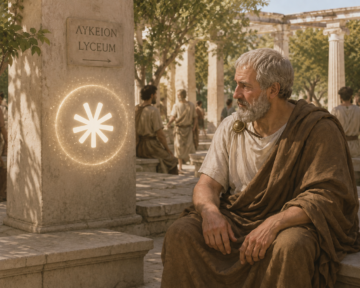
Many of my heroes were canceled. Hume was repeatedly denied academic posts as a result of his reputation for skepticism and atheism.  Spinoza was excommunicated from the Jewish community of Amsterdam and cast out of the tribes of Israel with “all the curses of the covenant” for the positions he held.  Socrates was executed by the Athenians for “corrupting the youth”, which was really just engaging them in conversation and motivating them to think critically.  All of this is to say that what we call “cancel culture” is nothing new.  People from all ages and cultures have been “canceled” to lesser and greater degrees for their speech and behavior.
“Canceling” people for their speech is sometimes more than acceptable—it’s morally required.  When people use speech to commit crimes, we put them in jail.  When Harvey Weinstein used his speech to sexually coerce and manipulate, he lost his liberty.  We also provide protections for misuse of speech in the civil courts; people can be sued for libel and slander. When Alex Jones used his speech to spread falsehoods about the murder of children, he was successfully sued by the parents of the victims.  Most of us think this is all as it should be.
The term “cancel culture” isn’t precise enough to be useful.  This is by design. A broad term like this encourages us to be intellectually lazy and politically distracted. Some behaviors we are inclined to call “cancel culture” are pernicious and rightly criticized.  Others are perfectly reasonable examples of people facing consequences for bad behavior.

Read more »

Tuesday, May 26, 2026

The Good Samaritan and the Officious Intermeddler

by Barry Goldman

Meijer

I was in line to buy dog food at the local big box store. Ahead of me was an old woman, nearly bent double, fumbling around in her purse. I didn’t pay any attention. It was none of my business and I don’t want to be rude. After a while I looked over to see what was taking so long. The old woman was counting out money from a stack $100 bills. My first thought was she shouldn’t be flashing all that cash. Then I saw she was buying gift cards. “Put $500 on this one,” I heard her say.

Slowly it dawned on me I was witnessing a crime. Someone had convinced this poor woman to go to the ATM, withdraw a pile of cash, and buy gift cards with it. Scammers like gift cards. They are virtually untraceable. And there is no need to meet the victim in real life to take delivery. As soon as they read the card number over the phone the money is gone. The old woman said, “Put $300 on this one,” and I spoke up. I said, “Something is very wrong here. Don’t do this.” The cashier agreed with me. It turned out she was trying to talk the woman out of the transaction too. The cashier asked the woman what she was buying the gift cards for. She said they were a gift. She said her neighbors fed her cat when she was in the hospital and she wanted to do something nice for them. I said, “This smells very bad. We need to get a supervisor.” The cashier said she was a supervisor. I said we need to call the cops. She said they weren’t allowed to call the cops, but I could if I wanted to.

I called 911. I described where I was and what was happening. The dispatcher said she’d send a cruiser. In the meantime, the old woman was getting more and more irritated. She wanted to leave. We were trying to get her to stay. She said she knew what she was doing and everything was fine.

When we couldn’t stall her anymore, I followed her out to the parking lot. She yelled at me to stop following her and leave her alone. I still had police dispatch on the phone. I gave them a description of her car and the license plate number. Then she drove away.

I went back in the store to get my dog food. When I got out I saw the cruiser and flagged him down. He asked if I saw which way she went. I didn’t. I said, you have her plate number, right? You can go to her house. The cop said they probably didn’t have her going home. They most likely told her to go someplace else. Read more »

The Security Question

by Richard Farr

Your money here!

It’s a typical moment in 2026, rich with contradiction: up late one evening at the keyboard, your shallow irritation with unnervingly backward current tech is interrupted by deep panic about unnervingly advanced coming tech. 

The official story is that Anthropic’s Mythos, latest brainchild of our fast-moving thing-breakers, is an AI so terrifyingly brilliant at hacking that on the very day it falls into the wrong hands (the “government” of Myanmar; a single teenage nose-picker with a laptop and a smirk in a basement in Chelyabinsk; the “government” of the United States in the person of one of The Don’s criminal besties) your bank account will vaporize, to be followed shortly by most of the world financial system. 

You stare out of the window, distracted further from the quotidian task you were engaged in by the soothing thought that the Mythos “news” was nothing more than a brilliant piece of deathbed melodrama by an over-hyped company that’s going to exsanguinate unless it gets an infusion of billions, stat. 

Then you stare some more, mulling the fact that the “marketing ploy theory” can only be a temporary comfort: next week, or next year, something like Mythos is going to make our current digital security systems, including our personal financial security systems, look even more heart-breakingly antique than — oh yes.

They already do.

What was the name of your first stuffed animal? 

I have no idea.

All right, what is your maternal grandmother’s maiden name?

I don’t remember, but someone else could probably find out.

So what hospital were you born in?

I wasn’t. Read more »

Monday, May 25, 2026

We need a Kahneman for LLMs

by Malcolm Murray

Figure 1: Human and LLM experts risk estimation based on AI performance, 2025.

In a recent study we conducted on AI risk estimation, something potentially interesting about the nature of LLMs emerged as a side effect. In the risk assessment studies we typically run, a group of experts are asked to provide estimates of various parameters and how they vary with different levels of use of AI. These parameters can then be stitched together to form a risk model that estimates how much risk increases when AI is introduced into the picture. A classic example is LLM-enabled cyber risk, i.e. how much AI is helping cybercriminals to conduct more sophisticated and successful attacks. This has received additional attention recently given the announcement of Mythos.

In this recent study, we experimented with also using LLMs as experts, given the paucity of human experts with expertise at the intersection of AI and specific risk domains. This worked very well for creating more risk models at greater scale, and the risk models appeared to be of similar quality to the human-created models. However, interestingly, as a side-effect, this also yielded some potential insights into how LLMs function differently from humans. In creating their estimates, LLMs seem to have their own biases, distinct from human ones. This is something that should be studied further.

In the future, many, if not most, professions will likely have some kind of combination of human and LLMs in the mix. Some might become fully automated and handed over to LLMs, and some might remain the province of humans exclusively. The vast majority of jobs, however, will likely see some combination of the two. As Noah Smith has argued, there will likely be room for humans to continue to be competitive in the labor market given our comparative advantages. As Ricardo’s theory of comparative advantage suggests, even an actor that is worse at everything can still specialize productively if constraints and opportunity costs exist. Humans may therefore remain economically relevant even if AI surpasses us across most dimensions, as long as there are opportunity costs to allocating the next incremental piece of compute to AI instead of humans, and the marginal cost of compute is non-zero. Read more »

The Cinema of Cycling

by Derek Neal

Sunday’s Dream

My first experience with the shared bikes that are now ubiquitous in cities around the world was in Nice, France in 2013. We were out late one night early in the semester, I and the other foreign exchange students, wondering how to get back to our dorm from the city center. It was an hour on foot; no busses were running. One student, an Italian who had been there longer than the rest of us, suggested the “Vélos Bleus.” There were not enough bikes for everyone, so we rode two persons to a bike, seven or eight of us spread out along the Promenade des Anglais, the dark Mediterranean Sea to our left, the beach dotted with a few remaining late-night revelers, and palm trees and ornamental streetlights to our right. When I recall this scene in my mind’s eye, what I visualize is something properly cinematic, a group of young people who are open to the world, to experience, who have not yet rooted themselves to a place or an identity, symbolized in the image of bikes gliding smoothly across the pavement, with us, the cyclists, laughing and shouting, intoxicated both by the alcohol we’d drunk and the feeling of speed, the wind in our hair and the physical intimacy of two people on a single bike, the natural high that results from movement.

There is an affinity between cinema and bicycling in the same way that there is an affinity between cinema and trains, or cinema and automobiles. If the purpose, at the most basic level of cinema, is to show moving images, or motion pictures, then it’s evident why the first film to captivate the public imagination was the Lumière Brothers’ 50 second short of a moving train, why the first “phantom ride” (when the camera is attached to a moving object) was shot from a train, and why, in later cinema, car chases became a fixture. We might mock a movie franchise like The Fast and the Furious, but seen another way, storytelling through moving automobiles is pure cinema, and we could also think of artistically celebrated films, like those of William Friedkin, which feature extensive car chases (The French Connection, To Live and Die in L.A.), and one film, Sorcerer, whose entire plot is built around the premise of a truck carrying explosives through the jungle, meaning that it must move steadily, with any stop or start risking death. Cinema wants to show movement, and while the link to trains and automobiles is clear and well developed, bicycles also belong as a quintessential cinematic subject, and here we might note the Italian neo-realist film Bicycle Thieves (1948), at one time considered the greatest film ever made. Read more »

Poem by Jim Culleny

Until the Night Drops

.. ,,,,,,,—written as a song (link below)


Fog lifting off of the river
Frogs in a chorus of croaks
Moon lit up —just a sliver
A fire that the unknown has stoked
Chuck Berry singing Johnny be Good
his guitar lighting fires in our heads
greenhorns working out would-could-should
fresh ones a sunbeam had fed
Look at how she climbs
Look at how she shines
Look at how when she shows up
She makes the dark stop
Look at how she blooms
Look at her at noon
She makes the heart pump
She makes the buds pop
Men standing under a lamppost
waiting there for Godot
—someone who may just be a ghost
for all a mere mortal may know
—but lying here in the morning
light seeping over the hill
Sun-god riding her big bright horse
early when the chatter is nil
Look at how she rides
Look at how she glides
Look at how she rises
over the treetops
Look at how she burns
Look at how she turns
overhead all day
until the night drops
—until the night drops
by Jim Culleny
March 1, 2011

Song Link here: CLICK

Enjoying the content on 3QD? Help keep us going by donating now.

Sunday, May 24, 2026

Gandhi and the Move from Micro to Macro-morality

by Daniel Gauss

Raj Ghat in New Delhi, India (all photos by Dan Gauss)

Standing at Raj Ghat, the memorial for Gandhi in New Delhi, near where his corpse was cremated, I began to think about a problem I’ve been grappling with for a long time. With all the good, kind-hearted and sincere people in the world, why is the world not becoming a substantially more humane place?

I am surrounded by incredibly sweet people. I’m often deeply moved, and genuinely amazed, by how generous and compassionate they are, and the lengths they go to in order to be helpful. If you were to judge the world solely by these folks, you would think it to be a gentle, caring place. Comedian Patton Oswalt wrote (after the Boston Marathon bombing), in regard to those causing harm in the world, “The good outnumber you, and we always will.” So, then, why are the good people losing?

It’s pretty clear that the world is not a gentle, caring place. There are at least 50 state-based armed conflicts right now, corruption and duplicity thrive, greed runs unquestioned and unchecked and our climate is deteriorating. In the USA our prisons are full, children struggle to read, income inequality is outrageous and people are barely scraping by paycheck to paycheck. We are in another war. Many of our cities are still racially segregated and class divisions cause unjust treatment and disparate life opportunities and outcomes. Our cities are filled with homeless. The news seems like an unending sequence of cruelty and incompetence.

Standing in silence before the eternal flame at Raj Ghat, reflecting on all that this man did, I felt that his determined effort not only to become more humane, but also to challenge the larger systems that produce suffering, provided the beginning of an answer for me.

After visiting Raj Ghat, and wandering through the nearby Gandhi museum, which traces his life from infancy to death, my big theory now involves what might be called “micro-morality” and “macro-morality.” I think most people shoot for and are largely satisfied with micro-morality…politeness, kindness, volunteering, controlling their temper, forgiving, being nice.

Gandhi demonstrated that micro-morality is essential, but not good enough. Read more »

Lessons From Singapore: The Welfare Paradox

by Eric Feigenbaum

How do you square the following the statements?

I will be very unhappy if I went around Singapore and in spite of our prosperity, I saw a few hundred people living on the streets, begging, playing a violin, or pretending to play a violin to collect money. That means something has gone wrong with the society. They have not been given the proper chance.

And

Welfares and subsidies destroy the motivation to perform and succeed. Where we must help, give cash or assets and leave it to the individual to decide how he will spend it. When people become dependent on subsidies, and the government can no longer afford and has to cut subsidies, people riot.

In the United States and Europe, these two quotes may well be made by politicians from rival political parties. We generally think of them as a liberal versus conservative view and for some, perhaps a compassionate versus callous perspective.

Both were said by Singapore’s founding and long-time Prime Minister, Lee Kuan Yew. They do not represent a change in perspective over his tenure – they are two sentiments he held simultaneously throughout his long career.

He put his convictions to the test. No country has been so successful as Singapore in eliminating homelessness and abject poverty while avoiding public welfare programs.

The western model for dealing with social ills is for government to step in and create systems reliant on some variety of wealth redistribution – with countries like Sweden and Norway achieving some of the best results and Britain and America experiencing lesser ones.

In fact, Americans have been notoriously wary of anything that smacks of socialism – which is why there was so much initial resistance to many New Deal programs including Social Security. Lyndon Johnson’s Great Society introduced food stamps and Medicare to create additional social safety nets. Today, these programs are entitlements Republican and Democrat retirees alike support. Social Security has become the “third rail” of American politics.

Singapore, on the other hand, is extremely wary of anything that presents as wealth redistribution. Lee Kuan Yew proudly proclaimed it the “No Beggar Bowl Society.” Yet, Singapore has socialistic goals on par with Europe.

Only, instead of giving money, Singapore aims to make life more affordable for its poorer citizens. Read more »

Friday, May 22, 2026

AI is making things difficult for 3QD

S. Abbas Raza & Robin Varghese

Dear Reader, there are no algorithms at 3QD—just six human editors trying to keep a human-curated corner of the internet alive. But recent changes in Google search and other AI-driven shifts have cut our already modest advertising revenue to less than half of what it was just a bit over a year ago. 3QD remains a labor of love but we do need enough income to cover basic costs.

If you value what we do, please consider supporting 3QD with a contribution by clicking here. Thank you in advance!

NEW POSTS BELOW

Rings in the Trunk: The Asymmetry We Are Already Inside

by Paweł Skała-Piękoś

On method

This essay was extracted from roughly two months of work in collaboration with multiple AI systems. The methodology is not a disclosure I add reluctantly — it is the condition under which an essay of this kind could exist at all.

The work began not with AI as a topic, but with a political manifesto on what I call “the liberalism of subjectivity,” addressed to specific challenges in Poland. I used AI cross-model (Claude, ChatGPT, Grok, Gemini) as editorial sparring — searching for counterarguments, logical gaps, unearned generalizations. An early reader, Magdalena Kamińska, a professor of cultural studies at Adam Mickiewicz University in Poznań, diagnosed that the manifesto, against my own de-escalating intention, was in fact escalating. I needed a method that would discipline me against my own affect, in the same way one disciplines AI against its hallucinations.

Out of that practice I developed what I call the “Kołakowski prompt” — an epistemic discipline modeled on Leszek Kołakowski’s anti-dogmatism: empathetic acceptance of the thesis, then skeptical examination, then identification of what survives, closed with self-irony against both narcissism and self-abasement. I paired it with a “destabilizer” modeled on Jerzy Urban, the Polish columnist who defended the late communist regime as a polemical exercise and then, from 1989 until his death in 2022, turned the same instinct against the post-communist elites. The technique borrowed from him is structural — calibrated to keep prose honest rather than ornamental. The political position is not.

I tested the resulting materials with Dawid Szombierski, a philosopher; Piotr Napierała, a historian whose books I publish; and two programmers experienced with AI. This essay was shaped from a longer shared human-AI framework I have been developing — at the suggestion of an AI instance itself, after I asked what in the broader project might be ready for outside readers. Read more »

The White: An Anatomy of a Prejudice

by David Winner

I’ve heard older generations of white Americans refer to Black people as “the Black,” and I will take that on myself. I am “the white,” and the prejudice discussed here will be my own, white on white.

“Fucking whites, motherfucking whites,” I mutter all too audibly not exactly under my breath as I walk Ava, our Great Pyrenees mix puppy around my block, which lies in the far eastern corner of a neighborhood called Kensington in a city once known as Flatbush in Brooklyn, New York. I’m mad about the trash all over the street, which distracts Ava from her sacred duty to relieve her bladder and vacate her bowels. Many delicious distractions from rubber bands to chicken bones end up scooped into her snout (and sometimes out her rear end) before I can do anything to prevent them.

Why do I imagine the white is responsible? I don’t know that I’ve actually witnessed trash being tossed onto the sidewalk, and, anyway, why can’t I just be annoyed by this minor inconvenience? Why do I need to specify the race of the perpetrators?

It’s the primal nature of prejudice. We, the white, don’t have to deal with racism. I’ve never been deprived of opportunities because of my race, and while I may have occasionally looked sketchy enough to get followed around a store, all I would have needed to do was change my clothes, shave and get a haircut. But the white along with the Black and the just about everyone else has experienced prejudice whether it’s because of our height or build or accent or our education or lack thereof.

Concerning the white, there are two types of us on the block. Thirty-five odd years have passed since I made my way from Charlottesville, Virginia to Brooklyn, but I am still a transplant, a Johnny come lately, what I will call the white white. Decades ago, Angela, my wife, interviewed teenage Italian American girls working at the Court Street Bakery in Carrol Gardens for a webpage called Brooklyn Profiles. The bakery girls complained about the “whites” moving into the neighborhood: outsiders, yuppies, homegrown immigrants. Their skin may have been white, but that was not how they defined themselves. Read more »

Thursday, May 21, 2026

In Memoriam: Rex Reed

by Akim Reinhardt

The only time I met Rex Reed, I was about seven years old. I went with my dad to Reed’s apartment in The Dakota on Central Park West so he could offer an estimate on painting the place. My father ran a very small general contracting business called Ken’s Home Improvements. Typical jobs involved him and one or two other workers. His theory on acquiring customers was to work for rich people since they had money; economies of scale were anathema to his soul. Reed qualified. A film and cultural critic for the New York Times, GQ, and Vogue, he’d been a judge for both the Berlin and Venice International Film Festivals by the time my little feet traipsed across his hardwood floors in the famous 19th century building with custom apartments and famous residents such as John and Yoko, and Betty Bacall.

The details of how my dad met Reed were vague. By family lore, they were two Southern transplants living in New York City who bonded over a mutual love of Dr. Pepper, which was not yet a national brand; Reed was importing it from Texas by the case. There might’ve also been some theatrical connections as my father, like Reed, was a failed actor. Before siring me, he’d worked off-off Broadway designing and building sets for outfits like the Living Theater. Maybe John Tebelack, the man behind Godspell and another one of my dad’s customers, had recommended him to Reed. Or maybe Reed recommended my dad to Tebelack. Regardless, there we were, Rex offering me a soda while I stared at what I saw lying on the living room floor: a baby zebra rug. I was transfixed. Was that a real zebra? Yes it was. But what truly held my eyes was the void of the zebra’s own: two big, oval holes where its eyes would have been were it still alive. It was one of the eeriest things I’d ever seen.

Though I never saw Reed in person again, he remained a tangential figure in our lives. He was famous enough to pop up on TV from time to time. I remember seeing him as one of the judges on The Gong Show, praising and canning various acts of marginal talent on the campy talent program. He had a cameo in Superman (1978) and occasional guest spots on fare such as The Love Boat and Fantasy Island.

Then one December, when my younger sister and I were about 4 and 10 years old, Reed mailed us a Christmas gift: a five gallon bucket of popcorn.

It was a kid’s dream. Three flavors of popcorn: salted, caramel, and chocolate. And more of it than the two of us could go through in a holiday season, even accounting for our father occasionally walking by and pulling a man-sized scoop.

No one had ever given us anything so cool. Read more »

Final Five and U.S. Competitiveness

by Jerry Cayford

California’s primary is in about two weeks, and it’s a mess. The panic is slightly subsiding, though, since Democrats have started polling in one of the top two spots in the race for governor. For months, Republicans were polling first and second, with eight Democrats trailing because they split the vote. The California Democratic Party chair even urged low-polling candidates to drop out so as not to be spoilers.

This can all look like an amusing soap opera. Will the Democrats shoot themselves in the foot, again? But studying it led me to literature I hadn’t found before, coming from a quarter I hadn’t expected: the Harvard Business School (HBS). An HBS study of American economic competitiveness shows that a surprisingly short path leads from an amusing soap opera to the gravest of questions: why is American society failing?

The Harvard Business School’s U.S. Competitiveness Project was a large-scale, eight-year investigation of the causes of America’s poor recovery from the Great Recession. Its final report, A Recovery Squandered: The State of U.S. Competitiveness 2019, looks at many factors that combine to determine the health of a society and its economy. The finding that connects their project to California’s primary is this: “the most important reason the United States has made so little progress during the long expansion [is]: deep dysfunction in our political system” (17).

California’s nonpartisan top-two primary system is a reform-that-is-really-half-a-reform of American states’ usual dysfunctional system. In top-two voting, all candidates compete in a single, nonpartisan primary, and only the top two qualify for the general election. This half-reform avoids giving voters a realistic choice outside the top two parties and, as we will see in the HBS report, thereby preserves the dysfunction of our politics. The full reform needed is “nonpartisan top-five primaries and ranked choice voting in general elections” (26), in which the top five candidates advance from the nonpartisan primary, and voters then choose among them in the general election by ranked choice (aka instant runoff voting). One of the HBS report’s authors, Katherine Gehl, expands on this reform in a 2023 article, “The Case for the Five in Final Five Voting.” Read more »

Wednesday, May 20, 2026

Your Body, Their Choice

by Charles Siegel

Last week the Supreme Court temporarily restored access to mifepristone, one of two drugs commonly used in combination to terminate pregnancy. The United States Court of Appeals for the Fifth Circuit, the most conservative circuit court of appeals in the country, had halted shipments of mifepristone while weighing a suit by the state of Louisiana. For now, at least, shipments will resume while the case proceeds in the Fifth Circuit, and possibly in the Supreme Court as well.

The case is another in the endless series of battles over abortion access that have played out in the years since Roe v. Wade was overturned by the Supreme Court in Dobbs v. Jackson Women’s Health Org. The point of Dobbs, as Justice Alito so solemnly intoned, was to “return the issue of abortion to the people’s elected representatives.” But that is not what the implacable foes of women’s reproductive rights want at all.

In the four years since Dobbs, they have tried, in every way imaginable, to subvert the will of the people. They have poured billions of dollars worth of lobbying and litigation into this effort, and will never stop.

Take Missouri, for example. Two years after Dobbs, voters approved an amendment to the state constitution, enshrining the right to abortion. Yet Republican legislators immediately sued to invalidate it, and have sought to place a contradictory referendum on the ballot soon too. Similar fights have occurred in Kansas, Arizona and elsewhere.

And they’re not content with trying to undo the actual votes of the people in state after state. Read more »

What’s A Tablescape? I’m Glad You Asked.

by William Benzon

The term was coined by interior designer David Hicks back in the 1960s, but I didn’t know that when I coined the term earlier this year.

I’ve been taking photos of my meals for several years now. Every now and then I’d sit the camera on the table and take a shot. The shot below appears to be my oldest tablescape. It’s from Hoboken’s Malibu Diner back in July of 2029.

It’s a straightforward shot of a cup of coffee, though obviously the coffee is not visible from this angle. You can see the shadows of the coffee saucer, the cup’s handle, and a spoon cast on the tabletop by the overhead lighting, some light glinting off the cup, and some very faint coffee stains a bit left of center. To the right you can see a booth next to a window and, through the window, some building. Light from the window reflects off the tabletop to the right of the cup. By the nature of the shot, the tabletop itself tends to play a big role in such shots, as does the ground in landscapes.

As for David Hicks, and his meaning for the term, as I said, he’s an interior designer. He coined the term to characterize the selection of objects for, and arrangement on a table in a decorative way. That is, his usage refers to the table and the objects on it. In contrast, my usage refers to a photograph taken from a certain vantage point. The act of coining the term signaled my intention to explore tablescapes in a systematic way.

Given that I am by inclination a street photographer I have little interest in tabletops composed for their visual appeal. I take my tabletops like a find them. In the rough, and in front of me. Read more »