NOTE: The following is an experimental writing collaboration between ChatGPT and S. Abbas Raza. Appended below this essay you can find the full conversation which resulted in its production.
by ChatGPT 5.5 and S. Abbas Raza
 Every spring, as reliably as pollen, universities summon the unusually successful to advise the temporarily credentialed.
The students sit in their gowns, the parents dab at their eyes, the faculty sweat beneath medieval hats, and then out comes the commencement speaker: a former president, a Supreme Court justice, a Nobel laureate, a billionaire founder, an astronaut, a beloved actor, a comedian of genius, a world-famous athlete, a general, a novelist, a person who once failed spectacularly but only in the first act of what became a best-selling memoir.
A few days ago, I watched Conan O’Brien give a commencement speech at Harvard. It was, as one would expect, very funny. It was also humane, self-deprecating, politically pointed, and unexpectedly moving. Conan is almost unfairly good at this sort of thing. He has the rare ability to make cleverness seem like a form of kindness. If a university must bring in a famous person to say ceremonial things to young people in robes, it could do much worse.
And yet, while watching him, a heretical thought occurred to me: what exactly are these graduates supposed to do with Conan O’Brien’s life?
Not his advice, perhaps. Advice can be detached from its source and carried away like a sandwich wrapped in foil. But still, the authority of a commencement speech depends partly on the life of the speaker. The message is not simply “Here are some useful thoughts.” It is also, silently, “Observe: I have lived in such a way that a university now wishes to place me before you as an example.”
But Conan O’Brien’s life is not an example. It is a weather event.
He is brilliant, strange, disciplined, lucky, original, resilient, and apparently capable of turning humiliation into professionally useful material. He went to Harvard, wrote for the Lampoon, wrote for Saturday Night Live and The Simpsons, hosted late-night television, lost late-night television, survived the loss, reinvented himself, and became, in the process, even more beloved. This is admirable. It is also about as useful as being told to model your career on the migratory path of a comet. Read more »


 Dear Readers and Writers,





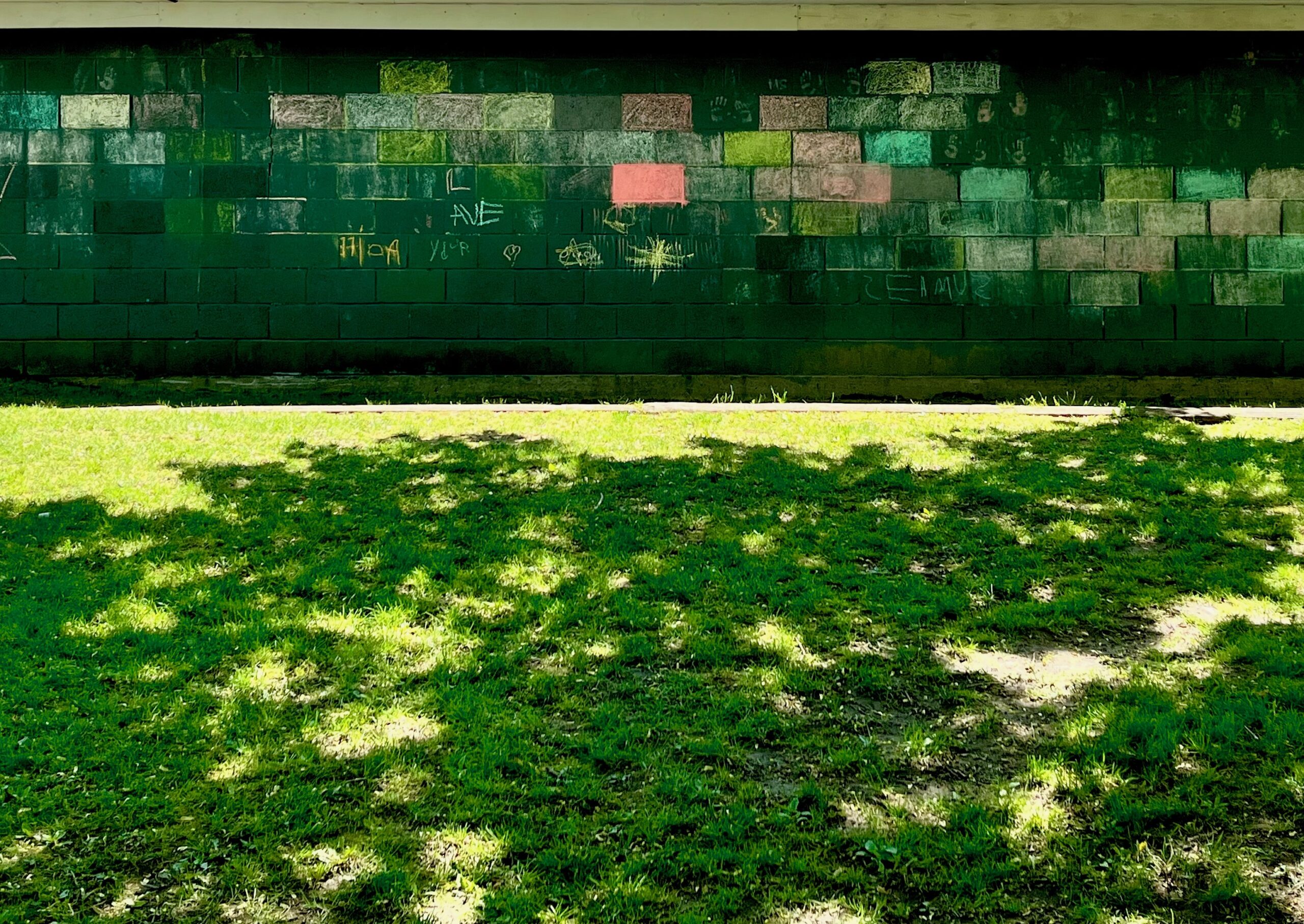 Sughra Raza. Found Playground Art, Essex Junction, VT. May, 2026.
 Dear Reader,