

State Medical Boards Should Trust Each Other

by Kyle Munkittrick

During covid, amid the maelstrom that was American healthcare, a miracle happened. State medical boards suspended their cross-state licensure restrictions.

No special legislation required, no political capital spent. Overnight, every state declared they would recognize medical licenses from any other state. One day you needed 50 licenses to practice nationwide—an expensive, tedious, slow process. The next day, you needed only the license you already had. The nation’s entire health system stayed this way for nearly two years.

As a patient, this was an incredible boon. If you had a primary care doctor you liked in New York and moved to Vermont, Texas, or anywhere in the US, you could keep seeing them over Zoom.

Moving did not mean losing your doctor. You could keep seeing someone you knew and trusted, even across state lines. Telehealth boomed. Whole new ways to deliver and build healthcare businesses emerged.

And then, at the end of the pandemic, all that freedom was quietly destroyed. Why? Because State Medical Boards don’t trust each other. Read more »
Friday, April 18, 2025

Solving the Trolley Problem: Towards Moral Abundance

by Kyle Munkittrick

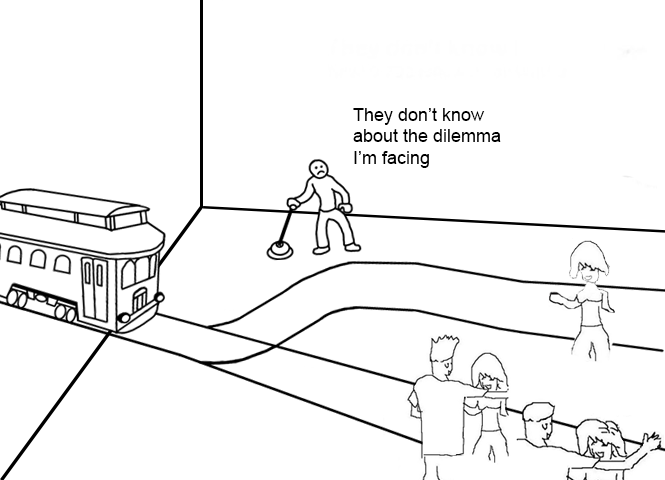
Trolley Problem meets ‘I Want To Go Home’ meme

Ezra Klein and Derek Thompson’s new book, Abundance, inadvertently exposes a blind spot in our collective moral calculus. In making their case for a better politics, I think they’ve also, as an accidental by-product, solved the infamous Trolley Problem.

Abundance argues that improving the supply of things like housing and energy is good on its own term and that material abundance can help address collective problems, like homelessness or climate change. The choice between allowing people to sleep on the streets in tents or forcing them into shelters is, as Klein and Thompson point out, a false dilemma caused by poor housing policy. The choice between growth and progress vs climate change is a false dilemma caused by poor energy and construction policy. Klein and Thompson are, justifiably, focused on the political thorniness of these issues, but, in their efforts, also demonstrate something startling: they implicitly demonstrate that material abundance can obviate moral quandaries.

The Trolley Problem is so well known and over-explored it’s easy to forget that it is relatively new. The Trolley Problem is a modern moral dilemma. There are no trolleys in nature. You cannot replace the trolley with a bear or a hurricane or an opposing tribe—those things do not run on tracks, their brakes can’t go out, and there is no simple lever by which you choose their behavior. The Trolley Problem is a problem of technology, yet none of its solutions are allowed to be. Read more »