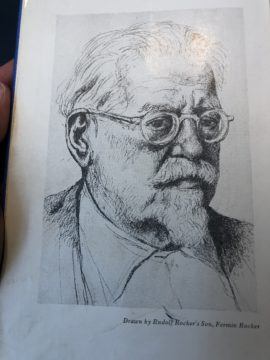
by Rafaël Newman
 I had a colleague, a great reader, whose favorite material was mid-century Japanese short-form realism. Frequently epistolary and often featuring at least one frame narrative, these novellas typically have as their narrator someone captivated, not to say obsessed, by a memory; and that memory, it seemed to me when I read the works my colleague lent me, is almost inevitably fed by an erotic or romantic encounter, as well as by its often calamitous sequelae.
When I asked her about this preference, my colleague explained that what she admired in such novellas was the fact that they were—and here she paused briefly to seek the appropriate English term: for she was a native francophone, and read her Japanese literature, for the most part, in French translation—“pudique.”
Now it was my turn to consult a mental lexicon. Pudique? I was reminded of the anatomical term “pudendum,” meaning the human genitals, derived from the Latin gerundive and meaning “that about which one ought to feel ashamed”. I remembered a TV news clip, viewed during a sojourn studying in Paris years ago, in which a certain politician, accused of corruption (I no longer recall whether fiscal or sexual), was seen escaping in his limousine and admonishing the reporters hounding him for a statement: red-faced with indignation, he called for the paparazzi to exhibit “un peu de pudeur”—for shame, his expression suggested, and as an Anglo-American politician in the same situation might have said. Could this really be what my colleague valued in her bedside reading: a sense of shame, of the shameful, of being ashamed, especially as regards intimate affairs? Read more »

 In the early 1980’s apart from joining the September group, there were two other outside organizations I was invited to join which expanded my intellectual horizons. The first was the South Asia Committee of the Social Science Research Council in New York. This Committee planned some research projects on different topics of social science in South Asia and also gave out research fellowships and postdoctoral research grants. It gave me the opportunity to interact with some of the top scholars working in the US on South Asia, including Myron Weiner, the distinguished political scientist, Bernard Cohn, the historical anthropologist, Wendy Doniger, the Sanskrit scholar, Ralph Nicholas, cultural anthropologist of Bengal, Richard Eaton, cultural historian of medieval India, and Ronald Herring, political scientist on agrarian development in India.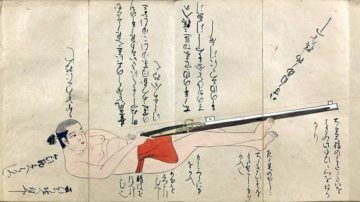
 An Immense World; How Animal Senses Reveal the Hidden Realms Around Us, Ed Yong, Random House/Bodley Head, June 2022
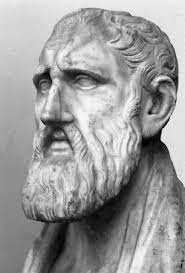 One of the more remarkable developments in popular philosophy over the past 20 years is the rebirth of stoicism. Stoicism was an ancient Greek and Roman philosophy founded around 300 BCE by the merchant Zeno of Citium, in what is now Cyprus. Although, contemporary professional philosophers occasionally discuss Stoicism as a form of virtue ethics, most consider it to be a minor philosophical movement in the history of philosophy with limited influence. Yet it has captured the attention of the non-professional philosophical world with many websites and online communities devoted to its practice.
  Sughra Raza. Be Unvaan. June 11, 2022, Cambridge, MA.

 Thomas O’Dwyer, my husband, died on Wednesday. He wouldn’t approve of this beginning. In his articles he always came up with something original or intriguing to draw the reader in.


 “Thus the concept of a cause is nothing other than a synthesis (of that which follows in the temporal series with other appearances)