by Marie Snyder
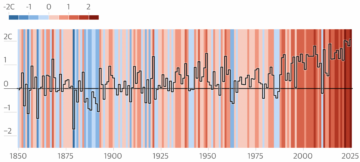 A recent article in The Guardian asked one of the UK’s top climate scientists, Professor Ed Hawkins, to bust the biggest myths about climate change. He tells us we can’t keep adapting to rising temperatures; burning fossil fuels is what’s primarily affecting climate; harvests are suffering; we’ve known the basics of all this for over 175 years, and it’s never too late to change. Does it help to clear all that up? I wonder if our reluctance to change has less to do with myths continuing to propagate and more to do with an increasingly pervasive ideology of individuality and independence. These myths might just be a way to rationalize our desire to be oblivious to our effects on one another.
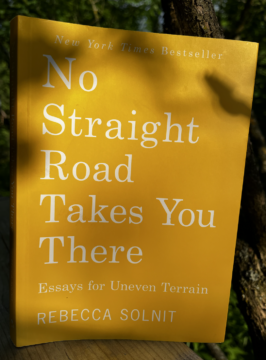 I always enjoy Rebecca Solnit’s writing, and her 2025 book, No Straight Road Takes You There: Essays for Uneven Terrain is no exception. The essays start with the need for a long view when we try to enact change, and she touches on several issues including democracy, masculinity, abortion, covid, and climate change, leaving us with some hope at the end. The thread I want to pull on is a much needed shift from a simplistic “us vs them” way of thinking into more complexity and nuance that comes with the acceptance of our necessary interconnectivity. I can’t help noticing some parallels with psychiatrist Frank Yeomans’ Transference-Focused Psychotherapy, which might imply that our personal development is important for the sake of the world. Maybe funding therapy would save the planet! Read more »