The Origin of Speech and the First Poets

by Carol A Westbrook

Who can remember back to the first poets,
The greatest ones,…so lofty and disdainful of renown
They left us not a name to know them by —Howard Nemerov, The Makers

In this poem, Howard Nemerov, Poet Laureate from 1988-1990, reminds us that we have no idea when poetry—that is speech—began. The origin of speech is lost in the depths of prehistory, but archaeologists are working hard to get a better understanding of how speech began, because it is one of the few things that makes us unique as human beings.

Social animals communicate in order to coordinate activities, share resources, and improve their chance of survival. There are many examples of animals communicatio: bees, for example, do an elaborate dance to tell others where they found food; whales and elephants also exchange information and coordinate activities. But humans are the only animals that communicate by speech.

At one time it was thought that closely related animals like the great apes, chimps and bonobos would be capable of speech if only they were raised like human babies. There were several attempts to do this by raising young chimps in human families and monitoring their acquisition of language. But while these chimps learned to understand some human speech, they fell far behind their human brothers and sisters in vocalizing more than a word or two. They never learned to speak properly more than a few words, and it soon became apparent that these apes must have been lacking certain anatomic features that were present only in humans.

Scientists have a fairly comprehensive understanding of the evolution of the human species, supported by the fossil record and DNA studies.

Stages of human evolution from australopithecus to present.

As seen on the picture on the right, our likely earliest ancestor is called Australopithecus, and is thought to have existed about 3.4 million years ago (mya).. The term Hominid (Family Hominidae) includes all great apes including humans (orangutans, gorillas, chimps, bonobos, and us) while hominim (Tribe Hominim) is a narrow group within hominids, referring specifically to modern humans, our extinct ancestors, and all species more closely related to us than the chimpanzees, after our evolutionary split from chimpanzees.  After Australopithecus came homo habilis, the maker, who made and used stone tools. Next came homo erectus, who used fire; then came Neanderthal and Homo sapiens, two species who evolved from a common ancestor. At what point did speech arise? Read more »

Vasco, and a supernova discovered

by Dilip D’Souza

No supernova
No dot there, September 20 2025

On a stargazing trip between September 19 and September 23 this year, I spied a supernova.

Well, not quite. I took plenty of photographs of a spectacular night sky through the four nights I spent out in the open. Then I came home and looked through them, still filled with wonder at what I had captured. Then I read some astronomy news. Then I returned to my photographs and looked through again, this time in some frantic urgency.

Then I had to (figuratively) sit down. For there it was. The supernova. In my photograph.

That is: On September 23, there was news that an amateur astronomer in Australia, John Seach, had discovered a supernova in Sagittarius two days earlier. In fact, and astonishingly, he had discovered two supernovae on successive days. The brighter of the two was only visible in the Southern hemisphere. But the other one was in the constellation of Sagittarius. Because I had pointed my camera at the Milky Way so often through my trip, Sagittarius was in several of my photographs.

I pored over all of them. I had several images from before September 21, and several more from after. All I needed to do was find a dot in a post-September 21 photograph that wasn’t there in a pre-September 21 photograph. You might wonder how, in images with thousands of dots – that’s how spectacular the night sky was – I could even think of finding a specific one. But the report from Australia had an image locating the supernova just “below” Sagittarius. So I knew pretty much exactly where in my photographs to look for it.

And to my amazed delight, I actually did find such a dot, precisely where I expected it. There on September 22. Not there on September 20. The supernova, on my laptop. Read more »

Franco is still dead, the 50th year edition, Part II: Of His Crimes

by David J. Lobina

‘…a los gritos de «¡Viva España!» «¡Viva La Legión!» muere a nuestros pies lo más florido de nuestra compañías…’ —Franco, Diario de una Bandera [i]

One of Franco’s concentration camps

In these times in which the term ‘fascism’ is forever abused, especially in the English-speaking world, and more specifically in the US, where large swathes of the liberal intelligentsia have convinced themselves that they are living through actual fascism,[ii] it is perhaps inevitable for the hispanist historian Paul Preston to be asked, on the occasion of the 50th anniversary of Francisco Franco’s death, why he is not so keen to call Franco a fascist (and, by extension, Francoist Spain a fascist state). And a historian’s answer he provides (not my own translation, because I am lazy, though I have edited it; my emphasis):

The use of the word “fascist” is a problem for me. If you ask me what a fascist is, I would say that the clearest example is Mussolini’s Partito Nazionale Fascista. Everything else is different. The problem with the word is that it is used as an insult. Today we say that Trump is a fascist. But of course, I am a university professor, and when I was at Queen Mary, University of London, I taught a course on the nature of fascism where I always asked to what extent Nazism was a case of fascism, because the problem is that it is something much worse. And Francoism, in many ways, was also worse.

Furthermore, [Italian] fascism had a rhetoric of doing away with everything old, something that Franco did not have, as he supported large landowners and the aristocracy. The part about the violence, which many associate with fascism, comes in Franco’s case from being a colonialist military man, an Africanist. Without Africa, I don’t understand myself, he said. Just like the Belgian or British military of the time. That’s why I’m uncomfortable using the word fascist with Franco.

This is par the course for a historian, as I have stressed many times before at 3QD (see, for instance, this piece) – most historians of Fascism, Nazism or Francoism have always kept them quite apart conceptually, despite some prima facie clear commonalities, which seem to me to be overemphasised in general anyway.[iii] But no more of this argumentative line now.

More to the point of this series, and as the Preston’s quote alludes to, it is Franco’s experiences in North Africa that explain a great deal of both his own outlook and that of the milieu he surrounded himself with – and this is a better foundation to understand Francoism than any analogies to Italian Fascism, let alone Nazism. Read more »

Thursday, December 18, 2025

The American South And Me: Clifftop

by Mike Bendzela

Nighttime jamming in a tent at Clifftop, West Virginia, August 2024. The O T stands for Old Time.

In “Hawthorne and His Mosses,” Herman Melville’s effusive review of the Massachusetts writer’s collection of short tales, Mosses from an Old Manse, Melville utters, under a cloak of anonymity (“a Virginian Spending July in Vermont”) one the most homo-erotic bits of praise imaginable for another male writer: [He] shoots his strong New-England roots into the hot soil of my Southern soul”! Reclining in his Vermont “hay-mow” with Hawthorne’s volume, the smitten Virginian notes “how magically stole over me this Mossy Man!” Indeed! Melville knew of what he spoke — of Nathaniel Hawthorne’s stories, that is, many of which have become classics, such as “The Birth-Mark” and “Young Goodman Brown.”

I mention all this not just because it’s awesome but because I want to pilfer Melville’s torrid statement to say this of Southern old time music:

“It shoots its strong Appalachian roots into the chilly soil of my Northern soul”!

I use Clifftop here as an avatar for this last essay excursion into how the culture of the American South has had a life-changing effect on me: Its myriad old time tunes have possessed me for about twenty-five years now. Clifftop, West Virginia is the location of Camp Washington-Carver, site of a yearly festival of old time fiddle and banjo music, the Appalachian String Band Music Festival. This festival is rustic, acoustic, genuine, low-tech, and — happily — takes place on top of an actual doggone 2500-foot hilltop, surrounded by dense deciduous forest. I’ve been to this mecca of old time only twice, the two trips twenty-two years apart, for a total of about seventy hours of non-stop jamming; but it’s effect on me has been profound, sort of like Saul of Tarsus seeing the Risen Christ, or something like that. Read more »

Living Free or as Evolution’s Arrow?

by Peter Topolewski

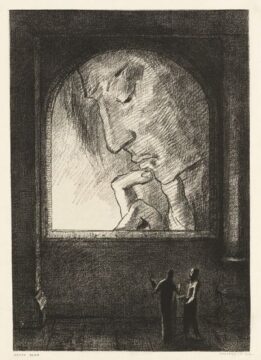
Light, Odilon Redon, The Art Institute of Chicago

Before the violence in the movie Bugonia moves center screen—and the narrative takes a not completely unexpected left turn—it’s made clear Teddy’s paranoia and consuming conspiracism and violent nature all have roots in childhood trauma. Things like child molestation and the hospitalization of his drug addled mother.

Oh gawd, you think, another movie explaining away awful behavior with a hellish upbringing. Seen it a million times, it’s boring already.

Boring in a movie, maybe, but that’s real life. Except it’s not only trauma that explains rotten behavior. Everything up to this moment in time explains everything about you, everything you’ve done, you’re about to do, and ever will do. This according to Robert Sapolsky, neuroscientist and author of Determined. You have no free will, your actions are determined by your genes, your environment, and your experiences. You have control over none of them.

His book, a couple years old now, has been well reviewed and discussed right here on 3 Quarks Daily, and there’s no need to do so again. The book feels like a mess at times, but an enjoyable one. And the choices—yes choices—Sapolsky made while writing the book are fascinating, the details of the science both enlightening and staggering, his purpose for writing it never more vital. And the implications are a trip. There’s no reason to carry on with this, but I have no choice but to go on, no more choice than I had to stop reading Determined, no more choice than Sapolsky had writing it.

Did he write it? Read more »

Wednesday, December 17, 2025

Inferior Men: Donald Trump and the I Ching

by Mark Harvey

The dark power at first held so high a place that it could wound all who were on the side of good and of the light. But in the end it perishes of its own darkness… I Ching, #36, Ming

Ji Chang (King Wen)

Years ago, someone gave me a copy of the I Ching, Book of Changes, translated by Richard Wilhelm. It’s a heavy little brick, more than 700 pages, and bound with a bright yellow cover. When I received the gift, I looked at it skeptically and never expected to read it. To my surprise, it’s been with me ever since, I’ve read it dozens of times, and the spine of the book is sadly broken from too many readings.

I grew up in a family with fairly skeptical parents and some very skeptical siblings. I vividly remember asking my parents if Santa Claus was real at an age when parents should definitely not disillusion a child of that belief. My parents looked at each other with pained expressions and then, too honest to lie about it, tried to let me down gently. So nothing in my formative years prepared me to like the I Ching.

Not all I Chings are equal, and there are some pretty flimsy versions out there. There’s even an app called I Ching Lite. Of the English versions, the Wilhelm/Baynes translation is one of the most respected.

The I Ching is said to be almost 3,000 years old and originated in China’s Zhou Dynasty. The structure consists of six stacked lines (called hexagrams), each either broken or unbroken. You’ll remember from your high school math that if you have two binary options (broken or unbroken) on six lines, you end up with 64 possible combinations. And that’s what the I Ching looks like: 64 hexagrams, each with its own special meaning. Read more »

One, Another; Other, Alone: the Fiction of Andrés Barba

by TJ Price

I came to Andrés Barba as I come to many authors—via recommendation. A very good friend was the first to mention Barba’s work—specifically, Such Small Hands—during the course of a fun back-and-forth of “Have You Read?” My friend proposed Such Small Hands at first assuming I was familiar, but when I admitted ignorance, she was surprised, and exhorted me most adamantly that I would love it; that it was one of her very favorites. It is hard to turn down a recommendation like this, especially when my friend’s taste in fiction is as varied as it is impeccable.

Such Small Hands, for quite awhile, however, was just a slim, neatly labeled spine tucked between others on the shelf—those of much more imposing measurement. The book was quite tidily printed—had a handsome cover and a very aesthetically pleasing presentation—and the title itself instantly evoked for me the closing line of one of the more famous E. E. Cummings poems: not even the rain / has such small hands

Thankfully, my friend is not one of those people who will take offense to delay—a blessing in any relationship for which mutual taste in reading is foundational. Months passed. Maybe a year. But in a fit of pique one night, having endured a drought of uninspiring genre fare, I picked out the book and opened it. In a matter of an hour, I’d read the book, closed it, turned out the light, and went to sleep, as I so often do after reading.

I have not had such howling terrors populate my dreams as I did that evening. Read more »

Tuesday, December 16, 2025

Are You 729 Times Happier than Donald Trump?

by Scott Samuelson

When I turned fifty, I went through the usual crisis of facing that my life was—so to speak—more than half drunk. After moping a while, one of the more productive things I started to do was to write letters to people living and dead, people known to me and unknown, sometimes people who simply caught my eye on the street, sometimes even animals or plants. Except in rare cases, I haven’t sent the letters or shown them to anyone.

Writing personal letters without any designs has been psychologically helpful. After venting any rage or confusion, I’ve found that what I have to say generally boils down to two things: I love you and I’m sorry. In the face of my mortality, it’s been good to be reminded of the strength of those two sentences and the connections built on their foundation. There’s something more than proper or quaint in addressing someone at the start of a letter as “Dear.”

Because our current president occupies more of my mental space than I’d prefer, he’s one of the people I’ve written a letter to. Dear Donald Trump. Then I ticked off a laundry list of grievances, going all the way back to the 80s.

When it finally dawned on me that I was addressing him as a figure rather than as a person, I began to wonder if I could talk to him human to human. Here’s a snippet of what I went on to write:

I’m having real troubles believing that you think of similar things as I do when you think about what makes life worth living. Am I wrong? For instance, that cry inside John Coltrane’s tone and Dolly Parton’s voice—do any songs at all break your heart with their beauty? Or what about friendship? When I recently visited a dear old friend of mine who lives in Brussels, my whole being flooded with joy when I saw his face at the airport. Do you have any such friends? What about a first love, a sweet pure love before puberty, before you even longed to kiss her (much less grab her by the pussy)—do you still dream of her? When you see, say, the first little daffodil after what has felt like three straight months of February, do you feel glad to be alive?

I continued like that in search of how we might connect over a fundamental good, away from the political shitshow that he’s in part responsible for. Read more »

The Cleaning Crew Part I: After Death

by Thomas Fernandes

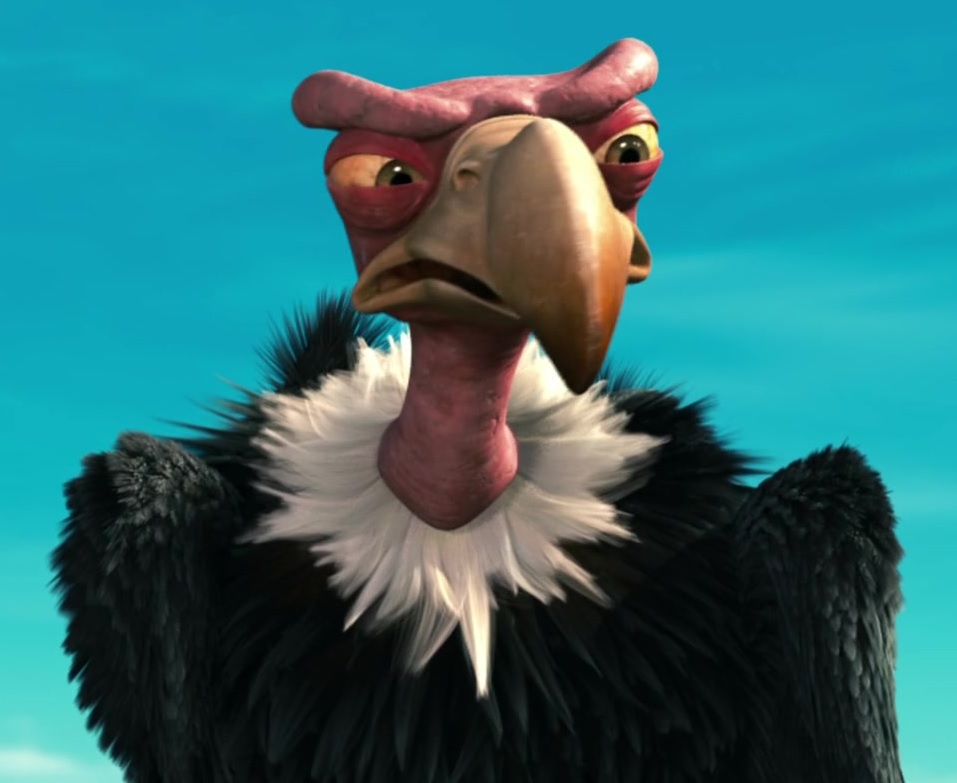
Figure 1: Ice Age 2 vultures, hoping for the death of the likeable protagonists

In the natural world, predation may mark the end of life, but it doesn’t signal the end of ecological interactions. The hunt, with all its challenges and shifting interactions, is not an end in itself, it only creates the opportunity to feed. O    nce the kill is made, two main strategies emerge: feeding quickly and leaving, or holding on to the remains for a few days to draw multiple meals from them. The carcass, meanwhile, becomes a contested prize, attracting stronger competitors seeking a free meal, blurring the line between hunter and scavenger. Solitary cheetahs, for instance, lose nearly half their kills to lions and hyenas. After this struggle, as time and heat accelerate decomposition, the remaining flesh soon turns inedible to most animals. From that inedibility emerges an opportunity for species able to thrive on what others must abandon. Scavenging, in this sense, occupies a shifting niche, rich in energy but scarce and unpredictable, a prize that few species can afford to rely on.

Among vertebrates, vultures stand alone as obligate scavengers, living almost entirely on the flesh of the dead. This diet exposes them to hazards that most animals evolved to avoid through evolutionary adaptations: pathogens, toxins, and chemical byproducts from decaying tissue. Humans, too, evolved pathogen avoidance, a behavioral response that manifests as disgust toward bodily fluids, rotting meat, or anything in contact with them. By association with the unclean, vultures are generally portrayed as vicious and malevolent, or simply ignored, despite their endangered state:  11 of the 16 species of African and Eurasian vultures are classified as Critically Endangered or Endangered, according to the IUCN Red List. Observing vultures challenges both our innate disgust response and our understanding of how scavengers adapt to extreme diets.

When we think of vultures, we imagine a single bird, when in fact they encompass a surprising diversity. There are two distinct vulture lineages that diverged 69 million years ago: New World vultures in the Americas and Old-World vultures in Africa, Europe, and Asia. The Old-World vultures tend to eat larger carcasses, including large ungulates such as hippopotami, horses, and buffalo. New World vultures, in contrast, feed on smaller prey, such as monkeys, rodents, and birds. Read more »

Monday, December 15, 2025

The United States Is Tearing the West Apart

by Bill Murray

One Monday in 1883 Southeast Asia woke to “the firing of heavy guns” heard from Batavia to Alice Springs to Singapore, and maybe as far as Mauritius, near Africa.
“So violent are the explosions that the ear-drums of over half my crew have been shattered,” one ship’s captain wrote. “I am convinced that the Day of Judgement has come.”

Barometers traced a pressure wave that circled the earth. Not for days or weeks did people understand the cause: that the Krakatoa volcano had erupted from the sea. Now in our own time, political shock waves have been sent out. Western democracies must interpret their impact urgently.

During the lifetimes of everyone born this year, the world will surely become a harder place to live. The main causes are two: ever faltering human politics, and even longer-term human climate tampering.

The climate part grows so gradually that it’s hard to rouse people to the ramparts. The politics part comes from a new cycle of populist nationalism. We saw how that worked out in Europe last century. It’s hard to believe we’re already at it again, but here we are.

It’s tragedy but truth that the climate part only goads the politics part. Climate disruption leads to refugee flows, and they reinforce xenophobia.

Which sets up the mid-2020s as a 1968 or a 1989, the end of a time of complacent stability, of relative governability, and the beginning of churning disruption. The mid-2020s are a tinderbox, and Donald Trump was elected by people who enjoy playing with matches.

If Krakatoa was a natural catastrophe, Trump’s presidency is a political one, the trigger of America’s current fit of government-by-destruction. An accelerant, releasing long-gathering American political decay and imperial overreach. Read more »

Mercy

by Andrea Scrima

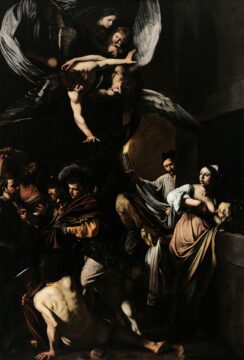
Caravaggio, Sette Opere di Misericordia, in the Confraternità del Pia Monte della Misericordia in Naples

Sette Opere di Misericordia, the famous altarpiece by Caravaggio commissioned in 1607 by the charitable Confraternità del Pia Monte della Misericordia in Naples, where it still hangs today, depicts the seven Biblical acts of mercy on a single large canvas. The dense composition is made up of at least fourteen visible and another three or four semi-hidden figures intertwined in dramatic enactments of the titular scenes: caring for the sick, tending to the imprisoned, sheltering the homeless, clothing the naked, giving drink to the thirsty, burying the dead, and feeding the hungry. The first five of these are crowded together on the left side of the painting, shrouded partly in darkness. On the right is a young woman suckling an elderly man and, behind her, two men carrying a corpse only the feet of which are visible. Hovering above the teeming confusion are the Virgin Mary and Christ Child; below them, two angels are locked in a mid-air embrace.

Traditionally, the chiaroscuro in the painting—the stark orchestration of light so emblematic of Caravaggio’s revolutionary style—has been interpreted as the expression of God’s will shining down on humanity and imbuing it with divine mercy. The angel’s pose is based on Michelangelo’s fresco The Conversion of St. Paul in the Vatican’s Capella Paolina, in which Christ, appearing in the heavens, extends his hand down to Earth to give manifestation to His divine power. Read more »

Poem by Jim Culleny

Until the Night Drops

Fog lifting off of the river
Frogs in a chorus of croaks
Moon lit up —just a sliver
A fire that the unknown has stoked

Chuck Berry singing Johnny be Good
his guitar lighting fires in our heads
greenhorns working out would-could-should
fresh ones a sunbeam had fed

Look at how she climbs
Look at how she shines
Look at how when she shows up
She makes the dark stop

Look at how she blooms
Look at her at noon
She makes the heart pump
She makes the buds pop

Men standing under a lamppost
waiting there for Godot
—someone who may just be a ghost
for all a mere mortal may know

—but lying here in the morning
light seeping over the hill
Sun-God riding her big bright horse
early when the chatter is nil

Look at how she rides
Look at how she glides
Look at how she rises
over the treetops

Look at how she burns
Look at how she turns
overhead all day
until the night drops
—until the night drops

by Jim Culleny
March 1, 2011
Song rendition link:
Stream Song: Until the Night Drops-1st Take by Jim Culleny | Listen online for free on SoundCloud

(Songs that immediately follow Jim’s recording
are not associated with it)

Enjoying the content on 3QD? Help keep us going by donating now.

Sunday, December 14, 2025

Putting the “Art” into Artificial Intelligence, or Banksy on Steroids

by Malcolm Murray

As I discussed AI with my cabdriver on a recent trip to Vienna, I was reminded of the fact that the German word for AI is Künstliche Intelligenz. This shares an etymological root with the word Kunst, German for Art. This made me realize that of course we have that in English too, the “Art” is right there in Artificial Intelligence, we have just overlooked it.

The words have diverged over time, from their common Proto-Germanic root, but I think their commonality is an interesting perspective to consider. Given the breadth of likely impact of AI on society, we need to analyze it from many different lenses and perspectives. So apply the “art lens” and being more cognizant of the “Art” in Artificial Intelligence could be helpful for making sense of some of the dissonant patterns AI presents us with.

First, we have the strange and somewhat discombobulating fact that AI is, as Ethan Mollick famously pointed out, neither software nor people. It is something else, a third category, with elements of both. We are used to people, and Kahneman and others have taught us how the ways in which they are fallible and make mistakes. They are flexible, but have many biases. We are used to software and we know its strengths and weaknesses. It delivers predictable performance, but with a limited range. What we have not yet encountered is fallible software. Like Ethan says, this is a new category which will take time to get used to. This partly explains enterprise adoption which is still slow, since that third category does not have a natural home in an organization. Processes will have to be changed drastically to allow this third category to fully come to its right. Seeing AI as more as of an art than a science helps put this in the right perspective. Read more »

The Barren Midwife: On Socratic Method and Psychotherapeutic Art

by Gary Borjesson

I’ve rarely regretted holding my tongue during a session. I’ve rarely regretted drawing out what’s on a patient’s mind instead of offering some (apparently) juicy insight or interpretation of my own. Holding myself back is sometimes a matter of willpower, but mostly a matter of art. The root of this art is the Socratic method.

In broad terms, the Socratic method can be used to teach law and other technical subjects, but these aren’t psycho-therapeutic in the way that Socrates was, that Plato’s dialogues are, or that a psychotherapist is. Law professors are not examining a student’s unconscious feelings, thoughts, or beliefs. Rather, the student has taken in a teaching, and their grasp is tested by Socratic-style questioning. But Socrates and Plato themselves are concerned with making what’s latent in the mind conscious, as are psychoanalysts and other depth therapists.

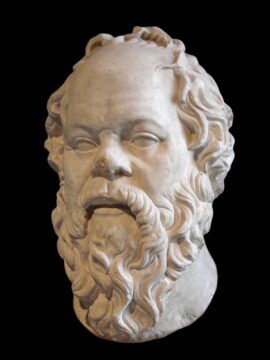
Socrates distinguishes the deeper, more therapeutic potential of his method by calling himself a midwife. This ‘maieutic’ metaphor has become synonymous with his method, as the accompanying definition shows. I want to unpack the meaning of Socratic midwifery and how this is reflected in psychotherapeutic art. The parallels are naturally of interest to me, having spent the first half of my career as a philosophy professor before leaving academia to become a psychotherapist. But more than that, the wisdom folded into the metaphor of midwifery sheds light on how to pursue an aim shared by philosophy and psychotherapy: getting to know oneself. Read more »

The Literature of Limits: The Buddhist Horizon (Part II)

by Muhammad Aurangzeb Ahmad

Sesshu_-_View_of_Ama-no-Hashidate
Painting by Sesshu Toyo (1420-1506) who was a Japanese Zen painter trained in China.

In the previous article of this series I started with the exploration of the concept that every civilization eventually arrives at the edge of its own knowing. It was not meant to be exhaustive or a critique but rather exploration of certain themes in Western thinking. Based on the feedback I have decided to dive into Buddhist thinking to clarify the scope of this exploration. How Buddhist thought approached the limits of its thinking is very different from the West. For Buddhist thought, and dharmic thought in general, the problem of limits of knowledge was not that knowledge had limits. The problem was that we had mistaken our concepts for reality itself. What might appear as an impassable boundary was, on closer inspection, an illusion created by the mind’s need to divide the world into knower and known.

From its earliest philosophical formulations, Buddhism did not ask how far knowledge could reach. It asked instead whether the question itself was coherent. In the Pali cannon there are fourteen questions that Buddha is said to have described as being unanswerable. The task of thought was not to extend reason to its horizon, but to dissolve the horizon altogether. The literature that emerged from this tradition does not always accumulate answers. It erodes the ground on which answering stands, the most well known examples being from Zen Buddhism. In contrast to Western thinking, the Buddhist literature of limits offers neither mastery nor despair, but release. This is way of seeing in which the limits dissolve precisely because the self that sought it gives way. This way of thinking can be epitomized by the most radical thinker of Buddhist philosophy, Nagarjuna sought to dismantle the very conditions that make limits intelligible. In the Mulamadhyamakakarika, he applies relentless logic to every fundamental concept whether it is cause, substance, self, or time. The goal is to show that each of these collapses under analysis. Things do not exist independently, nor do they fail to exist. According to Nagarjuna, they arise only in dependence, empty of fixed essence.

From here, we move to the limits of language. Read more »

Friday, December 12, 2025

Invisible Hands and Brandished Fists: The Three Dimensions of Power

by Jochen Szangolies

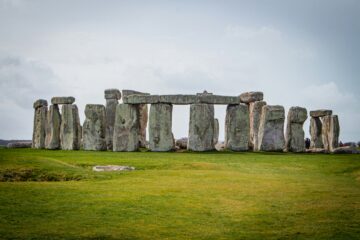
If you started saving one dollar every second ever since the first ground was broken at stonehenge, you would now have saved as much as the US loses thanks to tax avoidance by the top 1% of earners per year. Image credit: Priyank V on Unsplash

I have once again been thinking about power, and once again I feel ill at ease with it. Yet while I do consider myself somewhat badly equipped for this pursuit, I nevertheless feel, “in these trying times”, a certain responsibility to not cozy up with pursuits closer to my heart and talents, but invest some portion of my time and ability into examining the mechanisms of control as they are exerted in the world. After all, as before, one may hope that slow and steady going may substitute for knack and knowledge, and perhaps even help those otherwise sidelined to enter the conversation.

The prompt for the present swerve out of my lane was provided by a colleague’s lunchtime question, after the conversation had inevitably landed on the topic of what flavor of future dystopia awaits. “But how,” he started (or nearly enough so), “are the billionaires in their bunkers going to keep themselves in charge?” After all, what’s to stop the armies of servants they depend upon to uphold their lavish lifestyles from just, well, murdering them and taking their shit?

The question invites an immediate followup: what’s stopping us now? Not murdering, as such—but even just applying equal standards to the wealthy stands to free up resources capable of addressing a great many injustices in the world. According to a recent estimate by the US Department of the Treasury, the top 1% of earners dodge about $163 billion in annual taxes. (If you, like virtually everyone, have trouble conceptualizing these sorts of numbers, I find it helps to convert them to time scales: if a dollar is a second, then a million dollars are about eleven and a half days, while a billion dollars are roughly 31.7 years; the avoided sum of taxes then takes us back 5165 years, back to when the first phases of Stonehenge started construction. By contrast, the median US income for a full-time worker is about $63,000, or roughly 17.5 hours.)

Clearly, there is much good that could be done with that sort of money. As a semi-random example, according to estimates it would take from 10 to 30 billion dollars annually to end homelessness in the US, essentially eradicating a major source of suffering. And nobody would have to get murdered—or even unduly inconvenienced: this is money that is already legally owed, simply by having the 1% pay their fair share. Studies project an added revenue of up to $12 dollars per dollar invested in audits of high income individuals. So why aren’t we out there demanding equal treatment for the wealthy? Read more »

On Leave in this World

by Derek Neal

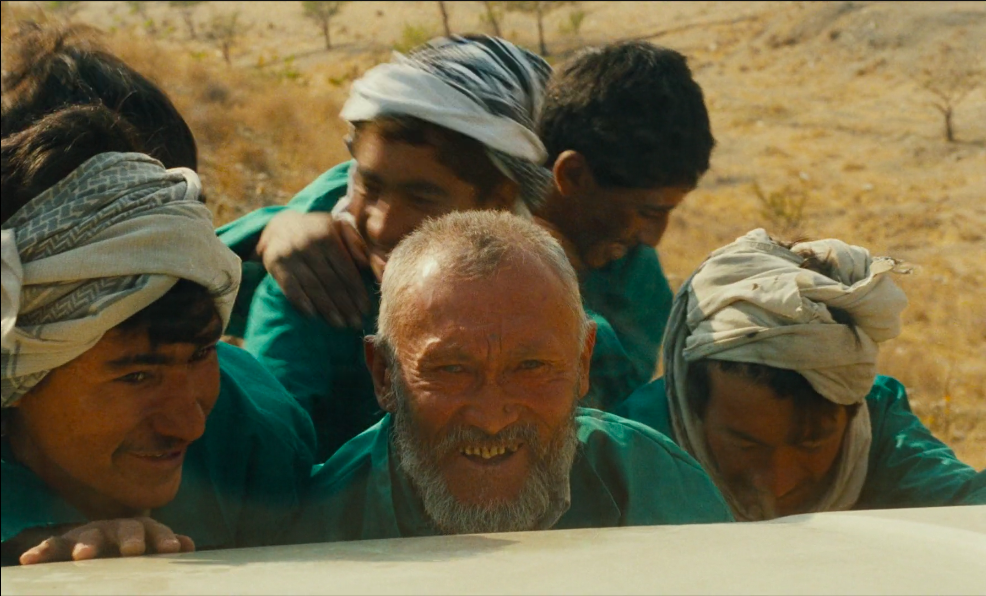
A group of workers push Ershadi’s car back onto the road

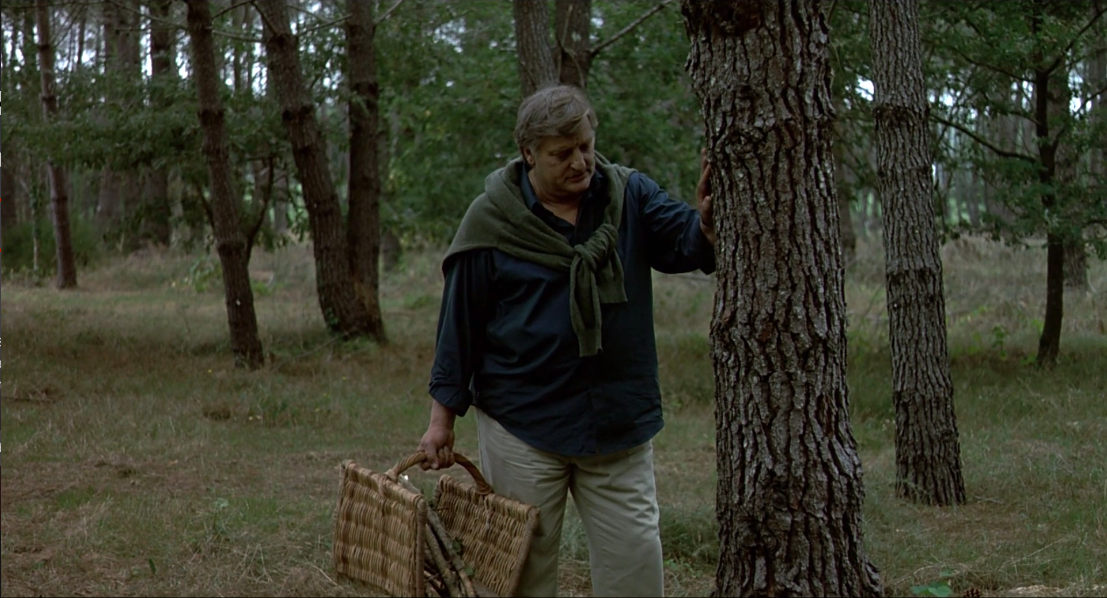
If one on the goals of art is to wake us up, to remind us what it is to be alive, one of the main ways of doing this is by bringing us as close to death as possible. This is why suicide is such a fruitful and, paradoxically, invigorating artistic subject. For the suicidal character approaching death, sensations are heightened, and life becomes fecund and tactile. One scene that captures this is in Francois Ozon’s Under the Sand (2000), just before Charlotte Rampling’s husband (Bruno Cremer) disappears into the ocean while she naps on the beach. The film never explains the husband’s disappearance—never confirms that it’s suicide—but the evening prior, the camera follows Cremer as he gathers firewood in the forest surrounding their vacation home.

He picks up a few sticks, then pauses at a tree and feels its bark, runs his hand down its trunk, as if he wants to feel the rough surface one more time before dying. The camera follows him as he passes behind another tree, then something unexpected happens: the shot stops on the tree while Cremer passes out of view, lingering in sharp focus on the nooks and crannies of the tree bark, showing the viewer just how wondrous a tree is, if only we could stop to see it. This is also a great example of Deleuze’s concept of “time-image,” when a film emphasizes time or duration rather than the movement of characters and plot. We then return to Cremer, who has crouched down and turned over a rotting log. Hundreds of ants scurry around—so much life, right there!—in juxtaposition to Cremer, alone in the forest.

Cremer touches a tree

This contrast of the isolated individual and the group is a recurring theme in Abbas Kiarostami’s Taste of Cherry (1997) as well. Paul Schrader famously imagined a man in a yellow cab as a symbol of loneliness and alienation, but Kiarostami took this idea even further—what if an entire movie was just a man in a car, driving around? That’s Taste of Cherry. The film is a series of vignettes as the main character (Homayoun Ershadi) motors around the outskirts of Tehran picking up one passenger after another, not as a taxi driver, but in search of a person he can convince to do a special job. Read more »