
by Pranab Bardhan
All of the articles in this series can be found here.
 Since 1990 I have also visited Vietnam a few times. Vietnamese economic reform (called doi moi) started in the mid-1980’s. On my first visit I found Hanoi to be more like a small quiet town in India, with a lot of poverty (and some begging in the streets, but not many visibly malnourished children), while Saigon or Ho Chi Minh City was somewhat better-off, and more raucous and colorful. One lecture I gave in Vietnam was titled “ The Rocky Road to Reform” where I spelled out the challenges of economic transition from a state-dominated economy; after my lecture a Vietnamese academic came to me and said, “Our roads are all full of potholes, so we are used to the ‘rocky road’ of challenges”!
One of the most knowledgeable people in Vietnam on issues of economic reform I met in Hanoi was Le Dang Doanh, who was an adviser to the General Secretary of the Communist Party, and later President of the Central Institute of Economic Management, a premier government think-tank on economic policy (I actually sought him out at the suggestion of my journalist friend, Nayan Chanda, who used to be with the Far Eastern Economic Review).
On my subsequent visits I found out how fast Vietnam was changing. In Hanoi, where I saw mostly bicycles before, it is now practically impossible to cross the road with the unending streams of motor cycles and cars (they’ll not stop for you, you have to take your chance). The Vietnamese economy is now a veritable dynamo of activity in Asia. It started with agricultural exports (like rice and maritime products) but soon followed China, a historical adversary, in the well-worn path of export-oriented labor-intensive industrialization with foreign investment and learning of foreign technology, combined, of course, with a deplorable level of political repression. Read more »


 Sughra Raza. Shadows on Beech Trunk, May 21, 2022.
 Not
Not 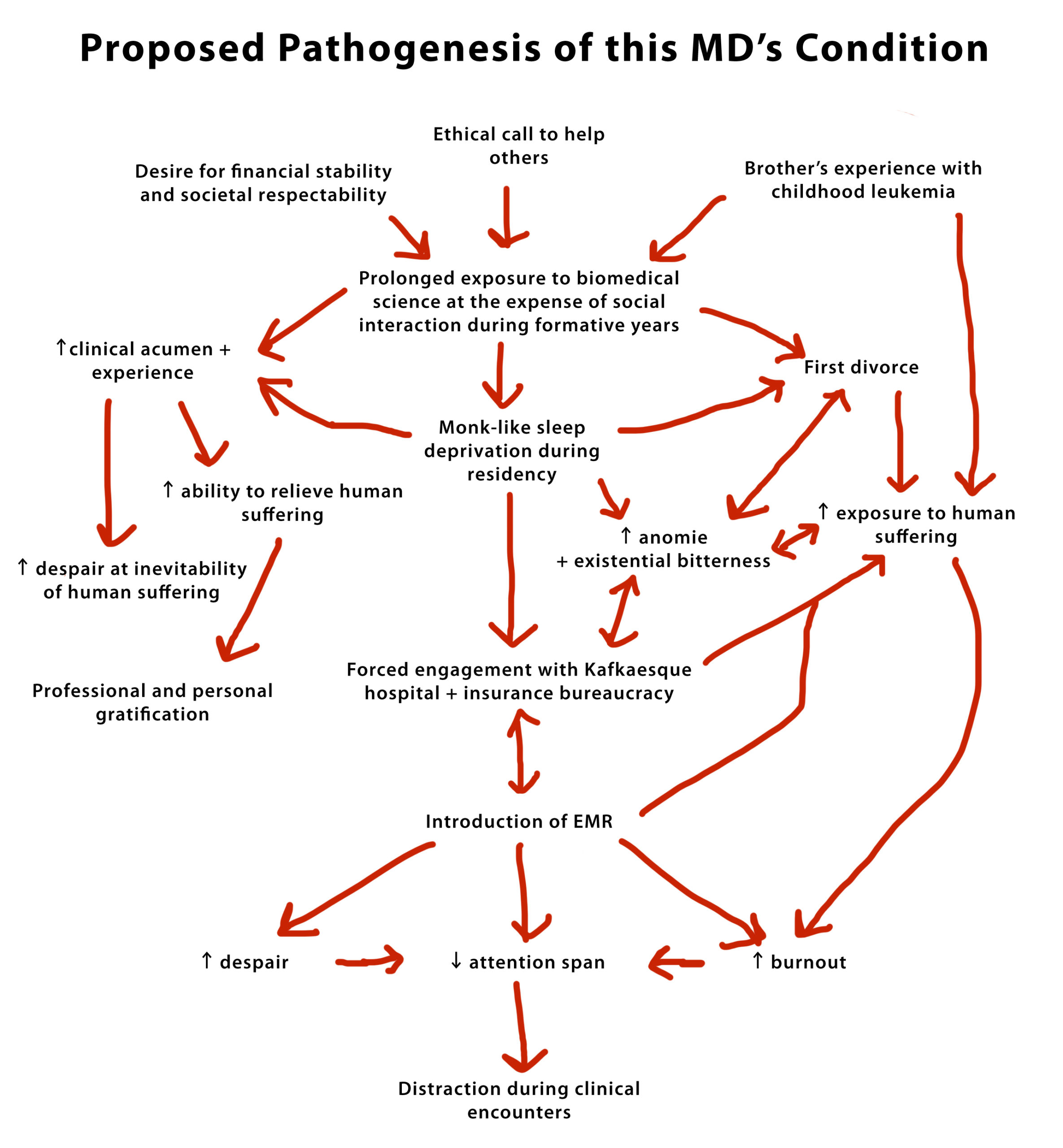
 “The constant direct mode of address was a chore. No one will enjoy having this read to them.” Quoting from a referee report on the Nicomachean Ethics misses the point of James Warren’s hilarious






 Lanchester’s square law was formulated during World War I and has been taught in the military ever since. It is marginally relevant to the war in Ukraine, particularly the balance between the quantity and quality of the two armies’ weapon systems.
 I regret not having children younger. Like, much younger. I was thirty-six when my first child, now four, was born; thirty-eight when my second was born. I wish I had done it when I was in my early twenties. This is an unpopular perspective. I know this because when I’ve raised this feeling with friends, many of whom had children similarly late in life, I’ve been met with a strong resistance. It’s not just that they don’t share my feelings, that their experience of having children later in life is different to mine, it’s that they somehow mind me feeling the way that I do. They think that I am wrong – mistaken – to feel this way. It upsets them.