by Derek Neal
 I find myself increasingly unable to read anything resembling AI text, that is, anything seemingly preformed, readymade, or mass produced, like an IKEA chair; but even as I write this, I think to myself—why an IKEA chair? Why does this object, or rather, this unit of language—IKEA chair—come to me unbidden? “IKEA” as signifier of anonymous, impersonal and practical furniture, and “chair” as typical illustrative example—Wittgenstein’s theory of family resemblances as shown by how the concept of “chair” functions in language, for example—combining to form the perfect analogy: IKEA chair is to furniture as AI text is to human writing; and yet, when I visualize an IKEA chair, or rather, when I see myself walking through the showroom in Burlington, Ontario, I see many chairs of all shapes and sizes, some hard and made of wood, some soft and upholstered, some big and roomy, some ergonomic and sleek, and I realize that, in fact, IKEA makes a wide variety of chairs, and perhaps my analogy is flawed.
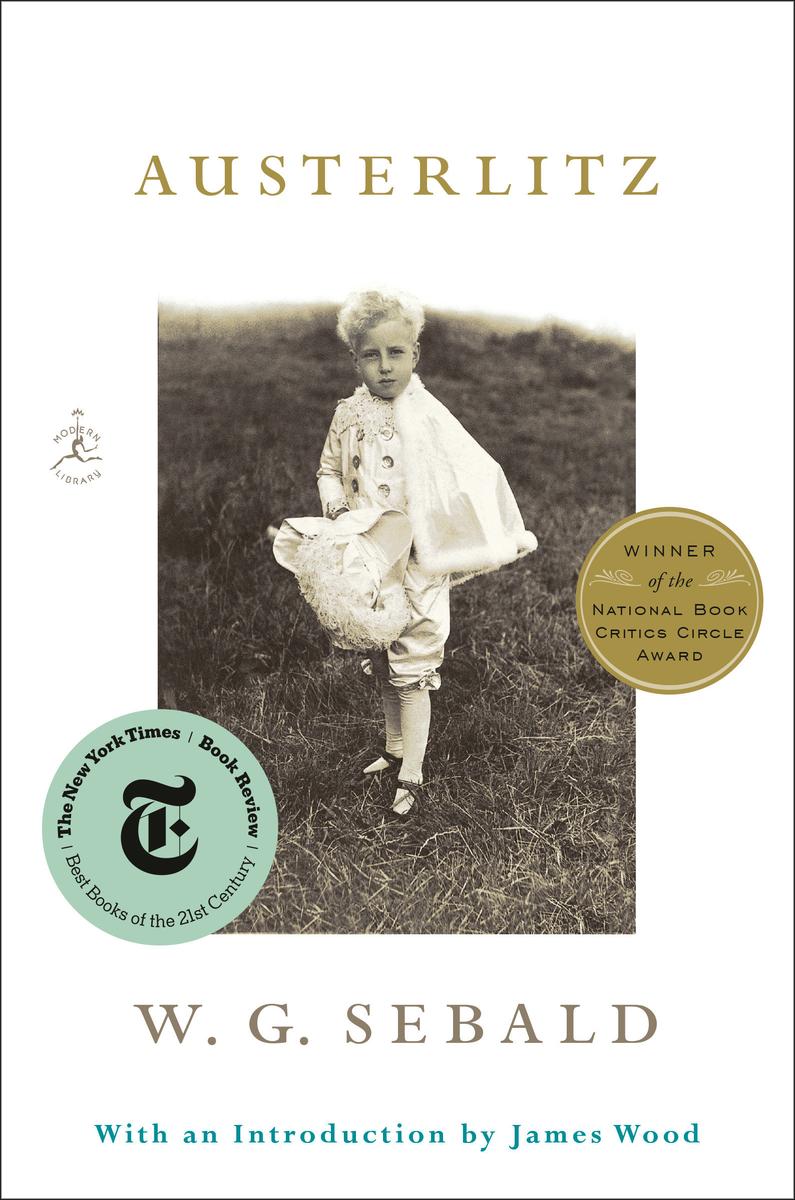
Maybe I should go further and say that I find myself increasingly unable to read any writing, especially fictional prose, that is written in short, declarative sentences, the purpose of which is to transmit information in a clear and succinct way. Instead, I’m reading W.G. Sebald. I drifted away from his novel Austerlitz after 100 pages last summer, but I’ve come back to it now, and although I initially had no idea what was happening, something about the prose and the long sentences has possessed me—I feel ensnared by the text, trapped in a twisting and turning labyrinth through which I must continue walking—and I’m deeply intrigued by the way a character will be narrating something, much like I’m doing here, but then, all of a sudden, there will be a pause in the text and the inclusion of “Austerlitz said,” before the narration picks up again, reminding us that we are not reading the thoughts of the narrator, but the words of another character relayed to us via the narrator. It’s as if, right now, in the middle of this essay, I included something like, “Sebastian said,” which would suggest that the previous words were not mine but were those of someone I was in conversation with, someone named Sebastian…
Do you know how in IKEA, Sebastian continued, they have those arrows on the floor, flowing you from one area to the next, until you end up at the warehouse section and then the checkout lanes? It’s a bit like that, AI text, in that the direction you’re supposed to go is so clearly defined, and you can’t move off in a different direction because behind you are more people, all going the same way, and they will crush you if you stop; you will be like a rock that has been ground down to a pebble and washed ashore, powerless to resist the strong current, as you end up at the self-checkout scanning a stainless steel spatula, wondering to yourself if you should purchase a $1 hot dog on the way back to the car. Read more »

 Sughra Raza. Esplanade Walks As Days Get Longer. Boston, March 2022.
 I recently read about a man who arrived in the United States from India with just thirty dollars in his pocket and, three decades later, had become a billionaire. When asked about the most important lesson of his journey, he answered without hesitation: money matters.

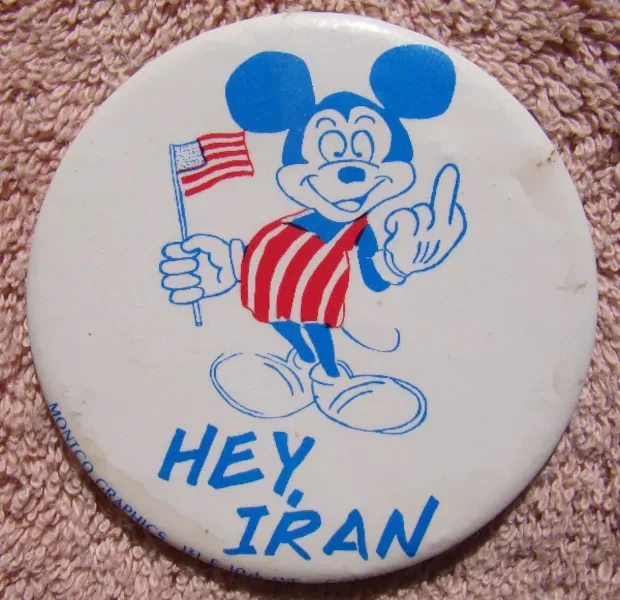 I was 12 years old when I walked down a street in my Bronx neighborhood and saw the poster in the window of Cappie’s. Cappie’s was a certain kind of corner store common in 20th century New York. It sold newspapers and magazines, candy and soda, lotto tickets, cigarettes, and various tchotchkes aimed at kids and teens. Cheap toys, baseball cards, posters, etc. Most of their posters were pinups of the era’s sex pots such as this or that Charlie’s Angels in various states of near nudity. But this poster featured a cartoon mouse, a clear copyright infringement on Walt Disney’s famed vermin. The caption read: Hey, Iran! The mouse held an American flag in one hand. The other flipped the bird.
 A couple months ago I wrote that we should not feel blame-worthy if we can’t do all the most courageous things in order to protect our neighbours or help stop a war or try to undermine the entire system. There are less courageous things we can do within our capacity. While that’s true, it doesn’t mean we shouldn’t