
by Derek Neal
 I find myself increasingly unable to read anything resembling AI text, that is, anything seemingly preformed, readymade, or mass produced, like an IKEA chair; but even as I write this, I think to myself—why an IKEA chair? Why does this object, or rather, this unit of language—IKEA chair—come to me unbidden? “IKEA” as signifier of anonymous, impersonal and practical furniture, and “chair” as typical illustrative example—Wittgenstein’s theory of family resemblances as shown by how the concept of “chair” functions in language, for example—combining to form the perfect analogy: IKEA chair is to furniture as AI text is to human writing; and yet, when I visualize an IKEA chair, or rather, when I see myself walking through the showroom in Burlington, Ontario, I see many chairs of all shapes and sizes, some hard and made of wood, some soft and upholstered, some big and roomy, some ergonomic and sleek, and I realize that, in fact, IKEA makes a wide variety of chairs, and perhaps my analogy is flawed.
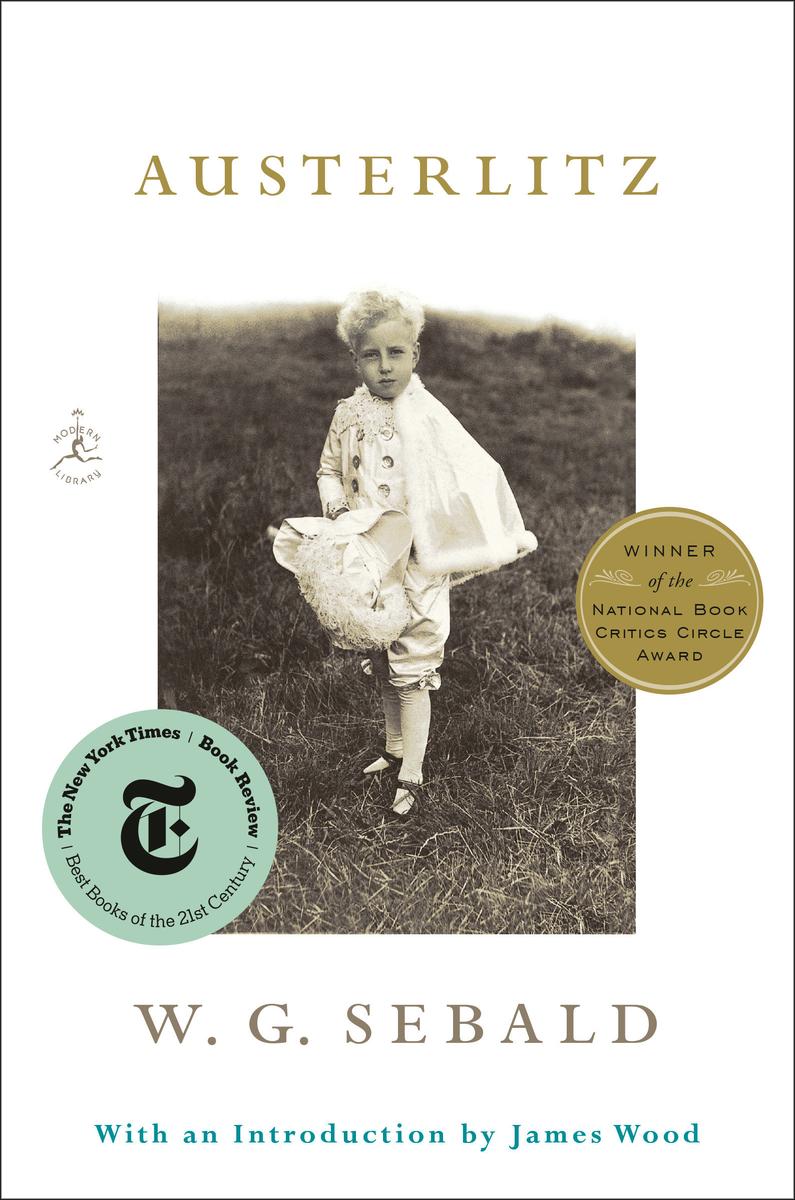
Maybe I should go further and say that I find myself increasingly unable to read any writing, especially fictional prose, that is written in short, declarative sentences, the purpose of which is to transmit information in a clear and succinct way. Instead, I’m reading W.G. Sebald. I drifted away from his novel Austerlitz after 100 pages last summer, but I’ve come back to it now, and although I initially had no idea what was happening, something about the prose and the long sentences has possessed me—I feel ensnared by the text, trapped in a twisting and turning labyrinth through which I must continue walking—and I’m deeply intrigued by the way a character will be narrating something, much like I’m doing here, but then, all of a sudden, there will be a pause in the text and the inclusion of “Austerlitz said,” before the narration picks up again, reminding us that we are not reading the thoughts of the narrator, but the words of another character relayed to us via the narrator. It’s as if, right now, in the middle of this essay, I included something like, “Sebastian said,” which would suggest that the previous words were not mine but were those of someone I was in conversation with, someone named Sebastian…
Do you know how in IKEA, Sebastian continued, they have those arrows on the floor, flowing you from one area to the next, until you end up at the warehouse section and then the checkout lanes? It’s a bit like that, AI text, in that the direction you’re supposed to go is so clearly defined, and you can’t move off in a different direction because behind you are more people, all going the same way, and they will crush you if you stop; you will be like a rock that has been ground down to a pebble and washed ashore, powerless to resist the strong current, as you end up at the self-checkout scanning a stainless steel spatula, wondering to yourself if you should purchase a $1 hot dog on the way back to the car.
I knew what Sebastian was talking about because I’d just been in IKEA, but, knowing the feeling of being trapped in a current of couples and young families searching for Swedish furniture, I’d taken shelter in the cafeteria while my partner moved through the various showrooms. Divide and conquer, I told her. For protection I’d brought the Sebald and another book, Stefan Zweig’s Chess Story, which I thought might help me better understand Sebald, as in the introduction to Zweig’s novella, Peter Gay elaborates on a narrative technique similar to the one used in Austerlitz:
Zweig frequently turned in his novellas to a narrative device—a form of presentation he might have patented, he employed it so frequently—that I might call a secondary narrator. He tends to enforce the intimacy of his “case histories” by resorting to a first-person narrator and at the same time keeps this intimacy under control by having the events of his tale largely presented by a third person, who exploits the narrator as the recipient of a fascinating tale.
In Chess Story, this takes the form of the unnamed narrator being told a long story from a “Dr. B.,” in which Dr. B. recounts his imprisonment at the hands of the Nazis and his discovery of a chess manual, which leads him to master chess during his period of isolation. This story goes on for over thirty pages and is told in long paragraphs with quotation marks, leading us to believe that we are reading the quoted speech of Dr. B. However, at the end of the story, the narrator tells us that “Dr. B. reported everything in much more detail that I have set down here.” In this way, Zweig, as Gay writes, “enforces intimacy” while “keeping it under control”: We hear the details of a terrible personal story, but not all of it.
The second instance of a secondary narrator follows a slightly different form. At the beginning of the novella, the narrator learns about another chess master—Mirko Czentovic—via a friend. This information is not presented as the quoted speech of the friend, but as narration from the narrator who summarizes the remarks of the friend. When the story transitions back to the narrator’s complete control, Zweig first introduces quoted speech from the friend, seemingly to remind us that the source of this information has been the friend (not the narrator), then writes, “concluded my friend, who had just related…” Here we have another kind of controlling of intimacy—the narrator doesn’t mention that anything’s been left out of his story, but he also doesn’t claim to be reproducing the friend’s story verbatim, as there are no quotation marks for the majority of the tale.
The question is why a writer would do this. Why must the events of the story be distanced in such a way, why can’t the writer simply tell us what happened, in all the detail—the complete truth? In his introduction, Gay connects Zweig’s technique to his admiration of Freud. He quotes a letter from Zweig to Freud and notes that Zweig had “his own aspiration to be the psychologist to his culture,” albeit through fiction rather than psychoanalysis. Seen in this way, Zweig’s fictional style begins to resemble a psychoanalytic session with the narrator, who listens, in the position of the analyst, and the secondary narrator, who speaks, in that of the analysand. This analogy also makes the purpose of the narrative technique clearer—the truth cannot be stated directly because it cannot be accessed directly, cannot even be arrived at, but only talked around and approached indirectly. A novel, through its form, is one way to do this, and Zweig’s novella is a sort of mise-en-abyme of the form itself: normally the reader would be the “listener” with the narrator as the speaker, allowing for the reader to interpret the novel and come to some understanding of the truth of both the story and his or her own existence through the process of moving through the text, but here the reader is distanced one step further, meaning the narrator takes the usual place of the reader, while the reader must navigate multiple levels and layers of the story, as the truth becomes knottier and denser. The reader does not just receive the story, but sees themselves receiving it in the figure of the primary narrator.
The reader, however, is only one part of the equation; the writer is the other. Zweig and Sebald both take the Holocaust as their subject, yet they cannot write about it from firsthand experience. Zweig, who was Jewish, left Austria for England in 1935, then went to Brazil in 1940. In 1942, he committed suicide. Sebald was born in Germany in 1944. In Zweig’s decision to cast Dr. B., who is captured by the Nazis and held in solitary confinement, as a secondary narrator; and in Sebald’s decision to have Austerlitz, who is sent as a small child to Wales from Prague to escape the invading Nazis, as a secondary narrator, one senses that the authors themselves may have felt conflicted about writing an account of the Holocaust in the first person. They weren’t there, after all.
This dilemma, usually referred to today as “standpoint epistemology,” or the idea that only a person from a certain community or possessing certain identity traits can write about certain people or experiences, is much contested. It probably reached its zenith a few years ago with the publication of American Dirt, which was the story of a Mexican mother and son fleeing to the United States authored by an American woman; now, with the much discussed “vibe shift” in the wake of Trump’s re-election, there is less cultural focus on who is allowed to write certain types of stories. This is seen by many as a welcome return to a more liberal understanding of art, with creativity and freedom of expression allowed to take precedence over cultural appropriation. In general, I agree—people should be allowed to write about whatever they want, but I also hasten to add another point: this doesn’t mean that the result can’t be criticized for a lack of authenticity.
I recall reading an excerpt of a novel set in Europe, written by an American author, which featured a stereotypical European scene—think of characters walking down a winding, cobblestone street, or sitting in a square sipping cocktails for an aperitif. The characters, like those in American Dirt, were not “Americans in Europe” à la Henry James, but Europeans (or Mexicans, in the case of American Dirt). Yet the scene struck me as completely improbable, and what the Europeans said I’d never heard any European say, couldn’t even imagine one saying, despite having spent some years there. It was a strange mix of cliché and vagueness, as if a scene had been written and then the details changed at the last moment—America swapped out for another country, and names changed to suit the new locality. This also occurred recently, according to an article by Michael Patrick Brady, in another novel where a Lutheran religious context is changed into a Catholic one, leading to “a latent Lutheranism lurking beneath a thin Catholic veneer.” This is not to say that an American writer should not set their novel in Europe, or that American Dirt should not have been set in Mexico, or that a non-Catholic can’t write about Catholicism, but if one does this, there is a responsibility to go beyond both cliché and superficiality. Identities and communities are not selected à la carte but require some sort of commitment, some investment of time and care that allows one to convincingly become part of a community and inhabit an identity.
This is partly what one feels reading Austerlitz, as the narrator listens to Austerlitz recount his story over countless meetings and many years. The narrator has done the work, so to speak, and we trust his account of things, which is also Austerlitz’s account. The other thing the secondary narrator achieves, in addition to a sort of humility in relation to the secondary narrator, is a naivety that allows the full force of the secondary narrator’s story to resonate with both the narrator and the reader. I wrote before that reading Austerlitz was like walking through a sort of labyrinth—one presses their hand against a cool, dark wall, groping in the blackness to advance, but there is no way to know how close one is to the center, or, in this case, what awaits them. It is truly astonishing, then, on page 127, when Austerlitz begins to tell of his nighttime excursions to Liverpool Street Station, “to which I was always irresistibly drawn back on my night journeys.” Austerlitz notes how this station was at one point “one of the darkest and most sinister places in London,” partly due to its main hall sitting below street level, but also due to the strange behaviour of light in the station, the insane asylum that once stood on the same site, the slums that replaced it, and the bones that were excavated from the ground when the station was built.
Whenever I was in the station, said Austerlitz, I kept almost obsessively trying to imagine—through the ever-changing maze of walls—the location in that huge space of the rooms where the asylum inmates were confined, and I often wondered whether the pain and suffering accumulated on this site over the centuries had every really ebbed away, or whether they might not still, as I sometimes thought when I felt a cold breath of air on my forehead, be sensed as we pass through them.
At this point in the narrative, a sort of terror has taken over—we read with bated breath—and then, suddenly, we are released, only to discover a newer, greater horror. Austerlitz discovers a hidden door in the station and enters the Ladies’ Waiting Room, “which had obviously been disused for years.” All of a sudden there is light and space in the story, which we feel as readers—we can breathe again—and Austerlitz tells us that “I stood in that empty space beneath a ceiling which seemed to float at a vertiginous height.” Then he remembers—he sees in his mind his adopted parents in the waiting room and “the boy they had come to meet,” who is Austerlitz himself. We quickly learn that Austerlitz had been sent there to escape the Nazis, having not known this before (although it can be suspected). We then learn, via Austerlitz’s story to the narrator, about Austerlitz’s discovery of his own identity, how he tracks down the traces of his family in Prague and then visits the town of Terezín, where his mother had been sent to a concentration camp. What is remarkable about this sequence of events is how we discover this information along with both Austerlitz and the narrator; to truly feel its impact, to understand its truth, we must walk the path just as Austerlitz does and as the narrator does in listening to Austerlitz. We cannot know it as an intellectual truth in advance, but must travel through the labyrinth, must experience the text to arrive at the place of knowledge.
Sebald pushes this technique, at certain moments, as far as it can go—when Austerlitz finds the maid from his childhood, Vera, she becomes a tertiary narrator, telling stories to Austerlitz which he then repeats to the narrator (“But I was particularly anxious, Vera told me, said Austerlitz, not to miss…), and at one point, there is even something nearing a quaternary narrator, when Vera begins to recount things Maximillian, Austerlitz’s father, had said.
At the end of his introduction to Chess Story, Peter Gay makes a curious claim about Zweig. After articulating the theory of the secondary narrator, he criticizes Zweig for being too reticent, wondering if Dr. B, as a stand in for Zweig, will “eventually deal with his trauma and live, or, like Stefan Zweig, defeated by exile and depression, let his past conquer him and die.” Gay suggests that Zweig, before committing suicide, “might have included his readers more frankly, more openly, about the desperate struggles within him,” as if this “confessional candor” could save him. But what does Gay think Zweig is doing in Chess Story? And what would Gay say about Sebald and Austerlitz?
Sitting in IKEA, finishing this essay in the food court, preparing to head for the self-checkout lane where my partner awaited me, I thought that Gay’s suggestion was incredibly simplistic, as if one could simply say what was within them in an unmediated way, as if one fully knows what they want to say before saying it. Austerlitz and Chess Story, clearly, are acts of self-discovery just as much as they are artistic creations, and in the writing of these pieces of literature, one imagines that Sebald and Zweig deepened their understanding of both themselves and the world. Simply put, there are no shortcuts.
Enjoying the content on 3QD? Help keep us going by donating now.